0
The United States Consulate in Lagos and the Federal Bureau of Investigation (FBI) have pledged to strengthen collaboration with the Economic and Financial Crimes Commission (EFCC) in tackling sextortion, cybercrime and other transnational financial offences.
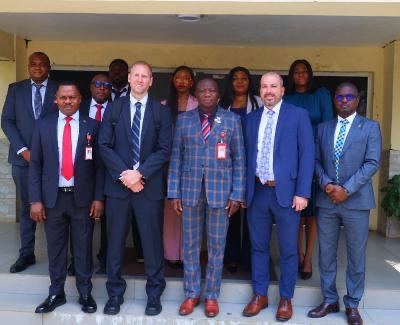
The commitment was made on Monday, July 6, 2026, when Assistant Law Enforcement Attaché of the US Consulate, SSA James Smith, alongside SSA Thomas Pepper of the FBI Cyber Division Headquarters, visited the Acting Zonal Director of the EFCC Lagos Zonal Directorate 2, Assistant Commander of the EFCC (ACE I) Bawa Usman Kaltungo, at the Commission’s office in Ikoyi, Lagos.
Smith said the engagement was aimed at deepening the existing relationship between the US agencies and the EFCC, particularly through improved intelligence gathering and timely exchange of information on criminal activities involving Nigerians and foreign nationals.

He noted that enhanced cooperation between both sides would boost efforts to investigate and prosecute cases involving sextortion, cyber-related offences and other crimes that cut across international borders.
Pepper, while appreciating the opportunity for the engagement, acknowledged the existing partnership between the FBI and the EFCC, describing it as productive.
“We have already enjoyed a robust collaboration and partnership with the EFCC in several cases. However, we are willing to improve the timeliness and efficiency of the investigative information we share with the Commission,” he said.
He explained that better-targeted intelligence sharing would further strengthen joint efforts against sextortion, which he described as a growing concern and a priority issue in the United States.
Pepper proposed the creation of a joint team that would facilitate intelligence exchange on sextortion cases reported to the EFCC, as well as requests submitted by the Commission to the FBI.
He also urged the EFCC to fast-track investigations into reported sextortion cases, adding that the FBI was working on gathering additional identifiers that would assist the Commission in tracking suspects.
Responding, Kaltungo thanked the delegation for the visit and assured them of the Commission’s commitment to continued cooperation with international law enforcement partners.
“Our doors are always open for collaboration. We also maintain similar partnerships with other countries and international organisations,” he said.
Kaltungo, however, stressed the need for additional support, particularly access to tracking tools that could assist investigators in identifying and apprehending perpetrators more quickly.
“We need your assistance and support to enable us to track and apprehend these perpetrators in good time. The availability of tracking tools will help make our work faster,” he added.
He further assured the FBI delegation that the EFCC would prioritise and expedite investigations into cases brought before the Commission.
Also speaking, the Head of Investigations, ACE II Moses Oguzi, said the EFCC had maintained a strong relationship with the US government and the FBI over the years.
Oguzi, however, requested a clear framework for the proposed joint operation to guide the Commission on the specific areas of focus.
He also sought clarification on whether the planned collaboration would be restricted to computer-related fraud or expanded to cover other forms of financial crimes, including the rising cases of visa fraud.
In response, Smith assured that the US agencies would provide a list of relevant cases and areas of interest, adding that necessary information would be shared in a structured manner to prevent the EFCC from being overwhelmed with unnecessary data.