Every week, Naijaonpoint spotlights the unfiltered stories of women navigating life, love, identity and everything in between.
What She Said will give women the mic to speak freely, honestly and openly, without shame, about sex, politics, family, survival, and everything else life throws our way.
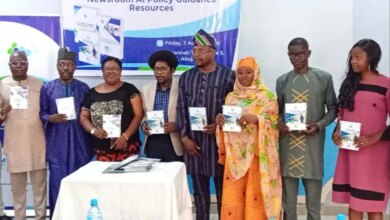
The subject of today’s #WhatSheSaid is Ejiro Sharon Okotie, a 42-year-old Gender, Disability and Social Inclusion expert, trained counsellor, founder of Hope Inspired Foundation for Women and Youth with Disabilities, and author of Beyond the Darkness: A Journey from Loss to Purpose. She talks about losing her sight to meningitis at 11 years old, the family that refused to give up on her, and why she is living proof that disability is not a death sentence.
My name is Ejiro Sharon Okotie. I’m 42, from Okpara Island in Delta State, and I currently split my time between Lagos and Abuja. I’m a development professional specialising in Gender, Disability and Social Inclusion; a trained counsellor running my own private practice, LRS Therapy Hub; founder and Executive Director of Hope Inspired Foundation for Women and Youth with Disabilities; a published researcher; and now an author. I am also a woman with a disability; I became permanently blind in both eyes at 11. I am a happy soul who loves the soft life, gospel music, laughter, love and humanity.
I am a twin, the second twin they call Kehinde in Yoruba, and I have an older sister. So that’s three girls from my mother, Elder Caroline Amujiane, who is the most selfless human being I have ever known. Though my mother found herself in a polygamous marriage that eventually ended in divorce, this means I have other half-sisters and brothers I do not really know from my father. My mother had my twin and me as a single parent because she divorced my father before we were born. We grew up with only her our entire lives.
As a child, I was very reserved, quiet and gentle. My twin was fiercer and more stubborn, and she would fight for me in primary school. The first six years of my twin’s and my life, we stayed with our maternal grandmother in Sapele, Delta State, because my Mum had moved to Kaduna in Northern Nigeria in search of better opportunities with her eldest sister, Mummy Rebecca. Eventually, she brought us back to Kaduna with her, and after about a year, she also brought in our oldest sister, Joy, who had been living with our father. My twin would also fight our older sister and fight my battles, too. I was just noticeably quiet, but over time, with different experiences, I became more outspoken and learned how to fight for myself. Because at some point, my mum’s younger sister took my twin to live with her family in Maiduguri, and she didn’t return until we were 18, like 10 years later.
Running errands for my mum. She was in the sanitation department at our church, and when she couldn’t get there on time, she would send me to sweep, mop the floor and clean the seats. She also used to send me to the market with a written list and money for food items. As small as I was, I already knew how to price things, collect change, and then I would use whatever was left of my transport fare to buy every sweet thing in that market and trek home with everything balanced on my head.
I was a lively, active child. I had church friends, and we played ten-ten and suwe together. We didn’t have luxury, but I never felt like I lacked anything. Life felt very full.
It was 1995. My mum had decided to put my older sister and me in boarding school that September. My sister went to Federal Government College, Kuje in Abuja, and I got admission into Christ Ambassador College in Sabo, Kaduna. I stayed only three months, September to December, before I started feeling sick.
Within a few days, it had gotten so bad that I couldn’t walk. I was too weak. They sent for my mum, and she had to carry me because I couldn’t manage on my own. She took me first to my aunt’s family hospital, but the admission fee was two thousand naira, and she didn’t have it. So she took me to another private hospital near where she worked. I was admitted, treated for malaria and typhoid, and kept for five days.
On the fifth day, I woke up to full darkness.
I couldn’t see anything. When I told my mum, she went to get the doctor, and they found a thick, dark, reddish coating over both my eyeballs. They said this was not what they had been treating and immediately referred us to the National Eye Hospital. By the next morning, my joints had started swelling. The eye doctors there told my mum something bigger was happening inside my body and referred us to Ahmadu Bello University Teaching Hospital. That is where they took a sample of my spinal fluid and found the Cerebrospinal Meningitis. But the damage to my eyes had already been done.
I spent six weeks in that hospital. Over 154 injections, including two directly into my eyes. And at the end of it all, the doctor at Guinness Eye Hospital told my mum plainly: “Your daughter will never see again. I advise you to get her into a blind school so she can continue with her life.”
That was how our journey into blindness began.
I immediately decided I wasn’t going to let it break me. Or maybe my infant mind just couldn’t fully grasp what I had lost. Either way, I started pretending it wasn’t affecting me as much as it was, because I could see how the news was destroying my mum.
I remember asking her then, “Mummy, whose report will you believe? I choose to believe the report of the Lord!”
I was forming strong for her. And somehow that helped both of us.
Returning to church. My friends were young, and they just didn’t understand what had happened. We would go to our usual playground, and once everyone was done playing, they would forget that I was now blind and run off, leaving me behind. I would just sit there crying, waiting for my mum to start looking for me and send someone to come and get me. The same thing happened at my aunt’s house. My cousins and their friends would run off to play, and nobody thought to take me along. I remember sitting in my aunt’s kitchen on one of those days, feeling terrible about being left behind.
But this didn’t last long. A few months later, we moved from Kaduna back to Sapele in Delta State, and the change of environment made things much easier. These new people only knew this version of me, and they engaged with me as such from the very beginning. Moving to Delta was advantageous because it led me to experience empathy. My grandma’s neighbours showed me kindness; they always wanted to help in any way and at every chance they got. So I really did not feel different.
My grandma also often spoke about my future whenever her friends or others came to greet her, and the topic came up. “So what will happen to her now that she is blind?” My grandma would say, “God that created her will see to it that she becomes something in life. God will not leave her.”
I remember two distinct incidents. The first: a drunkard from the neighbourhood came to my grandma with a proposition. I was sitting in the living room that day. He walked in, greeted my grandma, and began speaking to her in Itsekiri. I understood because I grew up with my grandma. He told her that he had heard she had a blind child and had come to ask if she would be willing to give him as a wife. At least he would feed me and take that burden from her, and I could bear children for him. I remember how furious my grandmother was. She walked him out of the house and asked him never to return, shouting after him, “Did I tell you I cannot feed my granddaughter?” And in that moment, she said, “This my granddaughter, go be a big woman for life.”
The second incident was a young boy from the compound who used to come to our house to play with me. My grandmother’s rule was that I must never enter any neighbour’s house, as there was a possibility they would take advantage and try to rape me since I would not see them close the door, take off their clothes or do something they shouldn’t. So anyone who wanted to play with me had to come to our house, where she could keep her eyes on them. This young boy’s visits had become too frequent for my grandma, and after a while, I noticed he was no longer coming. When I eventually ran into him and asked why, he told me my grandma had told him to get his eyes off me, that she had noticed the way he was looking at me, that I was not his spec, that “it’s an Engineer her granddaughter will marry and not a meat seller like him.” I was shocked and apologised on my grandma’s behalf, saying I didn’t know this had happened. I think people around us just took their cue from my family and treated me accordingly. Everyone was hopeful about what I would become. So though adjusting was difficult, at least I had my family.
I always say I am one of the most blessed individuals on the planet when it comes to family. I jokingly tell my cousins that the man who marries me will have a lot of people to pay bride price to because I am a living example of what it means to say it takes a village to raise a child.
Starting with my mother. Her sacrifices for me are immeasurable. When I was at UNIBEN, she would come to school on weekends just to help me dictate my notes so I could braille them, or to help me record textbooks onto tape. She gave everything she had.
My older sister Joy taught me how to carry myself as a woman, even with blindness. Around the time I was 21 or 23, she sat me down and said, “Ejiro, as a woman, you must be known for something. Pick something about yourself and focus on it, your skin, your hair, your dressing, or a combination.” Because of Sister Joy, I take very good care of my appearance.
And my twin sister, Sherida. I call her my Angel because that is the only word that comes close to describing what she means to me. At one point, we were literally living each other’s lives. Her classes were in the mornings and mine in the evenings, and she didn’t want to leave me home alone, so we just went everywhere together. Her classes, my classes, all of it. Until she was travelling to Lagos to help fix my laptop for me, and got into an accident that broke her hand and kept her home for over a month of her final year. That season was one of the hardest of our lives, but it was also when I found my independence. Before that accident, my twin did everything for me.
One of my mum’s greatest worries was education. Our family holds it very dear. The first person she spoke to when she visited a blind school in Kaduna was a blind teacher there, who told her, “Don’t waste time looking for a miracle. Let her continue her life. God can do it while she’s rebuilding her life.”
So my mum found Pacelli School for the Blind in Surulere and registered me in 1997. The principal, Rev. Sister Justina Obiangulu, created a special rehabilitation class just for me so I could learn Braille and typewriting without having to go back to primary school. My teacher was Mr Tunde Mohammed, Uncle Tunde, as I called him. He was also blind, and he was so patient with me. He taught me braille, how to type, how to walk independently, how to find things when they fell to the floor, and the doggedness that life required.
I used to cry constantly because I was desperate to get back to where I had left off, and braille felt like my only way there. Whenever the contractions weren’t coming to me, I would break down, and Uncle Tunde would say, “Ejiro, be patient with yourself; you will get it.” And one day, Sister Justina found me crying in the corridor, held me to herself and said, “Ejiro, always remember that whenever a door closes, God opens a window somewhere.”
Those words carried me for years.
I spent eight months at Pacelli. By July 1998, I had fully learned Braille and typing. By October 1998, I had gained admission into Queen’s College to JSS2, exactly where I had left off. I didn’t repeat a single class.
Queen’s College was manageable because the school had always had blind students and had basic provisions in place. Resource teachers, extra time for exams, and brailed scripts. I was also lucky that older blind students passed their Braille notes down to me, so I had two classes’ worth of notes ahead of me at all times.
University was a completely different battle. At UNIBEN, I was the first blind student in my department for the International Studies and Diplomacy diploma. I had to go around and introduce myself to every lecturer at the start of the term. I had no screen reader then, just a braille machine and a manual typewriter. With a typewriter, if you make a mistake, you cannot go back and correct it. I had to memorise each exam question, arrange my full answer in my head, and then begin typing, because once you started, you carried on no matter what.
Despite all that, I completed my two-year diploma with Distinction, then gained direct entry to the 200-level and finished with a Second Class Upper in International Studies and Diplomacy.
By the time I was doing my first master’s at UNILAG, I had learned to use a computer with the JAWS screen reader software and everything transformed. I could scan notes, get soft copies of textbooks, search the internet, type and correct mistakes, and print my exam scripts. What had been grinding and exhausting became something I could actually navigate with confidence.
That was the first of three master’s degrees. Public and International Affairs from UNILAG, Development Studies from the Institute of Development Studies at the University of Sussex on a Chevening Scholarship, where I graduated with a Distinction, and Marriage and Family Therapy from Triune Biblical University in the US, alongside other certifications and short courses.
Sure, there are several moments when one is excluded, deliberately or unintentionally, due to ignorance. Often, when people see me, because my disability is visible, people are quick to begin putting me in different CANNOT boxes. “Oh, she cannot do X, cannot do Y,” but they never think about what I CAN do. It’s sometimes from ignorance. But I have felt that way at work, at events, and even at church.
I do not think giving up was ever an option for me. Do I have low moments where I feel overwhelmed? Yes. But giving up, no! I love life too much. My mantra is that there is always a way out. Whenever I have cried, maybe slept a lot, or just engaged in the things I use to cope, I start thinking about the different possible solutions or ways out. I always believe that too many people have invested in my life at different points for me to just give up. Plus, God has surrounded me with great people; I always say I have the gift of people, and I do not take it for granted. During low moments, I always have someone to call, and often I get the right prayer or just the direction to move forward.
My mother is one of my biggest motivations to keep pushing in life. Whenever I think about everything she has done and been through, I always want her to look at me and be glad that her sacrifice was worth it. And it paid off after all! My purpose and all the destinies I now know are tied to mine, which is also what propels me to keep moving. When I think about all the hurdles I have surmounted in life and tell myself, if I lived through that, then I’ll survive this. What does not kill you makes you stronger. The difficulties I have faced at different stages of my life have made me stronger and often served as preparation for the next hurdle. I also thank God for the gift of salvation; I am a believer, and the word of God is where I draw the most strength. There is always the right word tailored for that particular situation, and the Holy Spirit is right there encouraging me, directing me to scriptures, or simply leading me to a story on YouTube or a WhatsApp status that answers the situation. God is my foundation and remains the rock that keeps me standing in any storm or blow that life may deal me.
What She Said: The Clinic Paid More For My Eggs Because I’m Light-Skinned
What do you think about this?
Drop your opinion in the comment section.
FOLLOW US & Share this with someone who needs to see this.