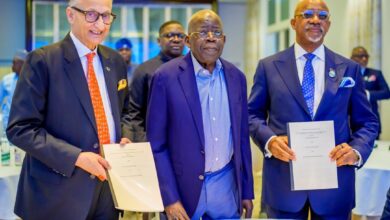
The Federal Ministry of Humanitarian Affairs and Poverty Reduction and the Bank of Agriculture (BOA) have signed a three-year agreement aimed at helping vulnerable Nigerians move from short-term assistance towards sustainable livelihoods. The partnership will use verified data from the National Social Register to connect eligible people with agricultural finance, farming inputs, skills and enterprise opportunities, but being on the register does not automatically guarantee financial support.
The Memorandum of Understanding (MoU) brings together the ministry’s social protection programmes and BOA’s agricultural financing expertise. It is intended to help vulnerable households become more economically productive rather than remain dependent on humanitarian assistance.
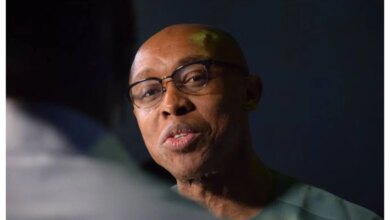
Minister of Humanitarian Affairs and Poverty Reduction, Dr Bernard Doro, said the National Social Register currently contains information on about 20 million vulnerable households, representing approximately 80 million Nigerians.
He added that more than 10 million people on the register have been validated through their National Identification Numbers (NINs).


Doro said: “We have something to bring to this partnership, and you too have something definitely to bring.”
The minister said the database would help the government and its partners identify people who need support and design interventions around their circumstances rather than applying the same programme to everyone.
Related news
How the Humanitarian Ministry-BOA partnership will work
Under the agreement, the Humanitarian Affairs Ministry will help provide access to eligible beneficiaries and coordinate relevant humanitarian and social protection programmes.
It will also engage government institutions and other stakeholders, provide policy guidance and support implementation.
BOA will develop financing arrangements and agricultural products suited to vulnerable groups. These could include agricultural finance, value-chain funding, financial inclusion initiatives and technical support.
BOA Managing Director and Chief Executive Officer Ayodeji Oludare said the bank could provide support such as fertiliser and seeds alongside financing designed to improve agricultural productivity.
The bank could also develop economic profiles for participating farmers to understand their activities and establish suitable credit-scoring systems.
Credit scoring is a process used by financial institutions to assess a person’s ability to borrow and repay money. In this case, it could help BOA determine what type of financing is appropriate for individual beneficiaries.
The agreement covers several areas, including poverty reduction, agricultural financing, livelihood restoration, financial inclusion, women’s economic empowerment, youth development, climate resilience, skills acquisition, rural development and food security.
It also covers digital financial services, agricultural value-chain development and enterprise development.
National Social Register to guide beneficiary selection
The National Social Register is expected to play a central role in identifying people who may benefit from programmes developed under the agreement.
Doro said inclusion in the register involves vulnerability assessments, community-based targeting, data collection, verification and analysis.
According to the minister, involving communities is important because poverty differs between locations and households. NIN verification is also intended to strengthen the reliability of the database by confirming the identities of people registered.
The government says this approach should help reduce duplication, waste and leakages in social intervention programmes.
The partnership is also linked to the ministry’s One Humanitarian, One Poverty Response System (OHOPRS), which is intended to improve coordination of humanitarian and poverty-reduction programmes.
Rather than treating every vulnerable household in the same way, beneficiaries could be assessed according to their circumstances and economic activities.
A farmer, for example, may require agricultural inputs and finance, while another beneficiary may be better suited to skills or enterprise support.
Partnership linked to wider poverty reduction plans
The agreement is also connected to the proposed Nigeria Poverty Resilience Fund (NPRF).
The fund is intended to link verified vulnerable households on the National Social Register with productive opportunities, including affordable credit, agricultural inputs and structured value chains.
The MoU could also allow the ministry and BOA to seek additional resources from development partners, donor agencies, private-sector organisations and multilateral institutions to expand successful programmes.
However, the signing of the agreement should not be interpreted as an announcement that 80 million Nigerians will immediately receive loans, grants or farming inputs.
The figure refers to the estimated number of individuals represented by households in the National Social Register. Actual assistance will depend on the specific programmes introduced, eligibility requirements, available funding and assessments carried out by the relevant institutions.
The agreement will initially run for three years and can be renewed by mutual agreement.
For Nigerians hoping to benefit, the important next step is to watch for official information on specific programmes, eligibility requirements and application procedures. People should be cautious about anyone demanding payment or claiming they can guarantee access to loans or grants under the partnership.
The success of the initiative will ultimately depend on implementation — particularly whether support reaches verified beneficiaries, whether financing is appropriate for their circumstances and whether the programmes create sustainable sources of income.