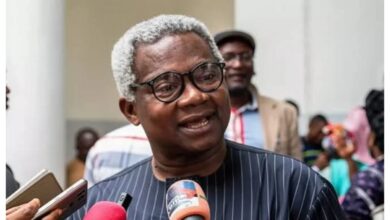
Former National Coordinator of the National Poverty Eradication Programme (NAPEP), Professor Magnus Kpakol, has warned that cash transfers cannot by themselves lift Nigerians out of poverty and called for government interventions to focus on skills, productivity, financial literacy, and sustainable income.
Kpakol made the submission during an interview with ARISE NEWS on Friday while assessing the Federal Government’s new poverty reduction programme. He described the initiative as worthwhile but said its success should be measured by whether beneficiaries eventually become economically independent.
“At the end of the day, it’s not about cash transfers. It’s not about money given to somebody. It’s about us being more able to produce the goods and services that the people of the world want,” he said.
He said cash support could provide a basic safety net for vulnerable Nigerians, but warned that ₦40,000 would offer limited relief without a pathway towards self-sufficiency.


“What we want to see is if they can create incomes,” Kpakol said. “If down the road, those people that were in poverty are no longer in poverty, and they are also now in a position where they can take care of other people. So that’s what the test is.”
READ RELATED NEWS UPDATES
Drawing on his experience at NAPEP, he said poverty programmes should combine financial assistance with training and capacity development. He cited financial literacy and skills acquisition as tools that can help beneficiaries manage resources and build livelihoods.
Kpakol welcomed the administration’s intention to “graduate” beneficiaries from welfare; he said prolonged dependence on government support should not become the objective of social intervention.
He also questioned the public understanding of the programme’s financing, particularly the World Bank component. He said the funding was an International Development Association (IDA) loan with a long repayment period and interest below two per cent, but called for clearer information on its size and repayment.
The former NAPEP coordinator also criticised weak coordination between federal and state authorities. He said states collectively control substantial resources that could complement federal funding if both levels worked together.
Political interference, he added, could derail implementation. Kpakol warned against allowing too many actors to influence beneficiary selection and programme delivery, saying this could produce unintended outcomes.
He called for greater transparency around the National Social Register to establish that beneficiaries are genuinely poor rather than party members or political associates.
Kpakol also backed industrialisation as a route to sustained poverty reduction, saying Nigeria must increase its capacity to produce goods and services while strengthening economic institutions at state and local levels.
“This is a laudable programme. It is a good programme. I support it myself. But I think we need to explain what the programme does better to the people,” he said.