The Independent National Electoral Commission (INEC) is set to conduct its own financial audit of the August 15 Osun governorship election after allegations that the All Progressives Congress (APC) and Accord Party (AP) spent more than N100bn on the contest, but election experts say proving the actual figure could be far harder than exposing the spending itself.
The controversy centres on whether the huge sums reportedly deployed by the two leading parties breached the N3bn ceiling for governorship election expenses prescribed by Section 92(2) of the Electoral Act 2026.
The alleged expenditure, reported by Saturday PUNCH, covered vote buying, party agents, canvassers, security personnel, electoral officers, and campaign materials across Osun State.
The report estimated that APC spent N22.578bn on vote buying, based on an alleged N40,000 allocation per targeted voter. Accord was estimated to have spent N11.289bn after reportedly targeting an average of 150 voters in each of the state’s 3,763 polling units at N20,000 per voter.
READ RELATED NEWS UPDATES
Some voters were also said to have received as much as N80,000 at individual polling units.
But INEC has drawn a line between an allegation published by a newspaper and evidence capable of sustaining an electoral sanction.
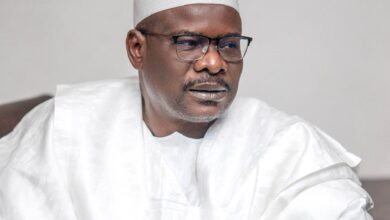
National Commissioner Mohammed Haruna told The PUNCH that the commission would not adopt the newspaper’s calculations without independently establishing the figures.
“The rules are quite clear, but INEC has to establish that those are the facts. INEC cannot act on the findings or calculations of another body, so we have to carry out our own calculations and findings and follow the rules from there,” Haruna said.
He added: “That is PUNCH; that is their own arithmetic. We haven’t done our own arithmetic, so we have to confirm those are the facts.”
That verification may prove difficult because much election spending does not necessarily pass through channels that leave an obvious financial trail.
Former Zamfara Resident Electoral Commissioner, Asmau Maikudi, said INEC had an election monitoring unit responsible for watching the spending activities of political parties and candidates. She nevertheless noted that political parties themselves were better placed to establish the precise sums they disbursed.
Maikudi also drew a distinction between legitimate campaign expenditure and inducements offered to voters.
“Money spent on vote buying cannot be part of the election expenditure, because vote-buying is illegal. Vote-buying is not allowed. Vote-buying is anti-democracy,” she said.
She listed cash, food and clothing among possible forms of inducement and called for offenders to face prosecution.
“Democracy is not a cash-and-carry issue. Democracy cannot survive under such conditions. We want our democracy to thrive,” Maikudi added.
Former REC, Prof Sam Egwu, was more sceptical about INEC’s ability to establish an exact figure from the available evidence. He questioned how investigators would calculate expenses incurred through different channels, including political advertising and alleged payments made directly to voters.
“There’s no way of verifying or establishing what was spent. It is a very difficult thing. Is it by looking at the campaign posters? Is it by looking at the money people have spent on vote buying? And how do you track it? You know, is it by tracking the cost of radio adverts? I mean, for me, it’s a wild goose chase, and it’s difficult for you to say you can vouch for, you know, the integrity of the figure that people are bandying around,” Egwu said.
His concern goes to the heart of the investigation. An election can involve thousands of small cash transactions, informal payments, and privately sourced funds, making a reconstruction of the total expenditure considerably more complex than adding up official campaign invoices.
Egwu acknowledged that political parties and candidates spent substantial sums during elections but said allegations alone could not establish that the statutory ceiling had been exceeded.
“I personally believe they spent money, but I wouldn’t know how much was spent for you to be able to determine whether they have exceeded, you know, the ceiling,” he said.
The Oyo State REC, Adeniran Tella, also pointed to the difficulty of determining actual expenditure from the field. He said the Electoral Act had prescribed spending limits, but a commissioner who was not deployed to Osun could not independently certify the amount spent there.
On vote buying, however, Tella said the position was clearer.
“So when it comes to the issue of vote buying, it’s an offence punishable under the law. And if a candidate is caught, the culprit will face the court of law,” he said.
A lawyer, Augustine Ogechukwu, welcomed the spending ceiling but questioned whether INEC would apply the law consistently to both governing and opposition parties.
“If they will be holistic and not be selective in enforcing it, it will be good,” Ogechukwu said.
Another lawyer, who requested anonymity, dismissed the alleged N100bn expenditure as unproven until an audit establishes where the money came from and how it was spent.
“Number one, it is an allegation. It has to be proven through evidence, and only a court of law can say a party has spent over N100bn; otherwise, it is beer parlour gossip,” the lawyer said.
The legal practitioner noted that some election-day cash transactions might never appear in banking records, complicating any attempt to reconstruct the full cost of the contest.
The stakes are significant. Accord candidate Ademola Adeleke won the election with 511,067 votes, defeating APC candidate Bola Oyebamiji, who secured 444,815 votes.
For INEC, however, the immediate task is not to determine whether the reported N100bn figure sounds plausible. It is to establish, through evidence, what each candidate and party actually spent, distinguish lawful campaign costs from illegal inducements, and determine whether any statutory limit was breached.
Until that exercise is completed, the N100bn remains an allegation. The eventual test will be whether INEC can turn scattered financial trails from thousands of polling units into evidence that can withstand legal scrutiny.