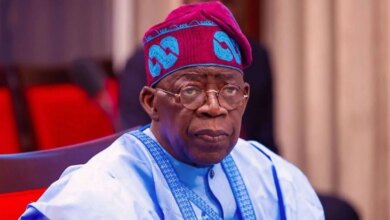
President Bola Tinubu has urged Nigerians to reject divisions based on religion and ethnicity, while APC National Chairman Nentawe Yilwatda cautioned political leaders against turning such differences into instruments for electoral advantage.
Tinubu, represented by Deputy Senate President Barau Jibrin, made the call on Tuesday at an International Conference on Security and National Unity organised by Jama’atu Izalatil Bid’ah Wa Iqamatus Sunnah in partnership with the Muslim World League.
The President said maintaining Nigeria’s unity requires continued dialogue despite differences among citizens.
Tinubu said, “The government is determined to make sure that we remain united as a country, despite our differences, whatever the differences may be. We should talk and remain in this country, and allow this country to remain a united nation.”

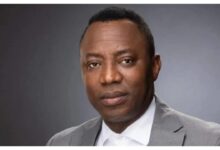
He described the conference as timely amid security challenges confronting countries across the world. He expressed confidence that its deliberations would contribute to efforts to advance peace in Nigeria, Africa and beyond.
READ RELATED NEWS UPDATES
Yilwatda, who also addressed the gathering, delivered a sharper warning to politicians, where he said the exploitation of religion and ethnicity for political gain could inflict lasting damage on the country.
Drawing from his experience as a displaced person during the Bauchi crisis, the APC chairman said violence did not distinguish between Christians and Muslims.
“When violence comes, it does not ask whether you are a Christian or a Muslim before it destroys either your home, or your humanity, or your dignity,” he said.
Yilwatda therefore advised political leaders to abandon the use of religious and ethnic sentiments as tools for securing temporary political victories.
“No political victory is worth the permanent damage inflicted on our nation,” he said.
He also charged religious leaders to turn mosques and churches into centres of peace, reconciliation, and responsible citizenship, rather than platforms for incitement.
The APC chairman called for a collective rejection of hate speech, regardless of whether it emanates from religious institutions, traditional authorities, political platforms or social media.
The Nigeria Inter-Religious Council echoed the appeal. Its Executive Secretary, Prof Cornelius Omonokhua, explained that Nigerians share a common identity as human beings regardless of their faith.
“No one is created a Christian, and no one is created a Muslim. We are created as human beings; hence what binds us together is humanity,” Omonokhua said.
He warned against weaponising religion, ethnicity, or poverty to provoke conflict and urged Christians and Muslims to uphold compassion, respect, and the sanctity of human life.
Sultan of Sokoto and NIREC Co-Chairman, Sa’ad Abubakar III, shifted attention to implementation, saying Nigeria already possesses many of the solutions required to address its problems.
“We don’t lack solutions to our problems. What we lack is implementation,” he said.
The Sultan also appealed to both faith communities to stop insulting one another; he implored Christians and Muslims to respect their differences as a condition for peaceful coexistence.
The conference featured the signing of the Abuja Declaration, which seeks to establish an alliance between Muslim and Christian leaders and develop a mechanism for preventing religious tensions from escalating into violence in Nigeria and West Africa.
Muslim World League Secretary-General Sheikh Mohammad Al-Issa, ministers, governors, religious leaders, and traditional rulers attended the event.