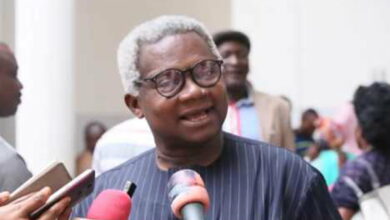
The ability of opposition parties to organise at polling units could determine how well they compete in the 2027 presidential election, FCT Minister Nyesom Wike’s aide, Lere Olayinka, said on Friday.
Olayinka made the assessment during an interview on Arise TV, pointing to Nigeria’s 176,846 polling units and the need for parties to have enough people on the ground to manage voting and canvass support.
Olayinka’s comments came as he explained why Wike believes President Bola Tinubu faces little serious opposition in the 2027 presidential contest. Olayinka said some parties lacked the state-level structures needed for a national campaign.
He said a presidential candidate could not rely only on being on the ballot. The candidate also needed people who could work at polling units on election day.


Party presence questioned in states
Olayinka cited the New Nigeria Peoples Party as an example of what he sees as a structural problem. He said the party did not have governorship candidates in 15 of the 28 states where governorship elections would be held in 2027.
“How do you win election when you don’t have people on ground to canvass vote for you, to manage election for you?” he questioned.
He made a similar point about the African Democratic Congress, saying it did not have governorship candidates in nine of the 28 states.
Such gaps, for Olayinka, raise questions about how parties would build the local structures needed to compete across the country.
READ RELATED NEWS
Wike hints at ‘largest rainbow coalition’ to back Tinubu in 2027
Wike explains why he rejected Tinubu’s 2027 campaign DG role
Opposition parties face fresh test as PDP skips Abuja unity summit
He said Nigeria has 176,846 polling units and that a party seeking to make a good impression on election day would need at least five people at each unit.
“In Nigeria today, there are 176,846 polling units. To make good impression on election day in election in Nigeria, you need at least five people to manage each polling unit for you, at least,” he affirmed.
That figure gives an indication of the scale of organisation Olayinka believes presidential campaigns require. His point was that candidates need people who can work at polling units across the country, not only prominent politicians or campaign personalities.
The 176,846 polling units are spread across Nigeria, making election-day organisation a major task for parties seeking votes nationwide.
Nineteen candidates and Tinubu’s prospects
Olayinka also questioned whether all the 19 presidential candidates he cited were entering the 2027 contest with a realistic expectation of victory.
He said some candidates contest elections mainly to “register their presence”, meaning their participation does not necessarily indicate that they expect to win.
“For instance, in this 2027 election, we have 19 presidential candidates. Can we say, honestly, that all the 19 are contesting with the mindset of winning? The answer is no,” he said.
He cited African Action Congress candidate Omoyele Sowore’s 14,600 votes in the 2023 presidential election and questioned how he could win the 2027 poll.
Olayinka also referred to the party associated with Peter Obi, questioning its prospects in the presidential race on the basis of its electoral organisation.
His comments also provided the basis for Wike’s assessment that Tinubu could have an easy path to victory in 2027. Olayinka said the minister’s position was based on what he sees as the weakness of the opposition parties.
“And that’s why the Minister has been saying consistently that this election of 2027 will be the easiest for the President to win, because there’s no opposition, nobody is contesting against him to win. Others are contesting to make impression,” Olayinka said.
Olayinka had also said Wike declared his support for Tinubu before the PDP presented its presidential candidate, Professor Sandy Onor. He said the minister had continued to make his preference public.
For More News Details, Visit New Daily Prime.