The Federal Government of Nigeria has been challenged to account for how Nigeria’s ₦166.79 trillion public debt was accumulated, serviced and spent, after new figures showed the debt stock as of 30 June, 2026.
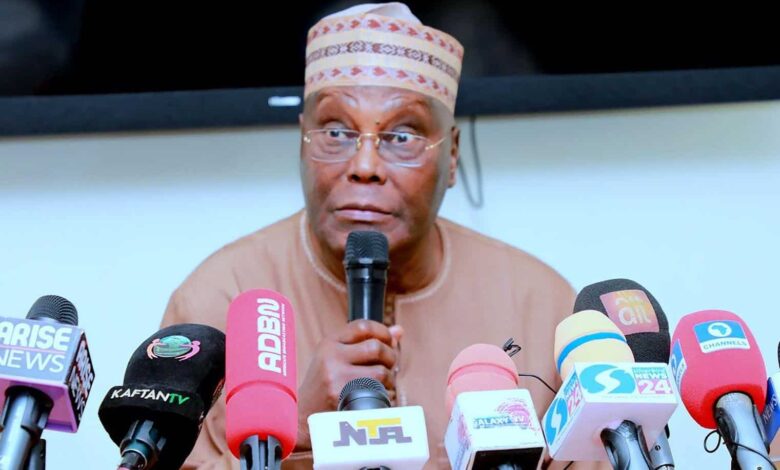
Former Vice President Atiku Abubakar said the government must separate genuinely new loans from old obligations and increases in the naira value of foreign debt caused by exchange-rate changes.
He also wants Nigerians to see what has been repaid, what is still outstanding and what projects or public needs received money from the borrowing.
Atiku made the demands through Phrank Shaibu, Director of Strategic Communications of the African Democratic Congress (ADC) Presidential Campaign Council.

Three questions on the debt
The Debt Management Office (DMO) reported Nigeria’s total public debt at ₦166.79 trillion at the end of June.
Atiku questioned the continued borrowing despite increased government revenue, saying the administration should explain why more borrowing was needed.
“A government that says more money is coming in must explain why it keeps borrowing and why the people paying for its policies cannot see the promised gains,” he said.
He asked President Bola Tinubu to provide a clear record of the debt inherited by the administration, loans contracted since it took office and repayments made.
READ RELATED NEWS
Data reveals banks borrowed N131.42 trillion from CBN in 2024 to meet business obligations
Atiku: N24.7tn borrowing is choking Nigeria’s businesses
Tinubu, Atiku clash over who should bear cost of economic reforms
“He should show what has been repaid and what remains outstanding. Accounting explanations must not become a hiding place for fresh borrowing,” Atiku said.
His demand also covers Nigeria’s Treasury Bills, which stood at ₦19.48 trillion as of 30 June 2026.
Atiku wants the government to show which Treasury Bills matured, which were redeemed, which were rolled over and which represented genuinely new borrowing.
The $22.5m payment
Atiku also questioned a reported $22.5 million charge connected to a First Abu Dhabi Bank Total Return Swap.
He asked the government to disclose the agreement, its purpose, the original facility, the amount drawn and the outstanding obligations.
The DMO’s second-quarter 2026 external debt-service report provides the official breakdown of Nigeria’s external debt payments for the period.
Atiku said the government should explain transactions listed under “other charges” and provide enough information for Nigerians to understand the payments.
He also wants the administration to show how its borrowing fits into its fiscal framework and what benefits came from expenditure financed through debt.
Debt and the cost of living
The debt questions come alongside Atiku’s criticism of the economic hardship faced by households.
He cited the removal of the petrol subsidy, the naira’s sharp depreciation and higher electricity and transport costs. He said these changes had placed additional pressure on Nigerians even as government revenue increased.
“Nigerians were asked to sacrifice. Fuel subsidy was removed. The naira was allowed to depreciate sharply. Electricity and transportation costs rose. Government revenues increased, yet borrowing continued,” he said.
“After all of this, the Nigerian people are entitled to ask one simple question: what exactly did our sacrifice buy?”
The International Monetary Fund (IMF), in its June 2026 Article IV assessment, said Nigeria’s reforms had improved macroeconomic outcomes but noted difficult conditions for many Nigerians.
The IMF estimated poverty at 63 per cent under the national poverty line and said about 27 million Nigerians had faced food insecurity in late 2025.
It also warned that higher fuel, food and fertiliser prices could worsen poverty and food insecurity.
What you should know
Atiku’s criticism is not limited to the size of the debt. His demands focus on how the debt figure was formed, how much has been repaid and what Nigerians received from the borrowed funds.
He also questioned the cost of debt servicing, saying money used for repayments cannot be spent on other public needs.
“Money committed to debt service is money unavailable for competing public needs. Nigerians were told to endure the pain because there would be gains. Where are those gains?” he asked.
Atiku also challenged the government to show how improvements in revenue, foreign reserves and other economic indicators have affected household purchasing power.
“The true test of economic policy is whether Nigerians can afford food, transportation, housing, education, healthcare and electricity,” he said.
He said Nigerians had been asked to accept economic pain on the promise of future gains.
“Nigerians were promised that today’s pain would produce tomorrow’s gain. After more than three years, they are entitled to ask: gain for whom?” he said.
Atiku wants Tinubu and the All Progressives Congress (APC) to account for the borrowing, explain the questioned payments and apologise over what he called the hardship caused by the administration’s policies.
For More News Details, Visit New Daily Prime.