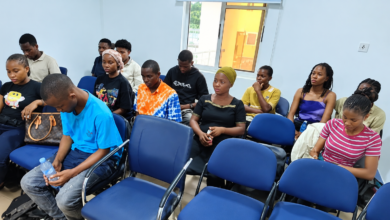
Democracy at Risk: Situation Room Raises Alarm Over 2027 Polls as 77% of Nigerians Reject Current Democratic Performance


The Nigeria Civil Society Situation Room has raised the alarm over growing threats to Nigeria’s democratic process ahead of the 2027 General Elections, warning that voter intimidation, electoral violence, inflammatory rhetoric, abuse of public office and impunity could undermine the credibility of the polls.
The warning was contained in a statement issued in Abuja on Tuesday to mark the International Day of Democracy.
The Situation Room said the integrity of the 2027 elections would not be determined solely by events on election day, but by the political atmosphere, conduct of political actors, institutional preparedness and the safeguards established in the months preceding the polls.
The group cited recent public opinion data from Afrobarometer, which showed that 77 per cent of Nigerians are dissatisfied with the way democracy is functioning in the country.
It also noted that public trust in key democratic institutions remains low, with only 23 per cent of Nigerians expressing trust in the Independent National Electoral Commission (INEC).
Despite the widespread dissatisfaction, the Situation Room said Nigerians had not abandoned democracy, noting that 64 per cent still preferred democratic government to any other form of government.
“Nigeria does not face a crisis of citizens’ desire for democracy as much as a crisis of democratic delivery, institutional trust and accountability,” the group said.
The Situation Room said the legitimacy gap was further reflected in international governance assessments.
It cited the V-Dem Institute’s classification of Nigeria as an Electoral Autocracy and the 2024 Mo Ibrahim Index of African Governance, which ranked Nigeria 33rd out of 54 African countries, down from 30th in the previous ranking.
According to the group, the findings point to a widening disconnect between Nigerians’ expectations of democracy and their lived experience.
It stressed that democracy goes beyond periodic elections, arguing that it also depends on the rule of law, protection of fundamental rights, accountable institutions and an environment where citizens can participate in politics without fear or coercion.
The Situation Room expressed particular concern over what it described as the deteriorating political environment, including hostile political rhetoric and the alleged use of threats and violence to suppress opposition.
It referenced the recently concluded Osun State governorship election, saying developments surrounding the poll raised concerns about intimidation involving high-ranking public officeholders.
The group identified six major areas requiring urgent attention.
First is what it described as institutional failure and a culture of impunity, particularly where allegations against influential individuals result in delayed or inconclusive investigations.
“A democracy cannot survive where the powerful are permitted to violate the rules with impunity,” the Situation Room warned, calling for impartial and timely investigations.
It also identified voter intimidation and inflammatory rhetoric, as well as forced disenfranchisement and threats of displacement, as serious dangers to democratic participation.
The group condemned reports of directives allegedly threatening citizens to vote for the All Progressives Congress (APC) or leave their communities.
It maintained that the constitutional rights to vote, reside and move freely within Nigeria should not be made conditional on political allegiance.
Other concerns identified by the Situation Room include the weaponisation of public office, particularly alleged threats to remove elected local government officials unless they deliver electoral victories; the use of ethnicity and religion for political mobilisation; and political thuggery, obstruction of candidates and voter suppression.
The group insisted that every candidate must be allowed to campaign freely, while security agencies must provide equal protection to all political actors.
To strengthen the electoral process ahead of 2027, the Situation Room called for five urgent measures.
It demanded impartial enforcement of the Electoral Act 2026 and prosecution of electoral offences; neutrality of public institutions and government resources; protection of fundamental rights and civic freedoms; accountability for political parties and leaders who promote violence or hate speech; and stronger institutional accountability and electoral preparedness.
The group further urged INEC, the Nigeria Police Force, the Department of State Services (DSS) and the judiciary to demonstrate measurable preparedness through transparent planning, effective reporting mechanisms and appropriate sanctions for misconduct.
Political parties, it said, must commit themselves to peaceful and issue-based campaigns, internal democracy and respect for credible electoral outcomes.
The Situation Room said it would intensify its monitoring of electoral preparedness, political party conduct, campaign financing, electoral violence, misinformation and the independence of institutions as the country moves towards 2027.
It warned against another election cycle in which voting takes place without citizens having genuine confidence in the democratic process.
“The 2027 General Elections must not become another exercise in the ritual conduct of elections without the substance of democratic choice. Nigeria deserves elections that citizens can trust,” it said.
The group concluded with a warning and a call to action: “The road to 2027 starts now.”