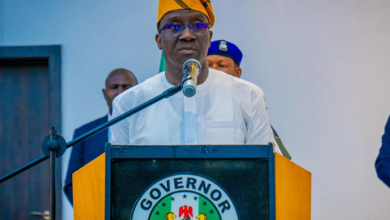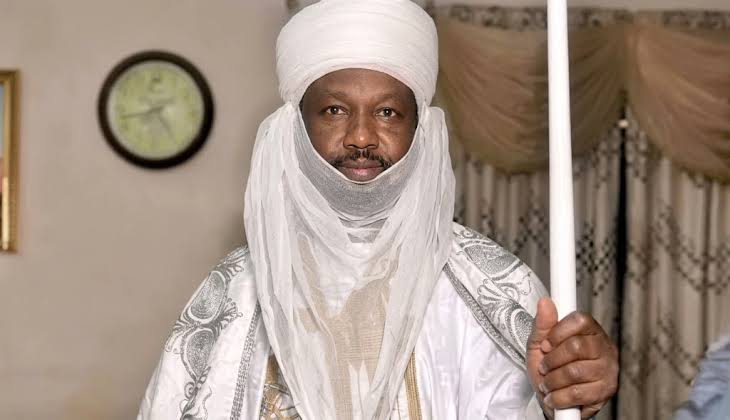
In the late evening of Sunday, 6 September 2026, the Jigawa State Government, through the Secretary to the State Government (SSG), Malam Bala Ibrahim, announced the emergence of Dr Lawal Ahmad Muhammad Sani as the 17th Emir of Gumel.
The new Emir ascended the throne amid mourning, an intense succession contest and widespread uncertainty over the integrity, unity and survival of the emirate as a single entity following the selection process. Gumel Emirate is one of the oldest emirates in Jigawa State. Founded around 1750 AD, it traces its lineage to the Mangawa/Kanuri-speaking people.


The emirate shares boundaries with the Republic of Niger, Ringim Emirate and Hadejia Emirate. It is endowed with vast arable land and a thriving livestock sector, while its people cultivate sesame, hibiscus, beans and millet.
The 16th Emir of Gumel, the late Dr Ahmad Muhammad Sani, died in Cairo on 3 September 2026, after spending 46 years on the throne. His death plunged the entire emirate into deep mourning, reflecting the love and respect the people had for the royal father and custodian of their rich culture and traditions.
Hundreds of thousands of people gathered for the late Emir’s funeral prayer, held the following Friday, to demonstrate their profound affection and respect for him. Many residents were visibly moved to tears by the news of his death.
The funeral was attended by a Federal Government delegation led by Vice President Kashim Shettima; Kano State Governor, Engr. Abba Kabir Yusuf, Jigawa State Governor and chief mourner, Malam Umar Namadi, his deputy, Engr. Aminu Usman, former Jigawa State governor, Muhammad Badaru Abubakar, his predecessor, Alhaji Sule Lamido, the Speaker of the Jigawa State House of Assembly, traditional rulers from within and outside the state, and several other dignitaries.
However, barely had the late Emir been buried than the struggle for succession began. Within hours, the process generated tension, concern and uncertainty within the royal family and across the emirate.
Six members of the royal family initially submitted letters of interest to the Committee of Kingmakers, chaired by Alhaji Adamu Muhammad Nasoro, the Wazirin Gumel. Three of the contenders later withdrew from the race, leaving three candidates to contest the throne. The contest subsequently became intense, with lobbying, consultations, advocacy and the deployment of various channels to influence the selection of preferred candidates.
Individuals from within and outside the emirate were also approached to support the contenders’ aspirations. As the succession struggle intensified, public mourning for the late Emir gradually gave way to political and traditional consultations.
The reception of visitors and sympathisers, who continued to troop into the emirate to commiserate with the royal family, the people, and the Jigawa State Government, was also affected.
For the average resident of Gumel, the questions were many: Who would emerge as the 17th Emir? Would the eventual successor possess the qualities required to fill the shoes of the longest-serving Emir? Could he preserve the enduring legacy left by his predecessor? And would he have the wisdom and strength to confront the contemporary challenges associated with the traditional institution and its constitutional role? Among the Gumel people, both within and outside the emirate, there was also concern about the possible consequences of the selection.
Would the emirate remain united after the contest, or would the succession process trigger a prolonged crisis that could destabilise the palace and undermine the legacy established by its founding fathers? The three contenders who remained in the race until the conclusion were two sons of the late 16th Emir: Dr Lawal Ahmad Muhammad Sani, the Chiroma Gumel and District Head of Bosuwa; and his younger brother, Alhaji Ibrahim Ahmad Muhammad Sani, the Tafidan Gumel and former Executive Secretary of the Jigawa State Board of Internal Revenue.
The third contender was Alhaji Sani Alhass, the Sarkin Dawaki and District Head of Maigarari, who is also a former Executive Secretary of the Jigawa State Pilgrim Welfare Board. All three candidates demonstrated considerable connections, experience and political and traditional acumen throughout the contest. According to the SSG, after due consideration of the emirate law, consultations and recommendations from the Committee of Kingmakers and the Jigawa State Council of Chiefs, Governor Umar Namadi approved the selection of Dr Lawal Ahmad Muhammad Sani as the 17th Emir of Gumel from the three names forwarded to him. The announcement and presentation of the letter of appointment to the new Emir opened a new chapter in the ancient city of Gumel, as jubilation, cheers and the sounds of traditional drums filled the city.
Dr Lawal was formally enthroned and turbaned at the palace on Monday, 7 September 2026, after all the traditional processes had been observed. Following the turbaning ceremony, the sounds of the kakaki and other traditional drums reverberated around the palace, while celebrations continued as royal family members, traditional rulers, dignitaries and residents offered congratulations and goodwill messages to the new Emir.
In keeping with tradition, Dr Lawal ascended the throne and sat majestically as the emirate chiefs and members of the council lined up to pay homage to him one after another.
The two other leading contenders, Alhaji Ibrahim Ahmad Muhammad Sani, the Tafidan Gumel, and Alhaji Sani Alhass, the Sarkin Dawaki, were among those who paid homage and pledged their allegiance to the new Emir.