Seven governorship candidates of the African Democratic Congress (ADC) have agreed to run separate state governments under a common North-West agenda if elected in 2027, with shared plans for security, trade, infrastructure, education and healthcare.
The agreement was reached on Wednesday at the Yar’adua Centre in Abuja when the candidates signed the Northwest ADC Governorship Candidates’ Compact 2027–2031. The pact keeps each state’s constitutional powers intact but provides for joint action on problems that cross state boundaries.
The candidates are from Jigawa, Kaduna, Kano, Katsina, Kebbi, Sokoto and Zamfara. Their agreement includes a N110,000 minimum wage for workers in all seven states and one specialist hospital in each of the region’s 21 senatorial districts.
The regional approach is based on their claim that many problems facing the North-West cannot be handled by individual states acting alone.


Seven states, one regional programme
The candidates said each governor would continue to control the state budget, procurement, civil service, education, healthcare, agriculture, land administration and infrastructure.
They would, however, work together on security, trade, data sharing and infrastructure where the issues affect more than one state.
The pact proposes a Northwest Regional Security Coordination Centre, alongside technology-based surveillance and rapid-response networks in the 21 senatorial districts.
READ RELATED NEWS:
No political ambition worth splitting ADC, Kebbi apart – Malami
Kebbi Govt fires Malami over “fake pledges” as campaign begins
ADC shrugs off coalition setback, backs Atiku for 2027 victory
Drones would also be deployed as part of the proposed security system.
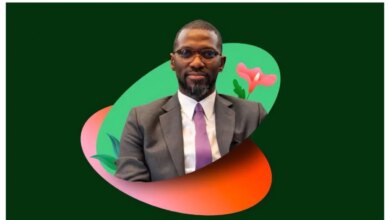
Former Attorney General of the Federation and Kebbi governorship candidate, Abubakar Malami, SAN, read the communiqué after the signing.
He said the candidates had adopted the agreement as a regional covenant focused on security, development and shared prosperity.
The candidates said more than 16,000 lives had been lost to insecurity between June 2023 and August 2026. They also recorded more than 1,583 kidnapping incidents since January 2023, with more than 10,000 people taken from their homes and farms.
They said tens of thousands of households had been displaced and more than 533,000 hectares of farmland in Zamfara and Katsina had been abandoned.
The candidates also pointed to education, saying the North-West accounts for 45 per cent of Nigeria’s out-of-school children.
They said insecurity had affected farming and contributed to hunger and the removal of children from classrooms.
Wage, food and public services
The candidates placed workers’ pay among their immediate promises, pledging to implement a N110,000 minimum wage across the seven states.
They also backed Atiku Abubakar’s promise to restore the fuel subsidy, blaming its removal by the APC-led Federal Government for worsening hardship in the region.
The candidates said the seven states and theirik local governments received more than N8.33 trillion in federal allocations between June 2023 and August 2026.
They claimed the money had not translated into accessible transport, affordable food and healthcare, functioning schools and improved living conditions.
They accused APC-led administrations in the region of massive looting and cited government houses, expensive cars and private jet travel as examples of what they considered excessive spending.
The candidates promised a different approach if elected.
Their agricultural plans include protected farming corridors, formal livestock production, agro-processing, a regional grain reserve and irrigation rehabilitation.
For education, they promised an emergency programme, full access to Universal Basic Education Commission funding, integration of Almajiri and Tsangaya children into formal schools and support for girls’ school attendance.
The healthcare plan includes full access to the Basic Health Care Provision Fund, rehabilitation of primary healthcare centres, more midwives, telemedicine and community health insurance.
Each senatorial district would have a specialist hospital under the agreement.
The pact also covers roads, rail, independent power generation, solar power for public facilities, water systems, digital infrastructure, border facilities and logistics.
Malami signed alongside Manir Mohammad Dan’iya of Sokoto, Sabo Mohammed Nakudu of Jigawa and Bilyaminu Yusuf Shinkafi of Zamfara.
For More News Details, Visit New Daily Prime.