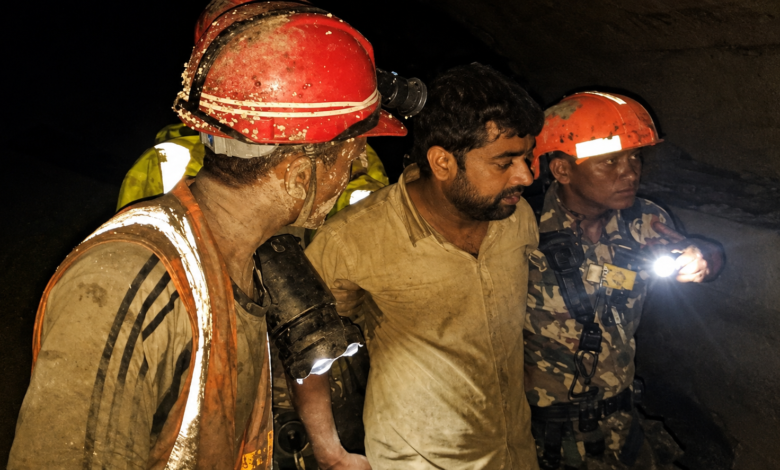
Two workers have been rescued alive from a hydropower tunnel in Nepal nine days after devastating floods and landslides swept through the Trishuli River valley, killing more than 1,200 people. The breakthrough has raised hopes that more people trapped underground could still be found alive as rescue teams continue searching damaged hydropower sites.
The men, identified by Nepalese authorities as Sanjay Sah, a mechanical foreman, and Kabir Maharjan, a mechanical supervisor, were pulled from the Upper Trishuli 3A Hydropower Station on Friday, 4 September. Both were taken for medical treatment in Kathmandu after spending more than a week underground.
The rescue came after teams heard voices from inside the tunnel and intensified efforts to reach those trapped. Engineers had been pumping air into underground passages while rescuers used drilling equipment, excavators and other heavy machinery to cut through mud, rocks and debris.
Rescue raises hopes for more survivors
The two workers had been inside the tunnel since 26 August, when a huge surge of water, ice, rock and mud swept through the Himalayan valley.


Officials and rescue workers believe the disaster followed the collapse of a glacier in the upper reaches of the Trishuli River. The flooding destroyed homes, roads and schools and caused extensive damage to hydropower infrastructure close to Nepal’s border with Tibet.
Authorities believe at least 900 people may have become trapped in tunnels connected to six hydropower projects along the river. More than 4,200 people were still reported missing across Nepal following the wider disaster, while thousands had been displaced.
The rescue teams reached Sah and Maharjan deep inside the Upper Trishuli 3A tunnel after days of clearing blocked access routes.
Reports said teams drilled an opening into the tunnel, supplied oxygen and worked through large amounts of debris. Some access points were reportedly blocked by rocks large enough to prevent rescuers from progressing without specialist equipment.
The operation has involved the Nepal Army, police and specialist teams, with international assistance also supporting the wider search effort.
Maharjan’s wife described the rescue as giving her husband “a second life”, saying the family had spent days believing he was still alive underground.
Sah later told rescuers that he had been working in the control room when the flooding reached the tunnel. He said he had tried to help other workers escape before becoming trapped himself.
More workers feared trapped underground
The rescue does not mean the emergency is over.
Search teams are continuing operations at the Upper Trishuli 3A site and other hydropower facilities along the river. Officials have said air pockets and dry sections inside some tunnels could have allowed other workers to survive for several days.
Before Friday’s breakthrough, rescuers had already reported hearing voices underground, strengthening hopes that additional people were alive.
The scale of the disaster has also renewed concerns about the vulnerability of Himalayan communities and infrastructure to extreme weather and glacier-related flooding.
New Daily Prime has previously reported on how flooding and environmental pressures can expose weaknesses in development planning. Indonesia, for example, announced restrictions on development on agricultural land after deadly floods raised concerns about construction, drainage and disaster resilience.
Indonesia moves to restrict development after deadly floods
What readers should know
The rescue of Sah and Maharjan is a significant breakthrough, but hundreds of people connected to hydropower projects and thousands across the wider disaster zone were still reported missing. Search operations remain active, and casualty and missing-person figures may change as authorities reach previously inaccessible areas. The most important development is that two workers survived underground for nine days, giving rescuers renewed hope that others may still be alive.
Related news
Indonesia to ban new hotels and restaurants on farmland after deadly floods
Nigeria on brink of a landslide disaster
Volcanic eruption grounds Bali flights as Indonesia issues highest alert
Read about Indonesia’s volcanic emergency response
I could not find an existing New Daily Prime article covering this exact 4 September Nepal tunnel rescue, so I have not invented an internal source URL. Once the story is published on New Daily Prime, its final URL can be added as the original NDP article link.