Nigeria has begun early preparations for the 2027 Hajj airlift as a major change in Saudi Arabia’s organisation of the pilgrimage introduces a new role for private tour operators.
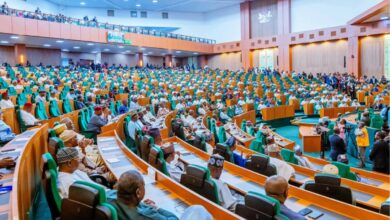
The Nigerian Civil Aviation Authority (NCAA) convened aviation and Hajj stakeholders in Abuja to examine lessons from the 2026 operation and coordinate arrangements for next year’s movement of Nigerian pilgrims to Saudi Arabia.
The meeting brought together the National Hajj Commission of Nigeria (NAHCON), Nigerian Airspace Management Agency (NAMA), Nigerian Meteorological Agency (NiMet) and participating airlines.
NCAA Director-General, Chris Najomo, represented by the Director of Aerodrome and Airspace Standards, Ahmad Abba, said early coordination would help address operational gaps before the 2027 pilgrimage.


The meeting focused particularly on Saudi Arabia’s proposed restructuring of Hajj operations, under which as much as 98 per cent of pilgrims could eventually be handled through tour operators.
But that figure requires context.
NAHCON disclosed earlier this month that Nigeria had secured a three-year transition period from Saudi authorities. Under the arrangement, private business-to-business operators will handle 30 per cent of Nigeria’s Hajj participation in 2027, rather than the full 98 per cent initially proposed. The transition is linked to Saudi Arabia’s drive to increase digitalisation and private-sector participation in Hajj administration.
Nigeria’s 2027 allocation has also been fixed at 50,000 pilgrims after Saudi Arabia rejected the country’s request for additional slots. The quota consists of 35,000 places for states and the Federal Capital Territory, while licensed private tour operators have 15,000 slots.
READ RELATED NEWS UPDATES
Saudi Arabia keeps Nigeria’s 2027 Hajj quota at 50,000
Court approves Bello’s travel to Makkah for lesser hajj
NAHCON clears five airlines for 2027 Hajj airlift
This means the policy change is not merely an aviation issue. It could affect who organises pilgrims, how services are packaged, how airlines receive passenger allocations and how responsibilities are shared between government agencies and commercial operators.
The aviation side is already taking shape. NAHCON approved five carriers for the 2027 operation: Air Peace, Flynas, Max Air, Saudi Air and UMZA Aviation Services. The commission said the airlines must still execute airlift agreements and satisfy NCAA and Saudi General Authority of Civil Aviation requirements.
Passenger allocations and flight schedules are expected to be developed with state pilgrims’ welfare boards and the selected airlines. The carriers must also comply with requirements involving pilgrims’ Nusuk-Masar records, safety standards and baggage allowances.
The need for early planning is evident from the scale of the operation. During the 2026 Hajj, Nigeria received a quota of 50,000 pilgrims, with about 39,000 government-quota pilgrims airlifted to Saudi Arabia. NAHCON recorded 98 outbound flights within 18 days, averaging about five flights daily.
The return journey also exposed the importance of airline scheduling. NAHCON reported that 17,347 pilgrims had been brought back to Nigeria by June 14, with some states yet to commence their return flights at that stage. The commission said return schedules depended on the slots secured by designated airlines and had a planned 19-day operational window.
Against that background, the NCAA’s early engagement carries a practical purpose. Weather forecasting, airspace management, airport operations, airline capacity and pilgrim coordination must fit into one timetable.
The 2027 exercise will therefore test more than the airlines’ ability to move passengers. It will also test how smoothly Nigeria adapts to a Hajj system gradually shifting from government-led arrangements towards a model in which private operators play a larger commercial role.
With the first stage of that transition already scheduled for 2027, the decisions taken before the first flight will matter almost as much as the flight itself.