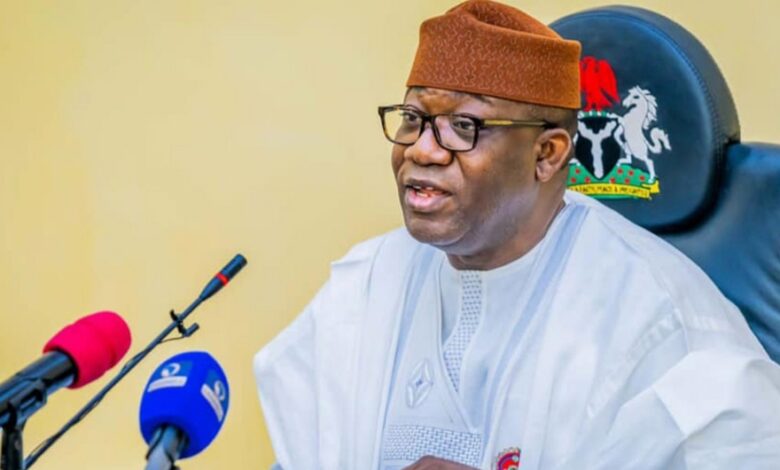
Former Ekiti State Governor Kayode Fayemi has called on the Federal Government to turn Nigeria’s medical brain drain into a source of investment for the country’s struggling health system, proposing better working conditions at home and agreements requiring countries that recruit Nigerian professionals to help strengthen the institutions that train them.
Fayemi presented the proposal on Thursday while delivering the maiden convocation lecture of the Federal University of Health Sciences, Ila-Orangun (FUHSI), in Osun State. His lecture was titled “Rethinking 21st Century Specialised Medical University in the Nigerian Context: Are the Challenges Surmountable?”
He said poor salaries, inadequate hospital equipment, limited career progression and insufficient postgraduate training opportunities were pushing doctors and other health professionals to seek employment abroad.
Rather than relying on measures that restrict their movement, Fayemi said Nigeria should make its healthcare system attractive enough to retain skilled workers while creating channels for those abroad to contribute to local medical services.


His central proposal is to make countries benefiting from Nigeria’s medical workforce contribute to the cost of producing and replacing the professionals they recruit.
Fayemi called for bilateral agreements with destination countries to support medical training, improve health institutions and expand the supply of qualified personnel. Such arrangements, if negotiated and implemented, could help Nigeria recover part of the public investment it makes in educating health workers who later serve foreign health systems.
However, the proposal would require detailed negotiations. The countries involved would need to agree on how contributions would be calculated, which institutions would receive funding and how the money would be monitored. Fayemi did not identify specific countries, propose payment rates or outline a funding mechanism in the report.
RELATED NEWS:
He also called for higher remuneration, functional medical equipment, reliable electricity and expanded residency and fellowship positions. Health workers posted to underserved communities, he said, should receive incentives such as housing support and access to postgraduate training.
These measures address different reasons professionals leave. Better pay may improve immediate financial security, while functioning hospitals, specialist training and credible career paths can influence whether doctors believe they can develop professionally in Nigeria.
Fayemi called for federal and state governments, teaching hospitals, regulatory agencies and university governing councils to coordinate efforts to improve medical education, research and healthcare delivery. He also highlighted predictable funding, institutional autonomy and accountability as requirements for specialised medical universities.
At the same event, FUHSI Vice-Chancellor, Prof. Akeem Olawale Lasisi, disclosed that the university had grown to 3,332 students and completed more than 20 infrastructure projects within five years of its establishment in 2021.
Lasisi said the institution had graduated its first set of students in four-year programmes without academic interruption, despite funding and manpower constraints.
The university’s growth highlights the importance of expanding medical education, but producing more graduates alone will not resolve the workforce problem if hospitals cannot retain them or provide adequate facilities for practice.
Fayemi’s proposal therefore places two responsibilities before policymakers: improve the conditions that drive health professionals abroad and negotiate practical arrangements that allow Nigeria to benefit from the expertise it has helped finance, even when those professionals work overseas.
For More Details, Visit New Daily Prime News