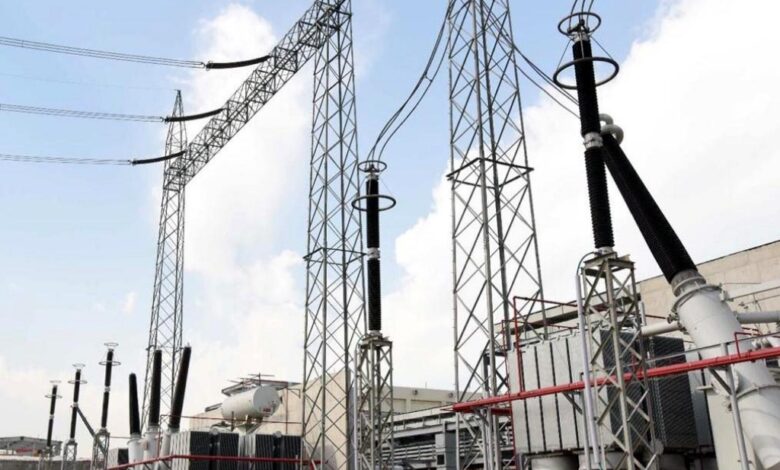
Nigeria’s government is prioritising the Lagos-Ogun economic corridor, which accounts for about half of the country’s electricity demand, as it confronts a ₦3.3 trillion power-sector debt burden, heavy distribution losses and infrastructure deficits threatening reliable supply.
Minister of Power Joseph Tegbe has announced the strategy at the 13th Nigeria Energy Exhibition and Leadership Summit where he named Lagos-Ogun, Enugu-Onitsha-Port Harcourt and Abuja-Kaduna-Kano as priority corridors for targeted electricity infrastructure upgrades.
The plan is designed to concentrate investment in commercial and industrial centres where improved power supply could deliver substantial economic returns. For businesses in Lagos and Ogun, the critical question is whether the proposed projects will reduce outages, cut operating costs and lessen dependence on expensive generators.
Tegbe said the Federal Government was considering additional substations equipped with transformers rated between 200 megavolt-amperes (MVA) and 300MVA to meet rising demand along the Lagos-Ogun axis.


“The corridor approach is important because we can’t address a 50-year problem across a nation as big as Nigeria overnight,” he said.
RELATED NEWS UPDATES:
Debt and distribution losses threaten progress
Tegbe disclosed that outstanding liabilities in the power sector stood at ₦3.3 trillion, of which ₦1.23 trillion had been paid down. The remaining debt underscores the financial strain facing an industry that needs sustained investment in generation, transmission and distribution.
He also put aggregate technical, commercial and collection losses in the distribution segment at between 30 and 40 per cent. Such losses can arise from inefficient networks, electricity theft, inadequate metering and unpaid bills, weakening the revenue available to maintain and upgrade infrastructure.
The consequences reach beyond electricity companies. Unreliable supply forces manufacturers and small businesses to spend more on alternative power, raising production costs and potentially pushing up prices for consumers. Households also bear the cost of keeping generators running.
The minister identified inadequate gas supplies to power plants, pipeline vandalism, overstretched transmission infrastructure and distribution losses as major barriers to dependable electricity.
Nationwide audit to guide investment
The government has begun a technical audit of power infrastructure nationwide to assess existing assets and identify urgent generation and transmission gaps. Tegbe said the exercise began about four weeks before the summit and was expected to conclude within weeks.
The findings are expected to guide spending according to documented needs rather than assumptions. However, the minister did not disclose the audit’s budget or the total funding earmarked for the proposed corridor upgrades.
Tegbe also revealed that he had held a four-hour meeting with the Lagos State governor and sector stakeholders, including the Transmission Company of Nigeria and the Nigerian Independent System Operator, to examine infrastructure gaps and discuss the ambition of achieving round-the-clock electricity in Lagos. Recommendations from the meeting are expected to inform further discussions with President Bola Tinubu.
The government’s three-phase plan covers grid stabilisation from June 2026 to February 2027, expansion from March 2027 through 2028, and sector transformation from 2028 onwards.
The immediate test is implementation. Without published funding commitments, project deadlines and measurable supply targets, the corridor strategy offers a framework rather than a guarantee of improved electricity.
For businesses and households, success will be measured not by the number of announced projects but by fewer outages, lower energy costs and more dependable power.
For More News Updates, Visit New Daily Prime News