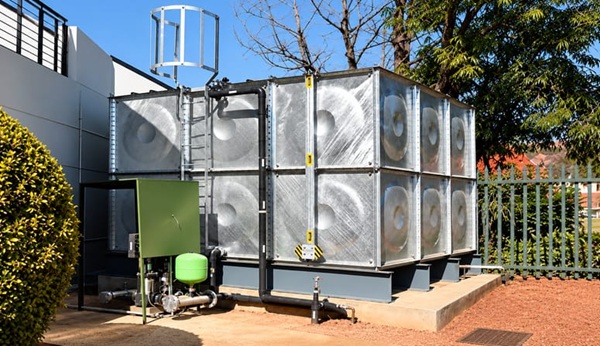
Nigeria’s water problem has now become an urban planning problem. As urban areas expand, the challenge is to deliver an efficient water supply and distribution system to crowded neighborhoods.
Existing systems are facing different pressures from urban growth in Lagos and Abuja, Kano, Port Harcourt and Ibadan. The World Bank has said service delivery in Nigerian cities is lagging urbanization, with access to public water varying greatly from city to city.
Water storage, once considered a component of backup infrastructure, is now emerging as a strategic part of urban sustainability.


Urbanization changes the water equation
According to Abeco Tanks, there are many reasons why demand is increasing, and one of them is a growing population. Reliable water supplies are necessary for all new housing developments as well as factories and logistics facilities.
Infrastructure scaled for smaller populations becomes vulnerable when demand outstrips the ability to treat and distribute water. Public water networks are essential and need to grow with development, and recently approved water supply upgrades show how pipes, storage tanks and distribution points can be planned together. That includes evaluating the storage capacity between the supply point and end-user.
Water storage provides breathing space
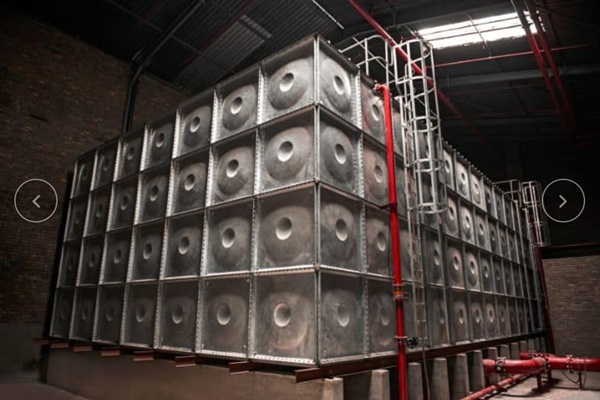
Water storage tanks are typically associated with unreliable or emergency municipal services in Nigeria. Access to safe water during an interruption is important, but only a fraction of their potential value.
A strategic location for storage provides the breathing space between supply and demand. A storage tank can hold water and release it when demand increases or distribution is interrupted.
This buffer can ease business and industry operations during pump failures and short-term interruptions. For housing developments, it maintains key services over a large site. At the municipal or district level, storage can help make distribution systems more flexible but cannot replace the need for longstanding public infrastructure.
Solutions for different cities
There is no single model of water storage infrastructure in Nigeria. Lagos has a very high population density and high commercial demand that puts a lot of stress on the existing public water infrastructure.
Abuja continues to grow with new residential and commercial development. Including water storage at the planning stage is more efficient than retrofitting systems after the buildings are occupied.
Kano is a major commercial center in the north but operates in a different climate and water-security context. Commercial water use patterns and seasonal conditions influence the storage location and the required capacity of tanks here.
The fast-growing urban environment and industrial activity of Port Harcourt creates a different set of requirements. Storage systems should be designed to support high-volume operations and to survive local environmental conditions.
Each project therefore needs to consider intended use and the reliability of its primary supply.
From a single tank to an integrated infrastructure
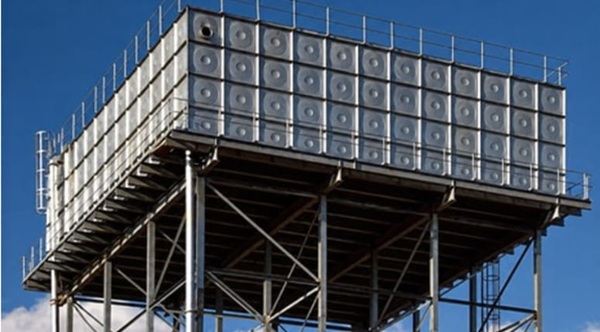
The move to sustainable water infrastructure in Nigeria also changes the tank specification. Developers can design storage as part of a larger network rather than just adding an isolated tank when supply problems arise.
Key decisions are total capacity, both ground level and elevated storage and whether modular or sectional construction are the best options for the site. Water quality protection and expected service life are also considered.
Engineered steel storage can be a great resource when developments require long-lasting capacity, or when tanks need to be built in smaller footprints. But the correct material and configuration should always be based on a proper assessment of the water, site and operational requirements.
Designing for Nigeria’s future cities
UN-Habitat says urban water supply systems are under pressure from rapid urbanization and climate change. To this end, cities need to consider growing public networks that work alongside decentralized water storage solutions. A more pragmatic future will likely include stronger distribution infrastructure backed up by appropriately designed storage capacity. The most sustainable Nigerian cities will be those that view water storage as a core aspect of urban growth.