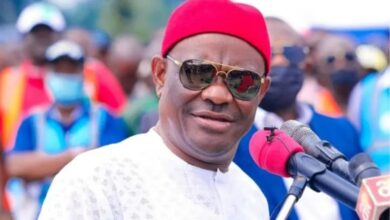
The presidential candidate of the Nigeria Democratic Party, Peter Obi, has officially commenced his campaign ahead of the 2027 presidential election, challenging other contenders to appear before Nigerians, defend their records and answer questions about their capacity to lead the country.
Obi spoke on Friday at a press conference at his residence in Onitsha, Anambra State, to mark the commencement of the 2027 presidential and National Assembly campaigns.
The former Anambra State governor said Nigerians deserved to hear directly from those seeking their mandate and should be able to scrutinise their records, credentials, policy proposals and capacity to govern.
He warned presidential candidates against hiding behind proxies or political surrogates during the campaign.
“No candidate should hide behind the high walls of power, send proxies or surrogates to the hustings, and expect Nigerians to entrust them with the leadership of the country,” Obi said.
He challenged all presidential contenders to engage directly with the electorate, answer difficult questions and subject their plans for the country to public scrutiny.
“Every candidate seeking the presidency must have the courage to come before the people, answer their questions, defend their records, and subject their vision to public scrutiny,” he added.
Obi promises nationwide campaign
Obi, who is seeking the presidency alongside his running mate, Senator Rabiu Kwankwaso, said the duo would personally take their campaign to Nigerians across the country.
He said effective leadership required physical presence and empathy, arguing that political leaders could not adequately understand the challenges facing Nigerians without visiting affected communities and listening to residents.
“True leadership requires presence and empathy. No one can lead from the front without standing with communities across Nigeria devastated by banditry, criminality, terrorism, and flooding,” Obi said.
“You cannot truly lead people you are unwilling to visit, listen to, and understand.”
According to him, the 2027 election provides Nigerians with an opportunity to assess the records, ideas and programmes of those seeking to govern the country at a time of significant economic and security challenges.
Obi said his central conviction remained that “Nigeria can work, and Nigeria must work”.
He identified poverty, food insecurity, internal displacement, unemployment, weak infrastructure, unreliable electricity, insecurity and the high cost of doing business as some of the major challenges confronting the country.
The former governor, however, argued that Nigeria had the human resources, natural resources, market, talent and entrepreneurial capacity required to overcome its difficulties.
Obi promises production-driven economy
Obi said a government under his leadership would seek to move Nigeria away from a predominantly consumption-driven economy towards production, investment, enterprise and human-capital development.
“Nigeria cannot import its way to prosperity. We will produce more of what we consume, process more of what we produce, and compete more effectively in global markets,” he said.
He pledged to prioritise agriculture, manufacturing, technology, construction, energy, creative industries and services while creating an environment that would encourage businesses to invest, employ workers and expand.
On agriculture, Obi promised improved security, irrigation, rural roads, storage facilities, access to finance and markets.
He also said his administration would promote manufacturing and agro-processing as part of efforts to increase domestic production and create employment opportunities.
Candidate promises stronger security, healthcare
Obi identified insecurity as a major obstacle to Nigeria’s economic development, arguing that no country could prosper when citizens were unable to farm, travel, trade or conduct businesses safely.
He proposed improved intelligence gathering and coordination among security agencies, stronger policing and border management, greater use of technology and lawful community-based systems for the early identification of threats.
On education, he promised to improve basic education, strengthen universities and expand technical and vocational training.
He also pledged to improve maternal and child healthcare, increase access to essential medicines and equip healthcare workers to provide better services.
According to Obi, Nigeria’s poor health indicators remain a major obstacle to human-capital development and economic productivity.
READ RELATED NEWS
Makinde emerges APM presidential candidate for 2027
Jonathan affirmed as 2027 PDP presidential candidate
Amaechi: Coalition will back ADC presidential candidate in 2027
Obi outlines regional development strategy
The presidential candidate said his proposed development strategy would allow every region to exploit its comparative advantages while contributing to a productive national economy.
He said the North-West could expand agriculture, livestock, irrigation, agro-processing and manufacturing, while the North-East could focus on reconstruction, agriculture, education and enterprise.
According to him, the North-Central could strengthen food production and processing while responsibly developing its mineral resources.
He identified manufacturing, technology, finance, trade and the creative economy as areas of strength for the South-West.
For the South-East, Obi said the region could build on its entrepreneurial and industrial base through improved infrastructure, connectivity and access to investment.
He also identified oil and gas, maritime services, fisheries and agriculture as areas with potential for greater value creation in the South-South, alongside stronger environmental protection.
“Every region must produce. Every region must contribute. Every region must benefit,” he said.
Obi calls for issue-based campaign
Obi urged voters to examine the records and proposals of all presidential candidates before making their decisions in 2027.
He encouraged Nigerians to ask difficult questions and demand evidence for campaign promises.
The former governor also called for issue-based campaigns devoid of hatred, violence, ethnic politics and religious divisions.
“Our campaign will focus on the urgent concerns of Nigerians and not on ethnicity or religion,” he said.
“Nigerians must reject and disregard any campaign driven by propaganda, ethnicity, religion, elitism, or cronyism.”
Obi said his ultimate objective was to unite Nigeria, tackle insecurity, reduce poverty and hunger, address the problem of out-of-school children, improve education and healthcare, and build an economy that works for all Nigerians.
He described the campaign as the beginning of what he called a journey to reset the country by uniting Nigerians, securing the nation and placing it on the path of inclusive economic growth.
“A New Nigeria is possible,” Obi declared.