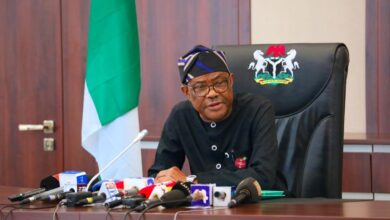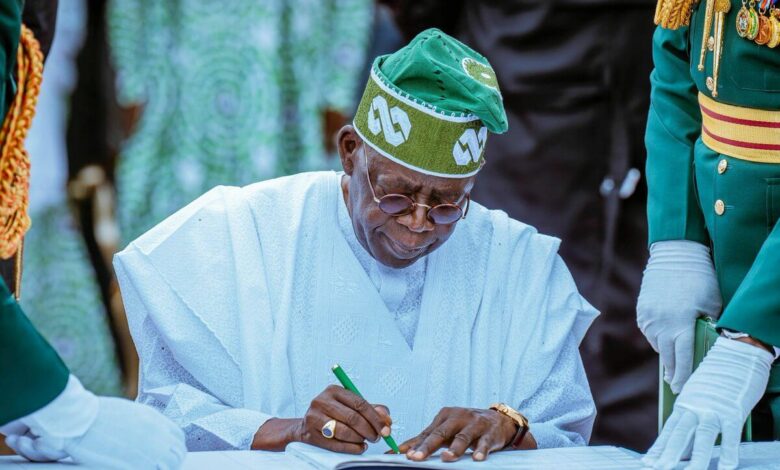
Minister of Works, David Umahi, has warned that the Lagos-Calabar Coastal Highway project may not be completed if President Bola Tinubu fails to secure re-election in 2027.
Umahi made the disclosure on Friday during an exclusive interview on Arise Television, describing the 750-kilometre highway as a personal initiative of the President that requires continuity to reach completion.
The minister argued that Tinubu’s return to office would be crucial to the completion of the coastal highway and other major road projects across the country.
“If President Tinubu does not come back in 2027 (God forbid), the Lagos-Calabar Coastal Highway will be gone,” Umahi said.
He, however, maintained that the project’s design and alignment remained intact, insisting that no one had the authority to alter its approved route while construction was ongoing.
“The 750-kilometre coastal highway is intact and cannot be changed, and nobody has the powers to change it, because it’s already designed and it’s ongoing,” he added.
Umahi also dismissed reports suggesting that the Federal Government had abandoned the coastal highway in favour of the East-West Road.
According to him, Tinubu had approved the reconstruction of an additional 400 kilometres of the East-West Road, stretching from Edo State to Cross River State, alongside the coastal highway project.
The minister explained that the President had directed that the coastal highway should follow the existing East-West Road corridor rather than create entirely new routes.
He attributed the adjustment in alignment to challenging terrain in Ondo State, where he said construction pits were more than 100 metres deep and sharp sand was unavailable up to a depth of 300 metres.
Umahi’s remarks have brought renewed attention to the long-term funding, continuity and sustainability of major infrastructure projects, particularly those whose completion timelines extend beyond a single presidential term.
His warning also raises questions about the extent to which nationally significant infrastructure projects can be insulated from political transitions, given their scale, cost and potential impact on transportation and economic activities.
The Lagos-Calabar Coastal Highway is one of the Federal Government’s flagship infrastructure projects, designed to connect Lagos with coastal communities and states across southern Nigeria.
The minister’s comments suggest that the administration considers political continuity an important factor in delivering the project, although the extent to which a change of government would affect its funding, implementation or completion would depend on subsequent policy and budgetary decisions.