Ojutalayo, who described courtrooms as cramped, hot and poorly ventilated, with inadequate seating, unreliable power supply and insufficient security, said the conditions undermine the effective administration of justice.
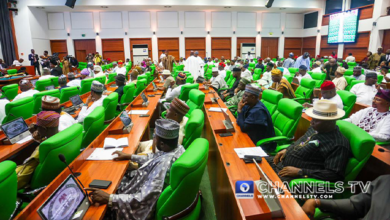
He spoke on Tuesday while delivering a keynote address titled “The Future of the Nigerian Magistracy in an Evolving Justice Sector” at the 2026 National Convention of the Magistrates’ Association of Nigeria (MAN), held at the Judiciary Complex, Abeokuta, Ogun State.
“The physical environment is therefore part of the quality of justice, and not a matter of administration alone. Many magistrates’ courtrooms are cramped, hot and poorly ventilated, with inadequate seating, unreliable power supply and little security.
“A court in which everyone present is uncomfortable and anxious to leave is not one in which careful justice is easily done. Many magistrates will admit that the temptation to rush through a list, simply to escape an unbearable room, is real,” he said.


According to him, such conditions could compromise litigants’ constitutional right to a fair hearing and restrict the public’s right to attend court proceedings.
He also identified inadequate funding, delayed welfare provisions, lack of official vehicles, heavy caseloads, outdated record-keeping systems and unclear promotion pathways as major challenges confronting the magistracy.
The SAN noted that delays in criminal justice proceedings were often caused by factors beyond magistrates’ control, including the failure to produce defendants in court, the absence of prosecutors and incomplete case files. He warned that such delays contributed to congestion in custodial centres, where awaiting-trial inmates constitute a substantial proportion of the population.
According to him, the Administration of Criminal Justice Act (ACJA), which seeks to ensure speedy trials through continuous proceedings and limits on adjournments, can only achieve its objectives if all institutions work together.
On career progression, Ojutalayo said magistrates often lacked clearly defined or publicly available pathways to elevation to the High Court Bench. He urged State Judicial Service Commissions and Chief Judges to publish objective promotion criteria and ensure their consistent application.
Citing Ogun State as an example, Ojutalayo commended the Chief Judge, Justice Mosunmola Dipeolu, whose career progressed from the magistracy to the High Court Bench and eventually to the position of Chief Judge.
He recalled that Dipeolu began her career as a magistrate, was elevated to the High Court in 1999 and was sworn in as Chief Judge in October 2018.
In her address, Dipeolu urged magistrates to prioritise professional development, competence and diligence.
She said she understood the demands of the office and magistrates’ aspirations for promotion but cautioned against allowing such expectations to diminish the quality of their service.
“Your current position is not a waiting room for another appointment; it is an office of considerable responsibility in its own right,” she said.
She urged magistrates to listen patiently to litigants, apply the law correctly, manage proceedings fairly and deliver well-reasoned decisions. She also encouraged them to embrace technological developments to enable them to handle electronic transactions, cybercrime, online fraud and electronically stored records.
Also speaking, the Chief Registrar of the Ogun State High Court, Olakulehin Luqman Oke, called on magistrates to shape the future of the magistracy through integrity, innovation and quality justice delivery.
He cautioned against relying solely on technology or the goodwill of those controlling resources.
“We must demand adequate facilities, welfare, training, transparent career progression and institutional respect. These are legitimate requirements of an effective judiciary, not personal favours,” Oke said.