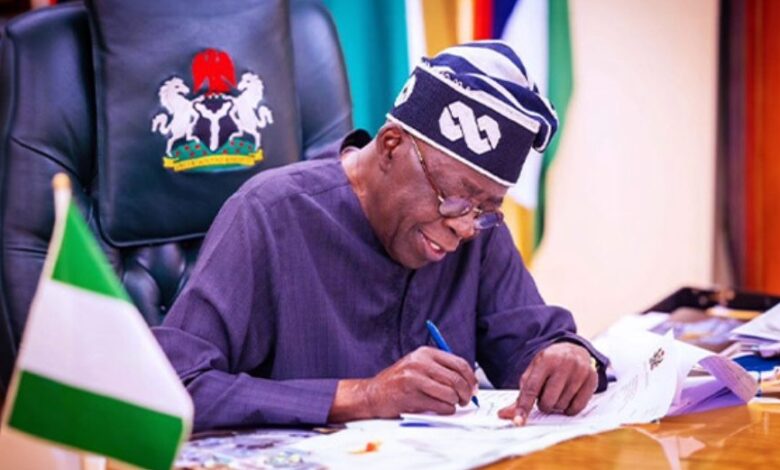
President Bola Tinubu has signed a fresh amendment extending the implementation of Nigeria’s 2025 capital budget until December 31, 2026, giving Ministries, Departments and Agencies another 92 days to execute projects originally captured in an earlier fiscal framework.
The President signed the Appropriation (Amendment) (No.4) Bill, 2025, on Wednesday, a day after the Senate and House of Representatives approved the extension. The amendment moved the deadline from September 30 to December 31, 2026.
The Presidency said the additional window would allow MDAs to complete ongoing capital projects and ensure that funds already appropriated are put to use without interrupting critical programmes.
In a statement issued by his media aide, Bayo Onanuga, Tinubu commended the National Assembly for its prompt consideration of the bill and described the action as evidence of cooperation between the executive and legislature.

But the latest amendment carries significance beyond the additional three months.
It is the fourth extension of the 2025 capital budget.
The original implementation period was scheduled to close at the end of 2025. Lawmakers subsequently moved the deadline to March 31, 2026, then June 30, and later September 30. The latest amendment now keeps the capital component open until the final day of 2026.
That timeline means a budget initially designed for 2025 is now entering the closing months of 2026.
The extension, however, does not create fresh projects under the 2025 appropriation. Senate Leader Opeyemi Bamidele said the measure was intended to provide additional time for projects for which money had already been appropriated and released.
He also said the arrangement would support economic activity, assist local contractors, improve the utilisation of released funds and enhance public service delivery.
READ RELATED NEWS UPDATES
The House of Representatives similarly linked the delay to difficulties surrounding the execution of capital projects. House Majority Leader Julius Ihonvbere said economic pressures and other factors had slowed implementation and made the additional period necessary.
The repeated extensions place the current decision against an earlier pledge by the Tinubu administration to end overlapping budget cycles.
While presenting the ₦58.18 trillion 2026 budget in December 2025, Tinubu declared that the era of operating multiple budgets, inherited obligations and perpetual rollovers should end. He said Nigeria needed stronger fiscal discipline and a more predictable budget system.
The latest amendment does not erase that policy objective, but it shows that the transition away from overlapping implementation periods has taken longer than originally projected.
The practical effect for Nigerians will depend on what happens to the projects covered by the extension.
Roads, bridges, schools, hospitals, power infrastructure and other capital works with appropriated and released funds can now continue within the legal implementation window. Contractors and MDAs also have additional time to process eligible commitments rather than allowing the September deadline to close the spending window.
The critical issue is therefore no longer simply how long the budget lasts, but how much of the outstanding capital work can actually be delivered before December 31.
The National Assembly has also placed accountability at the centre of the extension. Bamidele said the additional period should not be interpreted as a relaxation of fiscal responsibility, but as an administrative window for completing projects already authorised under the appropriation.
With the President’s assent, the 2025 capital budget has effectively acquired a second full year of implementation beyond its original fiscal year.
The new deadline gives government agencies three final months to turn previously approved allocations into completed projects, while placing another test before the administration’s promise to move Nigeria towards a cleaner, single-budget cycle.