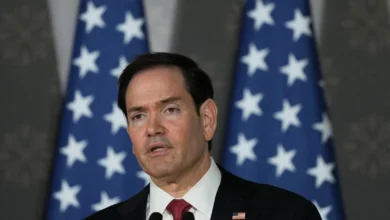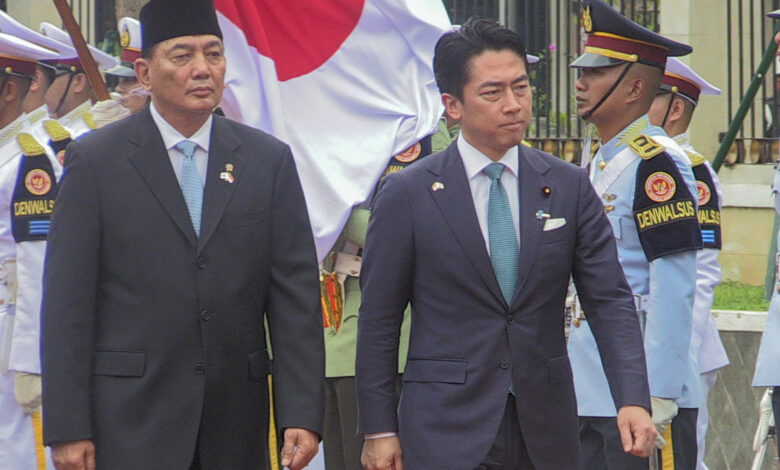
Indonesia’s Defense Ministry says it wants closer military cooperation with Kuwait through training, military education, and strategic dialogue. Officials presented the initiative as part of a long-standing bilateral relationship dating back to 1968.
But Kuwait is unlikely to become a central pillar of Indonesia’s defense strategy, and the recent meeting also reflects Jakarta’s lack of clear prioritization in how it engages countries across the Middle East and North Africa region.
Indonesia’s main security concerns are in the Indo-Pacific: maritime security, Chinese pressure around the Natuna waters, and military modernization. Those challenges require naval capability, surveillance systems, defense technology, and industrial cooperation.

Kuwait contributes little in those areas. It is not an Indo-Pacific military power and does not have a major defense industry. Kuwait itself still relies heavily on Western defense suppliers. Reuters recently reported that Kuwait signed a €320 million naval systems deal with Italian defense company Leonardo.
Indonesia already has defense relationships that are more directly tied to its strategic needs. The United States focuses on interoperability and military training. Japan has become increasingly important in maritime security cooperation, while Australia remains a key regional partner because of geographic proximity. South Korea is central to Indonesia’s aerospace ambitions, Türkiye has expanded cooperation in drones and defense manufacturing, and France has emerged as one of Jakarta’s main suppliers of advanced military hardware.
Kuwait’s value to Indonesia is elsewhere.
What Kuwait can realistically offer is capital, energy cooperation, and access to Gulf financial networks. Kuwait Investment Authority and Kuwait Fund for Arab Economic Development have shown interest in Indonesian infrastructure and energy projects.
Last year, Indonesian lawmakers discussed potential Kuwait involvement in the energy sector, including support for increasing domestic oil production.
This fits Indonesia’s actual needs. President Prabowo Subianto is trying to expand sovereign wealth funding, downstream industries, and infrastructure investment through institutions like Danantara. Reuters reported this year that Indonesia plans billions of dollars in resource-processing and industrial projects through its sovereign wealth strategy. Gulf capital could become important for that agenda.
READ: Indonesia reiterates call for UN probe after peacekeeper dies in Lebanon attack, condemns Israel
That is why Indonesia needs a more focused Middle East strategy.
Jakarta often treats the Middle East as a single geopolitical category instead of identifying what each country is actually good at. The result is vague “strategic partnerships” with unclear objectives.
Indonesia should prioritize by sector.
The UAE is useful for infrastructure and logistics investment. Saudi Arabia matters for energy, labor, and religious diplomacy. Türkiye matters for defense manufacturing. Qatar matters for finance. Kuwait’s comparative advantage is sovereign wealth, development finance, and energy cooperation.
That is a credible partnership. A defense alliance is not.
The larger problem is that Indonesia increasingly labels almost every bilateral relationship as “strategic.” This creates diplomatic inflation. Partnerships become symbolic rather than functional.
Indonesia’s weakness is not lack of diplomatic outreach. It is lack of prioritization.
The country still depends heavily on foreign suppliers for military modernization. Procurement remains fragmented. Long-term defense planning remains inconsistent. Adding more memorandums of understanding does not solve those problems.
There is also a political reason Indonesia prefers partnerships like Kuwait. They are low-risk. Unlike cooperation with the United States, Gulf partnerships do not trigger fears about alignment or sovereignty. Earlier this year, domestic debate intensified after reports about expanded U.S. military cooperation with Indonesia. Many Indonesians worried the country was drifting away from its “free and active” doctrine.
Kuwait carries no such political baggage because the strategic stakes are low.
That may make the relationship politically convenient, but convenience is not strategy.
Indonesia should cooperate with Kuwait where Kuwait is genuinely useful: investment, energy financing, sovereign wealth partnerships, and development funding. Trying to frame Kuwait as a meaningful defense ally only weakens the credibility of Indonesia’s broader foreign policy.
OPINION: Indonesia’s foreign minister didn’t defend the flotilla detainees. He defended Israel’s language
The views expressed in this article belong to the author and do not necessarily reflect the editorial policy of Middle East Monitor.