70
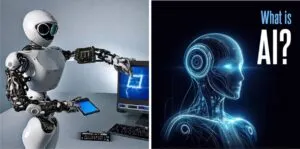
Artificial Intelligence (AI) is rapidly changing the way people work, communicate, and do business. What once seemed like a technology reserved for sci-fi movies and tech labs has become an everyday reality, influencing industries across the globe. From customer service and banking to media, healthcare, and manufacturing, AI-powered tools are increasingly taking over tasks that were once performed exclusively by humans. As businesses embrace automation to improve efficiency and reduce costs, concerns are growing about the future of employment and whether millions of workers could eventually be replaced by machines.
The impact of AI on jobs is already being felt in many sectors. Across the world, companies are investing heavily in artificial intelligence to streamline operations and boost productivity. AI-powered systems can analyse large amounts of data in seconds, generate reports, respond to customer inquiries, write content, process transactions, and even assist in making business decisions. For many employers, these technologies offer faster results, fewer errors, and lower operational costs than traditional human labour.
The growing adoption of AI has prompted several international organisations to examine its effect on the global workforce. According to the International Monetary Fund (IMF), nearly 40 percent of jobs worldwide are expected to be affected by artificial intelligence. The organisation warns that while AI can increase productivity and economic growth, it also poses risks to employment and income equality if workers are not adequately prepared for the transition. In advanced economies, where digital technology is more deeply integrated into daily operations, the percentage of jobs exposed to AI is even higher.
One of the industries experiencing the biggest transformation is customer service. In the past, companies employed large teams of agents to handle inquiries, complaints, and support requests. Today, AI-powered chatbots and virtual assistants are capable of responding to thousands of customer questions simultaneously, often without human involvement.
Many businesses now rely on automated systems to provide round-the-clock support, reducing the need for large customer service departments.
Administrative and clerical jobs are also under pressure. Tasks such as scheduling appointments, organising records, processing documents, data entry, and preparing routine reports can now be completed by AI software in a fraction of the time. Experts believe that office support roles are among the occupations most vulnerable to automation because many of their responsibilities follow predictable patterns that machines can easily learn and replicate.
The media and communications industry is not immune to the AI revolution. Advanced AI tools can now write articles, generate headlines, create marketing campaigns, edit videos, design graphics, and produce social media content within minutes. While human creativity remains crucial, many routine content production tasks are increasingly being handled by technology. This has sparked debate about the future role of writers, designers, and other creative professionals in an AI-driven world.
The banking and financial services sector has also embraced artificial intelligence. Banks use AI to detect fraud, analyse customer behaviour, assess credit risks, and automate transactions. Financial institutions that once relied on large teams for data processing and analysis now use intelligent systems capable of performing the same functions more efficiently. As a result, certain back-office positions are gradually declining while demand grows for workers with digital and analytical skills.
Manufacturing has experienced a similar shift. Robots and automated systems have been used in factories for decades, but AI has significantly expanded their capabilities. Modern production facilities now use intelligent machines to monitor equipment, predict maintenance needs, manage inventories, and optimise production schedules. These innovations have increased efficiency but have also reduced the need for some manual and repetitive jobs.
Even the technology sector itself has felt the impact of AI. Software developers now have access to tools that can generate code, identify programming errors, and suggest solutions in real time. While experts argue that AI is unlikely to replace skilled programmers entirely, it is changing the nature of their work and reducing the demand for some entry-level coding tasks.
Despite concerns about job losses, experts insist that AI is not only eliminating jobs but also creating new opportunities. The World Economic Forum estimates that technological advancements, including artificial intelligence, could displace around 92 million jobs globally by 2030. However, the same report projects that approximately 170 million new jobs could be created during the same period, resulting in a net gain of millions of positions worldwide. Many of these new roles will be concentrated in areas such as artificial intelligence, cybersecurity, data science, machine learning, software engineering, and digital transformation.
The challenge, however, is that workers whose jobs are being disrupted may not automatically qualify for these emerging opportunities. As a result, governments, educational institutions, and employers are increasingly focusing on reskilling and upskilling programmes to help workers adapt to changing workplace demands. Experts argue that digital literacy, critical thinking, creativity, emotional intelligence, and problem-solving skills will become increasingly important in the years ahead.
In Africa, and particularly in Nigeria, AI adoption is gaining momentum. Financial technology companies, telecommunications firms, media organisations, and startups are increasingly using AI-powered tools to improve efficiency and expand their services. While this presents exciting opportunities for innovation and economic growth, it also raises concerns about the future of entry-level jobs, especially for young graduates seeking employment in a highly competitive labour market.
Industry observers note that the debate should not focus solely on whether AI will replace humans. Instead, the more important question is how humans can adapt to a workplace where machines perform many routine tasks. Increasingly, experts believe that workers who understand how to use AI effectively will have a significant advantage over those who do not.
As artificial intelligence continues to evolve at a rapid pace, its influence on the world of work is expected to grow even stronger. While fears about job losses remain valid, the technology is also creating new possibilities and transforming industries in ways that were unimaginable just a decade ago. The future of work may not be a battle between humans and machines. Rather, it may belong to those who learn how to work alongside them.
For millions of workers around the world, one thing is becoming clear that AI is no longer a technology of the future. It is here today, and it is already reshaping the workforce in many ways.
Promise Babatunde
What do you think about this?
Drop your opinion in the comment section.
FOLLOW US & Share this with someone who needs to see this.