0
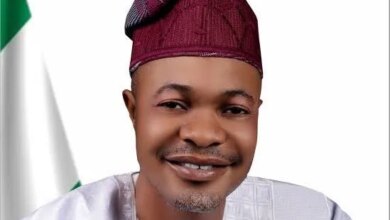
Director-General of the National Automotive Design and Development Council (NADDC), Otunba Oluwemimo Joseph Osanipin, has underscored the strategic role of specialised motoring journalism in accelerating the growth of Nigeria’s automotive industry, describing the media as a critical catalyst capable of fostering investment, promoting local manufacturing and shaping public perception.
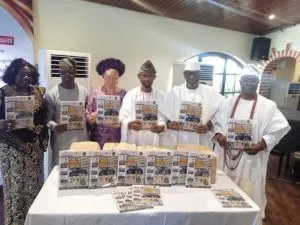
Represented by Suzan Taiwo, Osanipin made the assertion while delivering a keynote address titled, “Motoring Media as a Catalyst for Automotive Industry Growth in Nigeria,” at the 30th anniversary celebration of Motoring World, held on Thursday at the MUSON Centre, Lagos.
Congratulating the publisher of Motoring World, Mr Femi Owoeye, alongside the publication’s management and stakeholders, Osanipin described the newspaper’s three decades of existence as a remarkable testament to resilience, professionalism and relevance within Nigeria’s challenging media environment.

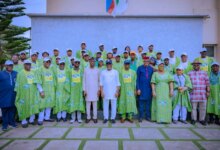
According to him, the anniversary celebration provided an opportunity to reflect on the increasing significance of motoring journalism in shaping the future of the nation’s automotive sector.
He noted that no automotive industry could thrive without effective communication, informed advocacy and active public engagement, adding that the media globally has continued to play strategic roles in promoting local manufacturing, stimulating policy discussions, educating consumers and building confidence in the industry.
Describing the media as the bridge between government, industry and the public, the NADDC boss said it remained a powerful force in informing, educating and influencing perceptions, while driving conversations capable of advancing industrial development.
Osanipin commended Motoring World for consistently chronicling the evolution of Nigeria’s automotive industry, from the early assembly plant era to the rise of indigenous manufacturers, policy reforms and the ongoing transition to cleaner mobility solutions, including electric vehicles and compressed natural gas (CNG). He said the publication’s contribution to the sector deserved recognition.
Highlighting developments within the global automotive landscape, he observed that electric mobility, alternative fuels, smart manufacturing and green transportation technologies were transforming mobility worldwide and stressed that Nigeria must position itself to take advantage of these changes.
He disclosed that the NADDC was implementing several initiatives aimed at transforming Nigeria from merely a vehicle market into a competitive automotive manufacturing and innovation hub in Africa.

Among the areas receiving attention, he listed electric vehicle development, compressed natural gas conversion programmes, promotion of local content, automotive component manufacturing, skills acquisition and strategic industry partnerships.
The Director-General, however, stressed that government policies alone could not deliver industrial transformation, insisting that the media had a complementary responsibility to simplify automotive policies for public understanding and educate Nigerians on emerging technologies and cleaner mobility alternatives.
He further urged motoring journalists to encourage patronage of locally assembled vehicles and components, spotlight opportunities within the automotive value chain and sustain constructive engagement among policymakers, investors, manufacturers and consumers.
Speaking on the importance of perception in industrial development, Osanipin warned that narratives dominated by challenges and uncertainties could undermine investor confidence. He argued that responsible reporting that highlights innovation, progress and opportunities could inspire confidence and stimulate economic growth.
While emphasising that accountability and constructive criticism remained indispensable to policy improvement, he advocated developmental journalism that supports national growth while maintaining professional standards and objectivity. He noted that Motoring World had played a commendable role in that regard.
Osanipin stated that as Nigeria deepens its pursuit of automotive industrialisation and energy transition, stronger collaboration among government agencies, industry operators and specialised media organisations would become increasingly necessary.
He reaffirmed NADDC’s commitment to sustaining such partnerships, stressing that industrial transformation depended not only on policy frameworks but also on information dissemination, awareness creation, collaboration and a shared vision.
According to him, Nigeria possesses enormous automotive potential, citing the country’s large market, youthful population, growing technical capacity, increasing investor interest and abundant natural resources as factors capable of supporting industrial expansion.
He maintained that achieving this potential would require sustained commitment, policy consistency, infrastructure development and stronger cooperation among stakeholders.
He expressed confidence that strategic collaboration between government, industry players and the media could position Nigeria as a leading automotive hub on the African continent.
Osanipin also described the 30th anniversary of Motoring World as a celebration of the enduring relevance of specialised journalism to national development.
He called on automotive journalists and media practitioners to continue promoting professionalism, balanced reporting, industry expertise and developmental advocacy.
“The future of Nigeria’s automotive industry will depend not only on factories and policies, but also on the quality of information and national conversations that shape public direction,” he said.
The NADDC Director-General concluded by congratulating Motoring World on its milestone achievement and wished the publication many more years of impactful service to the automotive industry and the Nigerian economy.