The latest exchange between Israel and Iran in June 2026 has been widely framed as another dangerous escalation in an already combustible region. Yet focusing solely on Iranian missiles risks obscuring a far more consequential reality.
Iran’s strike did not emerge from a geopolitical vacuum. It arrived after months of devastating warfare across Gaza and Lebanon, after repeated ceasefire violations, after the destruction of hospitals, homes, universities and critical civilian infrastructure, and after a mounting death toll that has surpassed 76,000 people across multiple theatres of conflict. The deeper story is not simply one of retaliation. It is the collapse of the belief that international law still applies equally in the Middle East.
For decades, the international system has rested on a foundational promise: states may disagree, compete and even fight, but rules exist to limit violence and protect civilians. That promise now appears dangerously hollow. What has unfolded in Gaza and Lebanon since 2023 has exposed an uncomfortable truth to global policymakers. In today’s Middle East, power increasingly determines legitimacy, while law struggles to constrain those with military superiority.

Israel continues to present its military operations as exercises in self-defence. Every state possesses that right under Article 51 of the UN Charter. Yet self-defence is not an unlimited licence. It is constrained by necessity, proportionality and the obligation to distinguish between combatants and civilians.
The sheer scale of destruction witnessed across Gaza and southern Lebanon has made those principles increasingly difficult to reconcile with realities on the ground.
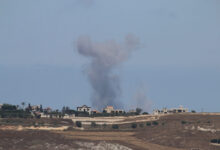
The humanitarian statistics alone are staggering. Entire neighbourhoods have disappeared beneath rubble. Major hospitals have been rendered inoperable. Humanitarian agencies have repeatedly warned of famine conditions, disease outbreaks and mass displacement. In Lebanon, Israeli operations have expanded beyond targeted strikes into broader campaigns affecting towns, infrastructure and civilian communities.
READ: Oil prices jump as Iran-Israel tensions escalate
The destruction around Tyre and southern Lebanon evokes memories of previous invasions that, rather than eliminating armed resistance, deepened regional grievances and entrenched cycles of conflict. The analysis contained in recent strategic assessments notes that Israeli military actions in southern Lebanon have included extensive bombardment and mass evacuation orders despite ceasefire arrangements negotiated elsewhere.
The result has been a profound erosion of deterrence. According to recent security analyses, the regional balance that once governed Israeli-Iranian confrontation has effectively collapsed. The old model—where both sides calibrated actions to avoid full-scale war—has given way to a cycle of escalation and retaliation. Scholars studying the region describe the period following the Gaza war, Hezbollah’s escalation and the subsequent US-Israeli strikes on Iran as marking the breakdown of established deterrence mechanisms.
This breakdown matters because deterrence is not merely a military concept; it is also a political one. It depends on the existence of boundaries. When those boundaries disappear, escalation becomes increasingly likely.
That is precisely where the current crisis sits. Israel’s military campaigns have repeatedly crossed borders, expanded operational theatres and continued despite diplomatic efforts to secure durable ceasefires. The document underpinning this crisis notes that even after a Pakistan-brokered US-Iran truce in April 2026, tensions remained unresolved and ceasefire arrangements failed to address broader regional flashpoints. Meanwhile, international institutions proved unable or unwilling to enforce compliance.
This failure has consequences. States and non-state actors alike observe that violations often carry few meaningful costs. The lesson drawn is dangerous but understandable: if international mechanisms will not restrain a perceived aggressor, affected actors may eventually attempt to do so themselves.
Iran’s June strike reflects that logic. It carries immense risks for regional stability and threatens civilians across multiple countries. Yet understanding is not endorsement. Strategic analysis requires recognising causality.
Tehran’s actions emerged from a regional environment in which diplomacy repeatedly failed, deterrence collapsed, and military force appeared to operate with relative impunity.
The consequences extend far beyond the battlefield. The war has already begun reshaping the global economy. Roughly 27 per cent of global oil exports and 20 per cent of liquefied natural gas transit through waterways affected by the crisis. Shipping disruptions have reportedly exceeded 70 per cent in some sectors, while oil and fertiliser prices have surged. What begins as a missile exchange in the Middle East quickly becomes higher food prices in Africa, inflation in Europe and economic uncertainty in Asia.
This interconnectedness makes the conflict more than a regional tragedy. It is increasingly a test of the international order itself.
The greatest casualty of this war may not be deterrence but legitimacy. International law derives its authority from consistent application; when enforcement appears contingent on geopolitical interests, global stability rests increasingly on military power rather than shared rules. Rules lose legitimacy when they appear conditional. Human rights become harder to defend when violations are perceived as tolerated for strategic reasons. Diplomatic credibility weakens when ceasefires are negotiated but not enforced.
The crisis has also exposed a widening credibility gap between rhetoric and action among major powers. Western governments regularly champion a rules-based international order. Yet many states across the Global South increasingly question whether that order applies universally or only selectively. The perception of double standards—whether fully justified or not—has become a strategic problem in its own right.
READ: Report: Growing Egypt-Turkey defence ties draw Israeli and US attention
This perception is reshaping global alignments. It is strengthening arguments advanced by revisionist powers that existing institutions no longer reflect contemporary realities. It is fuelling scepticism towards multilateral diplomacy. Most dangerously, it is encouraging the belief that military capability matters more than legal obligation.
History suggests such moments rarely end well. The Middle East has repeatedly demonstrated that overwhelming force can destroy infrastructure, displace populations and eliminate leaders. It has been far less successful at producing a durable peace. The Israeli invasions of Lebanon in 1982 and 2006, the Iraq War, the Syrian conflict and countless other interventions all illustrate the same lesson: military victories often prove strategically incomplete when underlying political grievances remain unresolved.
The question confronting global policymakers today is therefore larger than Israel or Iran. It concerns the future credibility of international law itself.
If ceasefires can be ignored without consequence, if civilian protection becomes negotiable, and if military power increasingly determines whose security matters, then the world is moving towards a more dangerous era. The June 2026 confrontation is not merely another chapter in the Middle East’s long history of conflict. It is a warning about the erosion of restraint.
The tragedy unfolding across Gaza and Lebanon is not simply the consequence of ancient rivalries or irreconcilable identities. It is also the product of political choices, diplomatic failures and institutional paralysis.
Until those realities are acknowledged, every new strike will be presented as the beginning of a crisis rather than what it often is: the predictable outcome of one that was never meaningfully addressed.
The most urgent challenge is no longer preventing escalation alone. It is restoring the principle that no state, regardless of power, stands above the rules designed to protect humanity from the worst instincts of war. Without that principle, the next missile barrage will not be an anomaly. It will be the new normal.
OPINION: Why the US–China Summit may decide the Middle East’s next war
The views expressed in this article belong to the author and do not necessarily reflect the editorial policy of Middle East Monitor.