By: Aondoakaa Tersugh Daniel | 10/06/2026
There are moments in a nation’s legal history that pass without the public fully grasping how close the edge was. Nigeria stood at one such edge, staring down an $11 billion liability that could have triggered a financial catastrophe of generational proportions. That it did not happen is not accidental. It is, in very large part, the story of one lawyer, one former Attorney General of the Federation, who refused to let Nigeria be robbed in a suit and tie.
The case in question is the P&ID dispute, arguably the most dangerous legal and financial threat Nigeria has faced in its post-independence history. Process and Industrial Developments Limited, a company floated by two Irish businessmen, anchored its claim on a Gas Supply and Processing Agreement signed in 2010. The terms were straightforward on paper: Nigeria would supply wet gas, P&ID would build and operate a processing plant in Calabar, Cross River State. Nigeria allegedly failed to supply the gas. But there was no site to make the supply in the first place, because no construction had been done anywhere in Calabar for such purposes. P&ID went to arbitration, won, and the award ballooned from approximately $6.6 billion to nearly $11 billion with accumulated interest. For context, that figure at the time represented a significant fraction of Nigeria’s foreign reserves. A judgment of that magnitude, enforced against Nigerian assets abroad, would have been a national catastrophe.
Chief Michael Kaase Aondoakaa SAN was Attorney General of the Federation when that agreement was allegedly signed in 2010 under the late President Umaru Musa Yar’Adua. When the crisis matured into a full legal emergency years later, he stepped forward and made the argument that unravelled the entire arrangement. His position was precise and prosecutorial: the contract was never subjected to Federal Executive Council approval as required by law, the deal bore the fingerprints of fraud from inception, and a coalition of Nigerian officials and foreign actors had conspired to engineer a liability that the Nigerian people would be made to pay. The office of the Attorney General and Ministry of Justice was not consulted on the contract. Neither was the Infrastructure Regulatory Commission. That argument gave Nigeria the legal and moral ground to fight back. It is on record that his intervention was central to turning the tide of a case that had appeared already lost. It was a case of fraud. Aondoakaa was drafted into the legal team to defend Nigeria. Nigeria won.
That history is not being recalled here for sentiment. It is being recalled because it is directly relevant to what is happening in Benue State today under the Alia administration.
The questions surrounding how contracts have been awarded under Governor Hyacinth Iormen Alia, why projects sit stalled at mobilisation stage, why garnishee orders are freezing state accounts, and why a N68 billion road looks more like an excavation exhibition than a construction site, all of these questions bear an uncomfortable structural resemblance to the P&ID anatomy. Inflated figures. Questionable approvals. Mobilisation paid, work abandoned. The public left staring at broken earth. It is alleged that some of these contracts have been padded by as much as 140% above their legitimate value. If that allegation has any substance, it means Benue State is carrying a fiscal weight that was artificially manufactured to benefit a few people at the top of the food chain.
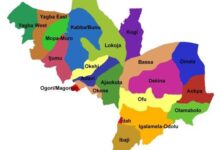
And it does not stop at the major contracts. It is also alleged that the Governor has directed council chairmen across all 23 local government areas of Benue State to award N5 billion road contracts covering five kilometres in each area, at a flat rate of N1 billion per kilometre. That flat rate is applied uniformly without any regard to the varying soil types and topographic conditions across these 23 local government areas, factors that any competent engineer or quantity surveyor would insist must reasonably and necessarily affect cost from one location to another. A road through the hilly terrain of one local government area does not cost the same as a road across the flatter landscapes of another. When a government ignores that basic reality and fixes a uniform price across the entire state, the question is not whether padding exists. The question is how much and who is collecting it. Across 23 local government areas, a flat and unjustifiable rate of N1 billion per kilometre has the potential to manufacture billions in artificial expenditure, all of it traceable to a single directive from the top.
There is approximately one year left in the Alia administration. That window may not be enough to complete what has been deliberately left incomplete. Any contractor banking on the continuation of the current arrangement to escape scrutiny should now begin to think differently. When Chief Michael Kaase Aondoakaa SAN becomes Governor of Benue State, he will not be arriving as a newcomer to the business of unravelling fraudulent contracts. He arrives as a man who has already done it at the level of an $11 billion international arbitration dispute. He saved Nigeria from that exposure. The question that should now keep contractors and their accomplices awake at night is this: what would he do to a local contract padded at 140% in a state he is coming to govern?
The answer is not difficult to find. An Aondoakaa administration would conduct a full reevaluation of every contract awarded under the current dispensation. Projects found uncompleted would face fresh scrutiny on their terms, their award processes, and their payment histories. Projects completed but with outstanding payment claims would be examined against their original contract sums and the going market rates for similar work. Where padding is established, the demand would not be for sympathy. It would be for refunds.
Contractors who chose to participate in a system where mobilisation funds were allegedly siphoned before work could begin are not entirely blameless actors. They signed contracts. They collected funds. They broke ground to create the appearance of work, and then they stopped. A state that has had its accounts frozen by garnishee orders because of those arrangements deserves a government that will trace every naira back to its source and account for where it went.
It should be clearly understood that money has DNA and its end users can be traced. This is where the Tiv adage finds full expression: when you pull the tail, the head comes along. Alia is setting himself up for what many may be persuaded to call a witch-hunt when his four years are over, but the questionable contracts are a problem the masses are not seeing now. Those who are potential accomplices should take note. When the time of reckoning comes, the office of the Attorney General of the state would be dragged into it. The procurement office would be dragged into it. All contractors would be dragged into it. All local government chairmen would be dragged into it. At the end, Alia himself would be brought to question. Make no mistake, Alia already has a place in the prison and is only waiting for the time the pronouncement would come. The case of Suswam is far more tolerable than what Alia is currently doing.
Chief Aondoakaa rebuilt his national reputation on exactly that kind of reckoning. Benue is a smaller theatre but the stakes for its people are no less real. The man who defended a nation against an $11 billion fraud is more than equipped to defend a state against its own internal version of the same disease.
The P&ID case taught Nigeria that fraudulent contracts, no matter how cleverly dressed in legal language, can be unwound when the right person is willing to stand up and pull the thread. Benue’s contracts are waiting for that same hand. It is coming.