0
Dr. Aminu Maida, Executive Vice Chairman/CEO of the Nigerian Communications Commission(NCC), has called for more deliberate and systematic collaboration among African telecommunications regulators to address common regulatory challenges.
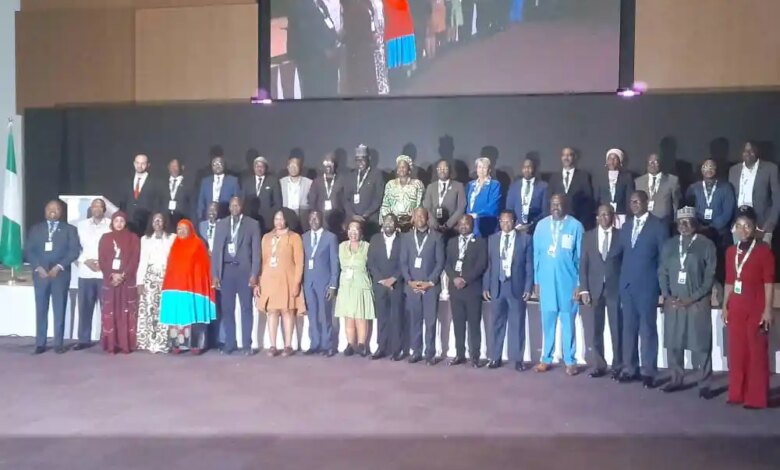
Maida made the call on Tuesday in Abuja while delivering a welcome address at the African Heads of Regulators Roundtable, with the theme, “Building Africa’s Network Intelligence Ecosystem for Evidence-Based Regulation.”
He noted that although regulators operate in markets of different sizes with different legal frameworks, the core realities of their work are remarkably similar.

“The conversation between regulators rarely remains a casual conversation for very long.
“Five minutes later, we are discussing investment, infrastructure resilience, satellite services, cyber security, affordability, artificial intelligence, or the latest technology that has arrived just in time to test the regulatory framework we thought had finally settled,” he said.
.
He emphasised that the value of the Roundtable lies in transforming informal peer exchanges into structured learning.
“Very often, the challenge that one regulator is trying to solve has already been encountered in one form or another by a colleague elsewhere on the continent.
“So the question really is: how do we make that exchange of experience more deliberate, more systematic, and more useful to our institutions?” he asked.
He described the theme of the Roundtable as “timely and relevant,” stating that it provides an opportunity to explore how data, evidence, and market intelligence can strengthen regulatory decisions and improve learning across African regulators.
The Executive Vice Chairman said Nigeria’s experience would be shared during the session, but the greater goal is to stimulate “an open and practical conversation” on what has worked, what has not, and where collaboration can prevent regulators from “solving the same problems repeatedly in isolation.”
In her remarks, Mrs. Rimini Makama, Executive Commissioner, Stakeholder Management, NCC, urged African regulators to move beyond data collection and focus on turning information into smarter, more transparent, and consumer-focused decisions.
Makama noted that the communications sector has evolved beyond traditional models, adding that “Broadband is expanding, satellite services are arriving, Artificial Intelligence, cloud computing, and digital public infrastructure are reshaping our sector.
“The old regulatory approaches were built for a simpler time. They are no longer enough.”
She stressed that to “stay ahead of the problems and not just react to them, we need trusted intelligence.”
She highlighted that while African regulators now hold more technical, market, and consumer data than ever before, “the challenge is not collecting it. The challenge is turning it into better decisions.”
She revealed that NCC’s regulatory intelligence ecosystem platform integrates Quality of Service and Quality of Experience data, consumer complaints, compliance analytics, and market intelligence into one place to ensure decisions are evidence-based.
In an interview with newsmen, Makama called for the creation of a continental platform to enable African regulators to share regulatory data, insights, and challenges for more cohesive decision-making.
She disclosed that NCC is embedding more transparency in its regulatory process by using data to drive decisions “for the benefit of the consumer.”
“Today we just had a panel about using data to drive regulatory decisions. The NCC is enshrining more transparency around using data to help with a lot of the decisions that we are making,” she stated.
She explained that the Roundtable brought together regulators from across Africa to share insights, share challenges, and learn from one another.
“The whole essence of this panel is: we gathered regulators from across Africa here to share insights, share challenges, and also learn from them,” she said.
Looking ahead, Mrs. Makama expressed hope that the engagement will lead to a structured platform for continuous collaboration.
Addressing newsmen, Adi Timothy Ashong, Director General, Regional African Satellite Communications Organisation (RASCOM),
called for increased investment in both terrestrial and satellite infrastructure to achieve seamless connectivity across Africa, especially in border and hard-to-reach areas.
Ashong commended Nigeria for deploying technologies that allow real-time monitoring of incidents such as fibre cuts.
“When they have fibre cuts, they are able to monitor it in real time. The operators get the information, and citizens are able to see it in real time on their website.
“Responding becomes very easy, and it is very transparent,” he said.
He urged other African countries to emulate this model to make regulation “move to the people, and not the other way around.”
Addressing the challenge of poor inter-Africa connectivity, he noted that no single institution can provide good network coverage alone.
He said:“It requires collective effort. We cannot rely on only one connectivity solution.
“If you only have one fibre coming into the country, we need to invest heavily in both the terrestrial and also the satellite aspect.”
He emphasised that satellite provides critical connectivity for Africa’s border areas where terrestrial coordination between countries is difficult.
“We have to invest heavily in the satellite platform. That’s where my institution comes in,” he added.
He therefore reaffirmed the readiness of RASCOM to collaborate with African institutions to bridge the digital divide and strengthen Africa’s connectivity.