25
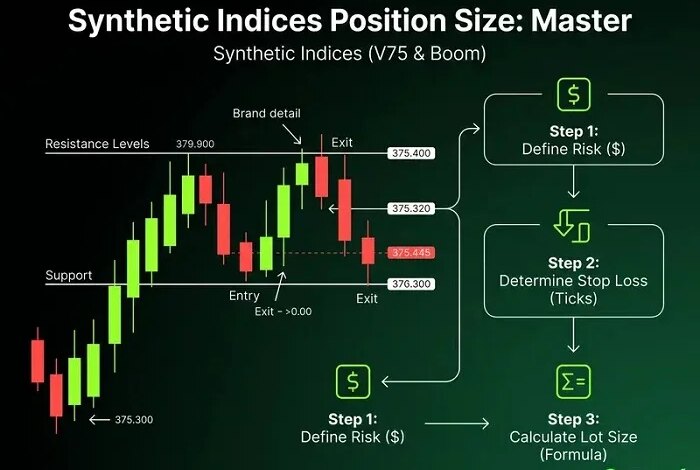
Successful synthetic indices traders understand that trading BASED on market direction is only half the equation; the other half is position sizing. Because the size of your position determines both the potential profit and how much your account is at risk on that particular trade. It is a vital component of trading. Many new traders, unfortunately, fail to appreciate how minimum lot sizes for synthetic indices work, and as a result, do not manage their trading capital as effectively as they could. Whether you are new to trading synthetic indices or have already traded them, understanding how the minimum lot size for synthetic indices works will help you make better decisions and better manage your risk in the long run.
Let’s look at why this concept matters before you place your next trade.

Minimum Lot Sizes Determine Your Risk Exposure
To understand minimum lot sizes for synthetic indices, you must first be aware that it is the minimum volume at which you can open a position in a particular index. As each synthetic index has its own set of contract specifications, minimum trade volumes vary greatly from market to market. Your lot size determines how much each price move will affect your account balance. Even a good trade can end up costing you money if you are holding a position that is too large. If you are aware of the minimum lot size that can be opened, you will limit your risk, preserve capital during market volatility, and develop better trading habits for long-term profits.
Every Synthetic Index Has Different Trading Requirements
Not every synthetic index follows the same trading specifications. Minimum lot requirements, volatility, and price movement differ from one instrument to another. Reviewing a synthetic index’s lot sizes chart before trading helps you compare the available markets and understand their requirements. Many traders maintain a synthetic indices lot sizes PDF for quick reference as they plan trades. Understanding these differences takes time, but it enables you to choose markets that fit your trading style, your account size, and your strategy rather than making assumptions.
Choosing the Right Lot Size Improves Trading Consistency
Consistent traders are not just chasing potential for larger profits, but are also trying to control their risk exposure. Understanding minimum lot sizes for synthetic indices helps you develop a position-sizing plan that fits your account size and trading objectives. Syntxwiki breaks down everything, from contract specifications, money management, and logical trading concepts, into a straightforward way that is easy to read. Knowing how many lots to trade for synthetic indices is a great way to stay focused, safeguard your portfolio, and not give in to impulsive decisions whether you’re experiencing a win streak or a losing streak.
Volatility Should Influence Your Position Size
Lot size should always be considered alongside market volatility. Some synthetic indices experience sharp price movements, while others move more steadily. Those who like less risk usually pick the least volatile synthetic indices because the price movement is usually more manageable. Adjusting your position size according to the volatility will help keep your risk in check. Even if you are only trading the minimum volume allowed, knowing how an index usually behaves can help you stop taking risks beyond what your trading plan allows.
Proper Position Sizing Supports Long-Term Growth
It isn’t the big one that makes you as a trader, but the consistency. When you’re trading, consistency matters more than the occasional big win. To help you trade consistently, you need to understand how to handle your capital responsibly and avoid putting too much at risk on any one trade. That means understanding the minimum lot sizes for synthetic indices, as trading the lot sizes appropriately will ensure that you use good money management. As you gain trading confidence and experience, naturally adapt your synthetic indices lot sizes to your account balance, market conditions, and trading goals.
Conclusion
To become a disciplined trader, you should not only learn how to interpret technical indicators or chart patterns. Understanding the importance of position sizing is just as important as it helps preserve capital and control risk. Contract specification, synthetic indices comparison, trading minimum lot size, and adaptation to the market conditions are just a few of the myriad of factors to be aware of. Incorporating minimum lot sizes for synthetic indices into your trading strategy will help you trade confidently, preserve capital, and overcome trading challenges more successfully in the synthetic indices market.
What do you think about this?
Drop your opinion in the comment section.
FOLLOW US & Share this with someone who needs to see this.