When we talk about security in Nigeria, the images that flash across our minds are almost always kinetic. We think of columns of military trucks kicking up dust in the Northeast, police checkpoints along our expressways, and bold newspaper headlines detailing the latest tactical operations against bandits and secessionists.
For decades, our national strategy has been to fight fire with fire. But as any fire chief will tell you, if you don’t douse the embers and fix the faulty wiring, the building will eventually catch fire again.This is exactly where the Institute for Peace and Conflict Resolution (IPCR) comes in.
Nestled in Abuja but operating silently across all six geopolitical zones, IPCR is Nigeria’s official peacebuilding think-tank. While our brave armed forces are trained to suppress violence after it erupts, IPCR is designed to stop it from happening in the first place.If we are ever going to break the cycle of insecurity in Nigeria, we must stop treating the IPCR as an obscure government agency and start positioning it as the ultimate focal point of our national security strategy.
Established in the year 2000 under the Ministry of Foreign Affairs, the IPCR is mandated to research the root causes of conflicts, provide policy roadmaps for the government, and directly intervene to broker peace.To understand why the IPCR is so vital today, look no further than its recent rollouts and strategic partnerships. The agency has been upgrading Nigeria’s National Conflict Early Warning System (NEWS). Think of this system as a digital weather forecast, but for human conflict. By monitoring structural triggers, such as local governance deficits, youth unemployment, and the intersection of transnational organized crime with community tensions, IPCR tries to alert authorities before minor disputes turn into bloody communal clashes.


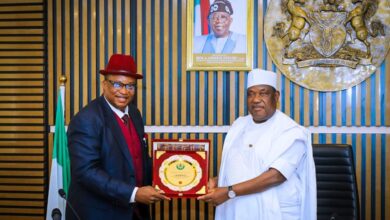
The Director-General of the IPCR, Dr. Joseph Ochogwu, recently hit the nail on the head when he pointed out that armed groups and insurgencies do not thrive in a vacuum; they are funded by shadow illicit economies like weapons trafficking and resource smuggling.
The military might eliminate a criminal, but it cannot eliminate the broken system that breeds them. The IPCR’s job is to fix the system.Right now, there is a massive disconnect. The government often underfunds the IPCR in favor of hardware spending, and the average Nigerian on the street barely knows it exists. To change this and make the Institute the heartbeat of Nigerian peacebuilding, we need a deliberate, multi-pronged approach:
1. The Government Must Move IPCR to the “Inner Room” of Security Briefings
Currently, when the National Security Council meets, it is dominated by military commanders and intelligence chiefs. IPCR needs a permanent seat at that table. Its data-driven research and structural recommendations should form the baseline of national security policies. If the federal government relies on the IPCR to map “ungoverned spaces” and design local policing frameworks, we will spend far less money buying fighter jets and much more energy reinforcing community resilience.
2. Take Peace to the Streets (and Classrooms)
The IPCR cannot just be an Abuja-centric bureau of scholars. The Institute recently signed several strategic Memoranda of Understanding (MOUs) focused on peace education and youth empowerment. This needs to go viral. The School Track: Partnering with the Ministry of Education to inject conflict resolution modules into primary and secondary civic education. Imagine a generation of Nigerian kids taught how to mediate peer disputes instead of resorting to ethnic or religious slurs. The “Peace Ambassador” Network: Deploying IPCR-trained community mediators to every local government area (LGA) across the 36 states, serving as local watchdogs and grassroots peace brokers.
3. A Digital, Citizen-Centric Approach
Citizens need to feel like they are part of the peace process. IPCR should launch a highly accessible, anonymous citizen-reporting mobile app tied directly to its Early Warning System. If a farmer in Benue or a trader in Kaduna notices unusual movements or rising ethnic tensions, they should be able to report it directly to the IPCR. When citizens see that their tips lead to proactive dialogue rather than sudden military curfews, trust in the state will skyrocket.Peace is not the absence of conflict, but the ability to cope with it by peaceful means.
If we want a stable Nigeria, we must fund the peacebuilders at least as much as we fund the peacekeepers.We must face an uncomfortable truth: military action alone has not cured Nigeria’s security woes. It has only managed them. Real, lasting safety is built on a foundation of social justice, grassroots mediation, economic inclusion, and early intervention. IPCR holds the keys to this alternative kingdom. By backing the Institute with political will, adequate funding, and active citizen participation, Nigeria can finally shift its focus from fighting wars to winning a sustainable, lasting peace.