Lynn Forester de Rothschild Backs the Clinton Policy Institute’s Push to Broaden American Prosperity

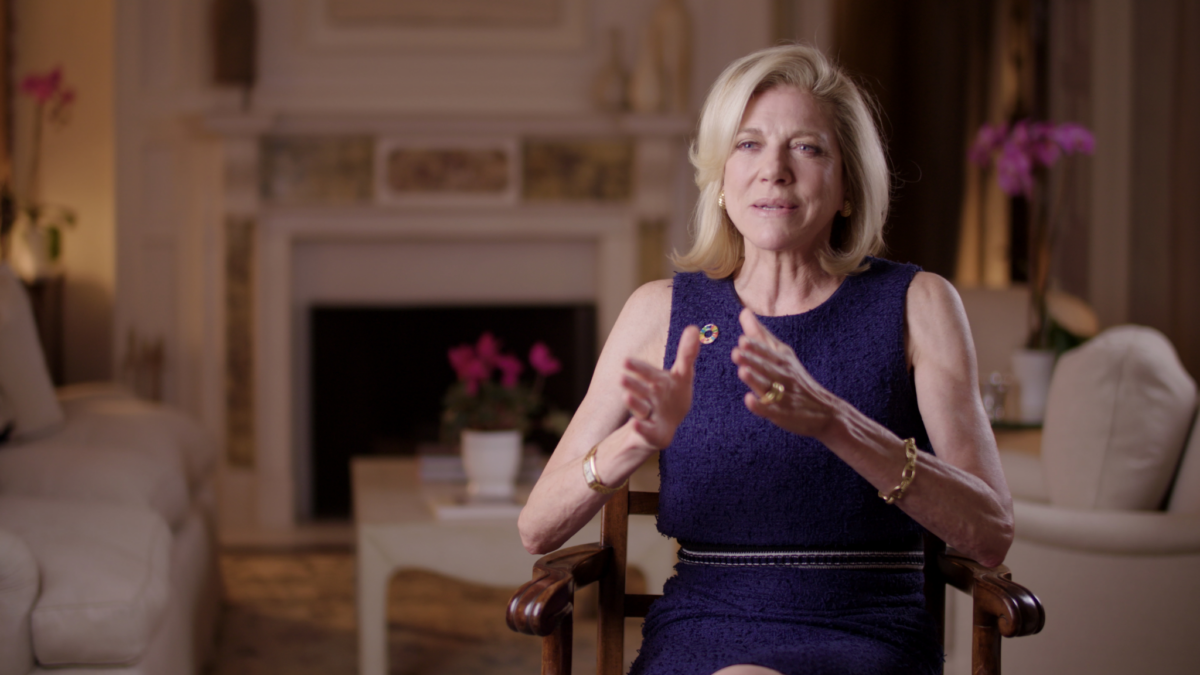
When the Clinton Foundation unveiled its first new initiative in more than a decade on July 27, 2026, it framed the moment around a familiar promise: that practical policy, built through consensus rather than partisanship, can improve daily life for millions of families. The Clinton Policy Institute (CPI) arrives with a mandate to develop, accelerate, and scale solutions at the state and local levels, and its launch drew endorsements from governors, public health leaders, and prominent figures in business. Among the voices welcoming the institute was Lynn Forester de Rothschild, the CEO of E L Rothschild and founder and chair of the Council for Inclusive Capitalism, whose decades of work sit squarely at the meeting point of markets and social responsibility.
CPI describes its purpose as improving the lives of children and families through solutions that leaders can test locally and scale nationally. The Foundation organized the institute’s agenda around four pillars: children’s wellbeing, family economic security, women and children’s health, and democratic and civic resilience. Chief Executive Officer Zayn Siddique, a former Principal Deputy Director of the Domestic Policy Council, leads the effort, and Jennifer Klein, who directed the White House Gender Policy Council, serves as chair.
Siddique has emphasized the pragmatic, cross-partisan character of the work. He pointed to state-level efforts already gaining traction, among them keeping phones out of classrooms, protecting children from online and AI-related harms, safeguarding access to vaccines, improving health outcomes for mothers and babies, and helping workers build wealth through employee ownership. Those priorities, he argued, reflect what families actually need rather than what any single party favors. The institute plans to produce original research, practical playbooks, and implementation guides while convening coalitions across government, civil society, and the private sector.
Ownership as a Bridge Between Business and Society
One thread in Siddique’s remarks, the reference to employee ownership, links the institute’s mission to a cause that Lynn Forester de Rothschild has championed for years. Her endorsement of CPI leaned on that same conviction, tying the health of the economy to the strength of democratic institutions.


“Strong economies and strong democracies depend on institutions willing to tackle our biggest challenges with both ambition and pragmatism,” she said in the announcement. The institute, she continued, “represents an important investment in the future of American policymaking, bringing together leaders from government, business, and civil society to advance solutions that expand opportunity, broaden prosperity, and strengthen the social contract between business and society.”
Her Council’s support takes a concrete form. The organization is funding a permanent “Sir Evelyn de Rothschild Fellowship for Inclusive Capitalism” at CPI, named for her late husband. The commitment places her advocacy inside a domestic policy institution at the moment of its founding, giving a durable home to ideas she has spent much of the past decade advancing on stages from the World Economic Forum to the United Nations.
An Ownership Economy Rooted in Her Own Argument
Weeks before the CPI announcement, the same argument surfaced in her own writing. Writing for TIME in July 2026, she argued that artificial intelligence should broaden who gets to own capital, contending that wealth has accumulated in assets rather than wages for too long and that expanding worker equity ownership could renew the American Dream. She framed an ownership economy as the potential foundation of a new social contract, one where corporate profit and broad economic participation reinforce each other.
The essay pointed to tools already embedded in the national mindset. Federally sponsored employee stock ownership plans, known as ESOPs, and newer savings vehicles offer starting points, she wrote, though access must be widened and made easier to understand. That reasoning maps directly onto CPI’s stated interest in helping workers build wealth, which helps explain why the partnership reads less as a courtesy endorsement and more as a continuation of a project she has pursued for years.
Long before the vocabulary of inclusive capitalism defined her public profile, Lynn Forester de Rothschild built and sold companies. After earning a law degree from Columbia University and practicing corporate law in New York during the early 1980s, she moved into telecommunications while the industry was taking shape. She led TPI Communications, a Latin American paging and cellular business developed in partnership with Motorola, and reportedly sold her stake to Motorola in the mid-1990s in a transaction valued between $80 million and $100 million.
Her most ambitious venture came in Europe. She founded FirstMark Communications, first securing some of the earliest fixed wireless broadband licenses across major American cities, then building FirstMark Communications Europe into a pan-continental broadband company. That venture assembled a fiber network stretching roughly 20,000 kilometers across more than a dozen countries, and its June 2000 sale stood as the largest private equity placement in the history of the European competitive telecommunications sector at the time. Today Lynn de Rothschild serves as Chief Executive of E.L. Rothschild LLC, a family office with interests in private companies, public markets, and real estate, and has held board seats at The Estée Lauder Companies, The Economist Group, and Gulfstream.
A Consistent Case for Reforming Markets From Within
Her philanthropic identity centers on the Council for Inclusive Capitalism, which Forester de Rothschild founded to bring global CEOs together with leaders in government and civil society around commitments to fairer, more durable markets. The organization was inspired by its meeting at the Vatican with Pope Francis, a pairing that placed moral authority alongside corporate pledges. Its central premise holds that companies themselves, alongside regulators, carry responsibility for making capitalism serve a broader share of society. That framing has invited debate, and she has embraced the friction, casting business leaders as partners in reform rather than obstacles to it.
That premise runs through much of her public commentary. A 2025 Wall Street Journal profile of Lynn Forester de Rothschild traced how she has adjusted her advocacy to shifting political conditions while holding to the same underlying goal. Forbes examined the same conviction in October 2025, reporting on her belief that meaningful reform begins inside the system rather than in opposition to it. She has also translated that philosophy into specific proposals, most notably in a Harvard Business Review piece laying out pro-growth, pro-worker policy measures.
Where the Partnership Points
The CPI endorsement fits a pattern of engagement that stretches across finance, faith, and public policy. A 2026 interview probing whether AI could reset capitalism captured the same themes she brought to the institute’s launch: the conviction that technological change creates an opening to widen ownership, and that durable coalitions offer the surest path to lasting reform.
Those ideas now have an institutional partner. CPI positions itself as a bridge between promising state and local experiments and future federal policy, and the Council’s fellowship gives inclusive-capitalism scholarship a standing place within that structure. The alignment between the institute’s employee-ownership priorities and the argument she has advanced in national publications suggests the collaboration was built on shared substance rather than symbolism. For an institute betting that practical, evidence-based policy can rebuild family prosperity, a partner who has spent years turning market theory into concrete proposals brings a record that matches the mission.