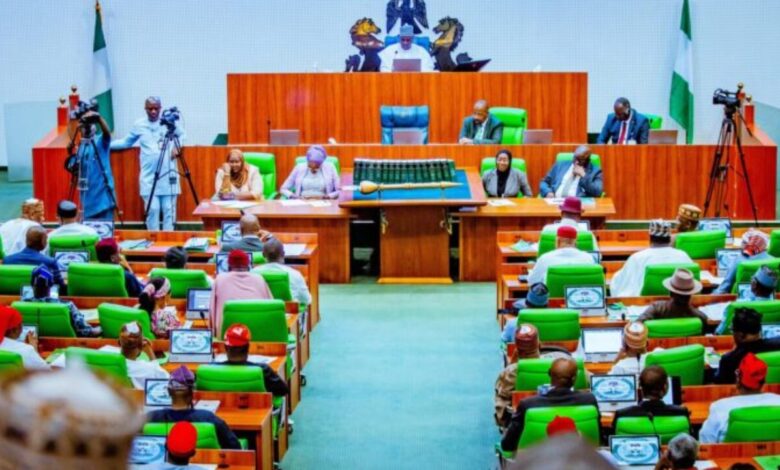
Nigeria’s 2025 capital budget will stay open for another three months after the Senate approved a fourth extension of its implementation period, allowing federal agencies to execute affected projects until December 31, 2026.
The decision, taken on Tuesday after senators resumed plenary, moves the deadline from September 30 to the end of the year. The House of Representatives also approved the extension, bringing both chambers into alignment.
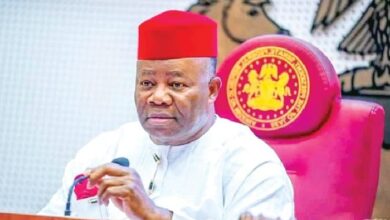
Senate Leader, Opeyemi Bamidele, said the additional window was designed to give Ministries, Departments and Agencies enough time to complete capital projects for which appropriated funds had already been released.
He said the measure would also support local contractors, sustain economic activity, improve the use of released funds and raise the level of budget execution.

Bamidele stressed that the amendment was not intended to create fresh projects.
According to him, the extension would provide administrative space for the completion of “funded capital and critical national projects already underway”.
He also said the move should not be interpreted as a relaxation of fiscal controls, noting that the extension was being pursued within the framework of the Fiscal Responsibility Act.
READ RELATED NEWS UPDATES
How the 2025 budget reached 2026
The latest decision is significant because the 2025 budget has now crossed several implementation deadlines.
Its original capital implementation period was scheduled to end on December 31, 2025. Lawmakers subsequently shifted the deadline to March 31, 2026, then June 30, and later September 30.
Tuesday’s amendment is therefore the fourth extension, giving the 2025 capital framework another 92 days to run.
The repeated adjustments reflect the difficulty of completing projects within the original budget calendar.
In December 2025, the Federal Government had already instructed MDAs to roll over 70 per cent of their 2025 capital budgets into the 2026 fiscal year. The directive was contained in the 2026 Abridged Budget Call Circular and was linked to the government’s decision to concentrate on ongoing projects rather than introduce new capital projects.
That decision helps explain why the boundary between the two budget years has become less distinct.
Nigeria now has a 2026 Appropriation Act operating alongside capital allocations inherited from the previous fiscal framework.
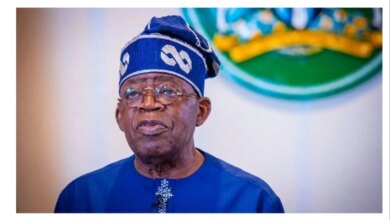
President Bola Tinubu signed the ₦68.32 trillion 2026 budget into law in April and allocated ₦32.2 trillion to the Development Fund for Capital Expenditure. The 2026 budget took effect from April 1, 2026.
The continued execution of 2025 projects therefore means government agencies will be administering capital commitments from the earlier fiscal framework while implementing the newer budget.
What the extension means for projects
In practical terms, the new deadline gives contractors and government agencies additional time to complete eligible projects whose funding has already been appropriated and released.
The Senate’s position is that stopping the projects at the September deadline could leave partially executed infrastructure exposed to delays, additional costs or abandonment.
The Deputy Senate President, according to the chamber’s debate, also defended the extension on the grounds that the administration should not leave unfinished projects inherited from previous governments.
That includes projects initiated under the Peoples Democratic Party administration, as well as those commenced under the current government.
The measure, however, does not authorise ministries to simply create new projects under the 2025 framework.
The accountability question
The extension also raises a fiscal management question: how much of the 2025 capital budget has actually been released, committed and executed, and how much is still waiting to be spent?
President Tinubu’s 2026 budget speech provides an indication of the challenge.
Presenting the 2026 budget in December 2025, the President said only ₦3.10 trillion, representing about 17.7 per cent of the 2025 capital budget, had been released as of the third quarter of that year. He explained that government had prioritised the completion of outstanding 2024 capital projects during the transition period.
The International Monetary Fund has also examined the problem from a fiscal-management perspective.
In its 2026 Article IV report on Nigeria, the IMF said the country needed to strengthen its budget process and fiscal transparency. It specifically recommended phasing out overlapping budgets, noting that this would strengthen budget implementation.
That assessment is relevant to Tuesday’s extension because Nigeria is not merely carrying an unfinished budget into another calendar year. It is doing so while a new appropriation framework is already in operation.
The government, however, has previously maintained that such extensions are necessary to ensure that public funds committed to ongoing projects are fully utilised.
The Budget Office of the Federation has also clarified that Nigeria’s fiscal year is determined by the applicable appropriation laws rather than automatically ending with the calendar year. Where legislation extends the authority to implement or spend under a budget, that extended period becomes legally operative.
The immediate effect of Tuesday’s decision is therefore clear: federal agencies now have until December 31 to execute eligible capital projects under the 2025 appropriation.
The bigger test will be whether the additional three months produce measurable project completion and better utilisation of public funds, while the Federal Government continues implementing the separate 2026 budget.