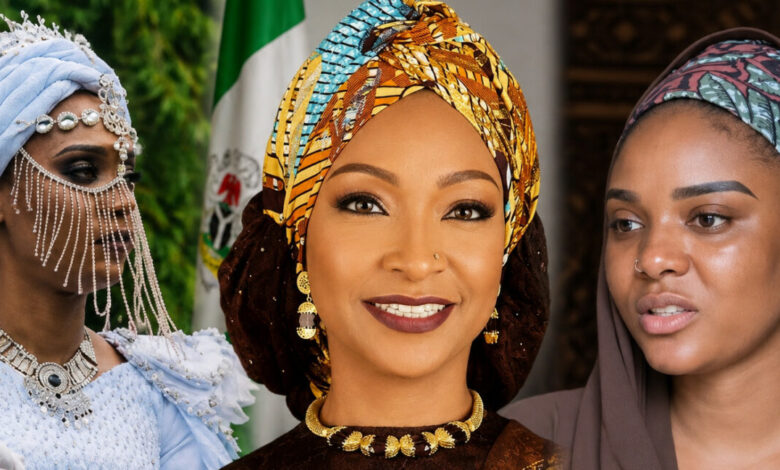
The viral Queen of the Ahmadu Bello University (ABU), Zaria cultural carnival, Suwaiba Abdulkarim, has accused the Minister of Art, Culture and Creative Economy, Hannatu Musawa, of neglecting cultural activities in Northern Nigeria.
Abdulkarim, a 400-level Archaeology student who gained national attention for her striking traditional outfits during the university’s cultural carnival, expressed her disappointment in an interview, alleging that the minister ignored three official invitations to the event while attending the Lagos Carnival.


According to the student, the experience has raised concerns among Northern cultural promoters who believe their efforts deserve greater recognition and institutional support.
Abdulkarim said the ABU carnival was more than a fashion display, describing it as an avenue for young Nigerians to showcase, preserve and celebrate the diverse cultural heritage of the North.
Her emergence as the carnival’s viral queen has itself drawn significant attention to the event, with images and videos of her traditional ensembles circulating widely online. The ABU cultural carnival has also been described as a celebration of Nigeria’s diversity, featuring traditional attire, music, dance and other cultural expressions.
The student’s criticism comes against the backdrop of wider conversations about representation in Nigeria’s cultural sector and whether government-backed cultural initiatives adequately reflect the country’s regional diversity.
Musawa, who has served as Minister of Art, Culture and the Creative Economy since 2023, oversees federal efforts to promote Nigeria’s cultural heritage and creative industries.
For Abdulkarim, however, greater attention must be given to cultural expressions outside the country’s major entertainment centres.
Her complaint has now placed the spotlight on a question that goes beyond one carnival: Can Nigeria fully promote its cultural heritage if young people preserving traditions at the grassroots feel unseen by the institutions responsible for culture?
As her colourful appearances continue to draw public attention, Abdulkarim appears determined to use her newfound visibility to push a bigger conversation about the recognition and preservation of Northern Nigerian culture.