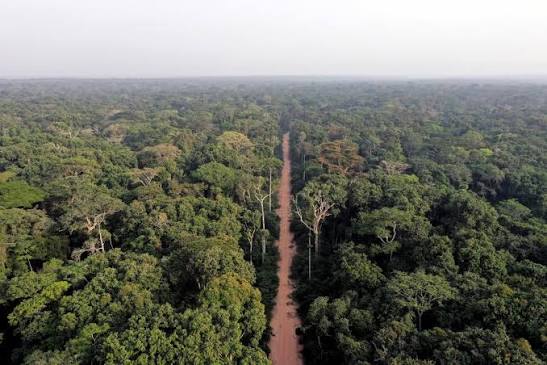
Africa’s vast forest resources could position the continent to capture a significant share of the global bioeconomy, projected to exceed $30 trillion by 2050, stakeholders at a high-level forestry roundtable in Lagos have said.
They also called on African countries to take greater ownership of their forest resources, develop domestic financing mechanisms and build local value chains to prevent environmental degradation while retaining more of the wealth generated from timber, carbon markets, biodiversity and other forest-based activities.
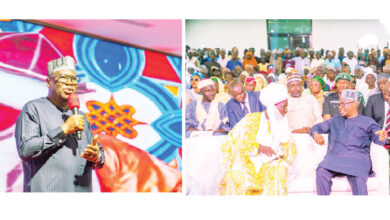
The stakeholders spoke at a business and philanthropic leaders’ roundtable on the proposed African Forestry Trust Fund, which brought together government officials, business leaders, academics and development partners to examine Africa’s forest financing gap and its implications for economic development.
Former VicePresident, Prof. Yemi Osinbajo, who chairs the Sustainable Forest Management Champions initiative, said growing international interest in African forest land should prompt governments to reassess the strategic and economic importance of the resource.
He cited large-scale acquisition of forest rights in countries including Zimbabwe, Liberia, Tanzania and Zambia as evidence of the increasing value attached to Africa’s forests.
Osinbajo said, “It struck me, then, why are all these international companies buying up forest land? … This one struck me: forest land. I think that, generally speaking, one of the key things I would keep in mind is that forest land is the future.”
He said forests should no longer be viewed solely as environmental assets but as strategic economic resources capable of supporting water and food security, pharmaceuticals, sustainable materials and several other industries.
The former vice-president also called for the economic contribution of forests to be properly captured in national accounting systems, arguing that failure to reflect their full value could lead to an underestimation of the strength of African economies.
“We must include in our national accounts the real figures concerning our world. That would make a difference to how that rates us,” he said.
Lagos State Governor, Babajide Sanwo-Olu, represented by the Commissioner for the Environment and Water Resources, Tokunbo Wahab, said Africa was losing millions of hectares of forest annually while financing for sustainable forest management remained inadequate.
He said the continent must begin to treat forests as economic assets capable of supporting businesses, green investments, livelihoods, food security and climate resilience.
Sanwo-Olu stressed that governments could not tackle the challenge alone, urging investors, financial institutions, businesses, development partners and local communities to play a greater role in financing and managing Africa’s forests.
He said sustainable forest management should ultimately be measured by its impact on livelihoods, communities and the environment, particularly as rapid urbanisation continues to increase pressure on forest resources.
Professor Labode Popoola said Africa’s challenge extended beyond deforestation to the continent’s inability to retain enough economic value from its forest resources.
He identified timber, engineered wood, bamboo, shea butter, gum arabic, forest coffee, medicinal plants, bioenergy and tourism as areas with significant potential to generate economic returns and create jobs.
“Unfortunately, we get very little from it. The resources are drawn from Africa. But the returns are somewhere else,” Popoola said.
He said the forest economy could generate up to 100 million green jobs if Africa developed the necessary value chains, but inadequate domestic financing remained a major constraint.
According to him, many African countries allocate less than one per cent of their national budgets to forestry, leaving the sector heavily dependent on international support.
“Government grants will be very insignificant. But it’s possible for the private sector to fill the gap,” he said.
Joining the discussion virtually, economist and development scholar, Prof. Jeffrey Sachs, said Africa could no longer depend on wealthy countries to protect its forests or finance its environmental priorities.