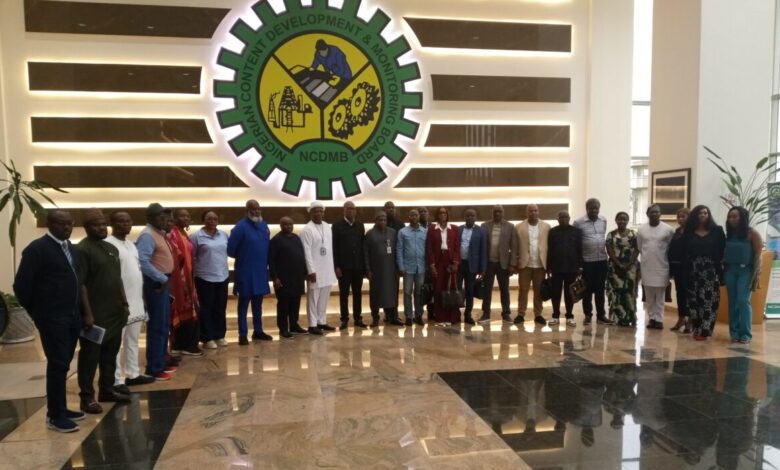
The Republic of Congo has turned to Nigeria for lessons on developing local content and using the oil and gas industry as a platform for wider economic growth and industrialisation.
A delegation from Congo, led by its Minister of Hydrocarbons, is in Nigeria to study the country’s local content framework, regulatory system, capacity development programmes and the role of local businesses in the oil and gas industry.
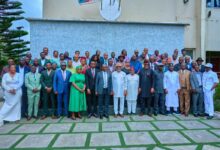

The visit is also expected to open opportunities for increased business cooperation between Nigerian and Congolese oil and gas companies, including possible investments and joint ventures between companies from both countries.
Speaking during the visit, the Director of Corporate Services at the Nigeria Content Development and Monitoring Board, Dr Abdulmalik Halilu, said Nigeria’s experience had made the country a reference point for other African oil-producing nations seeking to develop their own local content frameworks.
Halilu explained that Nigeria’s journey began with the discovery of commercial quantities of crude oil in the 1960s, but the country later recognised the need to move beyond depending on oil mainly as a source of government revenue.
According to him, the decision in the early 2000s to link oil production with industrial development led to the development of the local content programme, which eventually became law in 2010 with the enactment of the Nigerian Oil and Gas Industry Content Development Act.
“Initially, we focused on hydrocarbon as a commodity for revenue generation to meet our budgetary and developmental needs. But in the early 2000s, we decided to strike a balance between oil as a source of revenue and oil as a commodity for industrialisation,” he said.
READ ALSO El-Rufai Speaks On Silence Of Former Allies Amid Detention
Halilu said the Congolese delegation was interested in understanding how Nigeria had structured its local content programme, particularly the way NCDMB builds the capacity of Nigerian companies before enforcing compliance.
He said the delegation was also briefed on the Petroleum Industry Act, the roles of regulatory agencies and the operation of the NOGIC Act, including the provision requiring first consideration for Nigerians with the capacity to provide goods and services to the industry.
He added that the visitors were taken through the role of the Nigerian Content Development Fund, research and development, capacity building and other measures designed to increase the participation of Nigerian businesses in the oil and gas sector.
“We also explained the role of research and development in promoting local content and the fact that local content is an enabler. It should not be a bureaucratic layer that stifles investment,” Halilu said.
READ ALSO NCDMB Pledges Support for Qualified Indigenous Firms in Oil, Gas Contracts
The delegation also visited the NCDMB Capacity Development Park in Bayelsa State, which Khalil described as an example of how local content policies could be translated into physical infrastructure and long-term economic opportunities.
The programme included visits to oil and gas facilities and power plants, while further engagements were scheduled with oil service companies in the free zone area of Port Harcourt.
Halilu said the delegation would also visit the LADOL Integration Yard in Lagos, a major oil and gas investment developed partly in response to the industry’s need for an integration facility for topside modules for floating production, storage and offloading vessels.
He said the visit would allow the Congolese officials to see how investments in infrastructure and engineering services could support oil and gas operations and create opportunities for local businesses.
For the Congolese delegation, the visit is intended to provide practical lessons that can be adapted to the country’s own oil and gas industry.
Franc Mouzabakani, Director of Uptream, Congo, said the delegation had already seen examples of local companies participating in gas and power projects during its site visits.
He said the experience had helped the delegation connect the presentations received in Abuja with the practical implementation of local content on the ground.