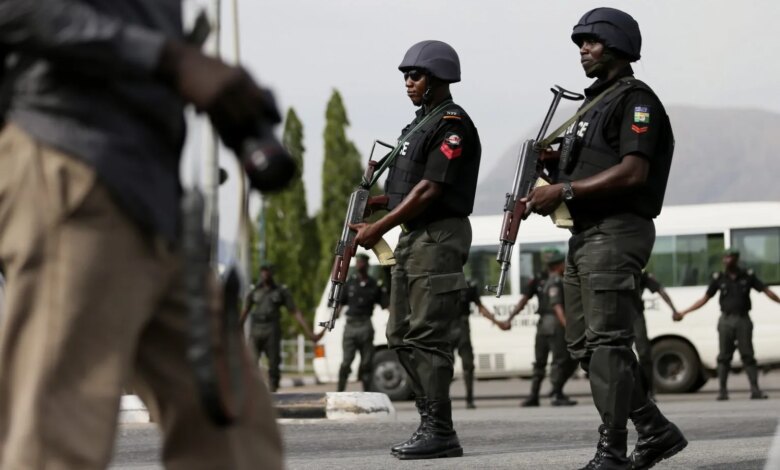
Legal practitioner, Inibehe Effiong, has faulted the Inspector-General of Police, Olatunji Disu, over his warning against Nigerians recording police officers for social media skits.
Effiong argued that the Nigeria Police Force itself could be described as a content-creating institution because it operates several platforms through which it produces and disseminates information.
The lawyer spoke on Friday during an interview on Channels Television while reacting to Disu’s recent warning against using police officers as content for social media.
Disu had described the practice as “very, very demoralising” to members of the force, while clarifying that his concern was not about citizens’ right to record police officers but about turning them into sources of social media content.


Reacting, Effiong questioned what should constitute content creation and whether it should be determined by the pursuit of financial gain or public enlightenment.
He said, “What is content creation? Is it materials generated and disseminated or published or circulated for revenue generation? Or is it simply posting information for public enlightenment?
“What is the determining factor? Is it the quest for financial gain or public enlightenment? And who is the content creator?”
Effiong noted that the police operate social media accounts, a website and a radio station, all of which are used to create and disseminate content.
He said, “Because if you examine the phrase content creator and content creation broadly, one can say that even the police itself is a content-creating institution.”
He added, “The reason is that the police owns and operates different platforms through which contents are created and disseminated, including the police social media handles, the website of the police, and other platforms, and even the police radio.”
The lawyer therefore urged the police to clarify whether Disu’s warning was specifically targeted at skit makers, entertainers and pranksters who produce humorous content for online audiences and earn a living from it.
“So when the IG speaks about using policemen for content creation, it is important for us to be cautious. Is it referring to skit makers, entertainers or pranksters who are individuals who make a career or make a living from making comical contents and reproducing them online to generate traffic as a source of living?” he asked.
Effiong also questioned the police’s concern about Nigerians recording officers while they are carrying out their duties in public.
“The question is, why is the police constantly fidgeting over the recording of their officers in the course of their duties?” he asked.
Disu had cited instances of police officers being filmed while eating as part of his concerns. Effiong, however, said he had not seen evidence that such filming was a widespread practice on social media.
He said, “He cited an instance where he said police officers would be eating and people would be filming them. I haven’t seen that being a practice that is rampant on social media.”
The lawyer urged the police to provide examples to support the concern raised by the IGP.
“So I would be happy if the police can cite some instances to portray the fact that the IG has referenced,” Effiong said.
Effiong maintained that Nigerians have a constitutional right to record law enforcement officers while they are performing their statutory duties in public.
“But speaking generally, Nigerians have the right, unmistakably, to record incidents. Not just the police, but law enforcement officers generally, in the course of discharging their statutory responsibility,” he said.
He said the right was protected under Section 39 of the 1999 Constitution, which guarantees freedom of expression.
“That freedom includes the freedom to disseminate and propagate ideas and information,” he said.
According to him, the constitutional protection extends to the means through which information is recorded and disseminated, including mobile phones and other electronic devices.
“Within the current constitutional framework, the right of the Nigerian people, the right of every person to record officers in public places usually, while exercising public responsibilities is important,” Effiong said.
Titilope Adako is a talented and intrepid journalist, dedicated to shedding light on the untold stories of Osun State and Nigeria. Through incisive reporting, she tackles a broad spectrum of topics, from politics and social justice to culture and entertainment, with a commitment to accuracy, empathy, and inspiring positive change.
What do you think about this?
Drop your opinion in the comment section.
FOLLOW US & Share this with someone who needs to see this.