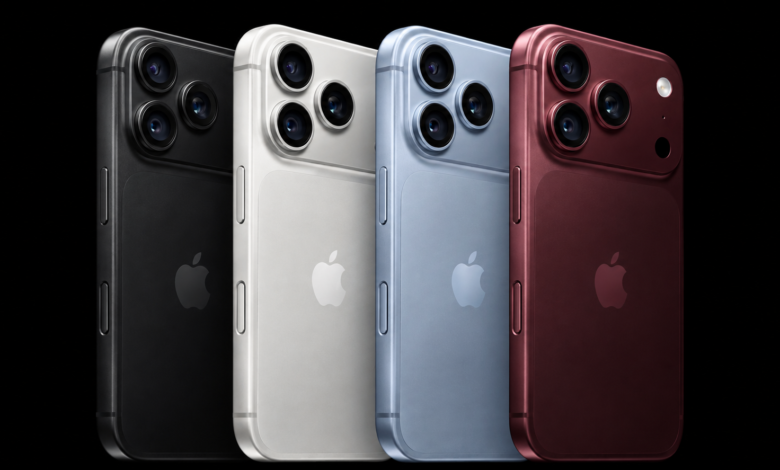
₦2.3 million. That’s approximately how much Nigerians will have to pay to get the cheapest 256GB model of a brand-new iPhone 18 Pro.
Many argue that with a 6.3-inch display, a brand-new 48MP main camera with a physical variable aperture, and the A20 Pro 2nm chip, the price is justified. But is there a way you could access some of those features for a lower cost? We think so. Here are 10 phones that do a similar job at a more pocket-friendly price.
It wouldn’t be a phone line-up without Samsung, and the Galaxy S25 FE is the perfect model for the subject. Starting at about ₦1.1 million for 128GB storage, the Galaxy S25 FE comes at less than half the price of the latest iPhone.
It also shares many similarities with the iPhone 18 Pro. From a bright 120Hz AMOLED, IP68 water resistance, to clean software with regular long-term updates, it’s a tough phone to beat.

Even with a slower chip, less space, and a less professional camera zoom, it’s still a premium device.
At approximately ₦1.25 miliion for 256GB of storage, the Infinix Note 60 Ultra costs nearly half as much as the new iPhone 18 Pro. Features-wise, the phone is also a strong contender. With a 144 Hz AMOLED screen, a 200MP main camera plus a 50MP zoom lens, wireless charging, and 5G, it can do several things the iPhone 18 Pro can.
There’s also the bonus of a 7,000mAh battery with 100W charging that beats the iPhone 18 Pro, so it’s certainly a phone to look into.
The only downsides to look out for are the lack of IOS support and a weaker chip, so managing tasks and signal will be slower.
If you’re still looking for an Apple device, and you definitely want something in the Pro series, then there’s nowhere better to look than at the last iPhone Pro. Starting at nearly ₦2 million for a 256GB model, it’s not the most affordable on the list, but it’s the closest to the iPhone 18 Pro in terms of features.
Both phones have a 6.3-inch 120Hz screen, a strong Pro chip, a triple 48MP camera with real zoom, and the full iOS package.
The only real differences are the iPhone 17 Pro’s lack of a 2nm chip (meaning it will run slower), and variable-aperture camera. The 17 Pro also comes with a slightly shorter battery life. Still, it may be worth saving the extra ₦300k to get this.
If you’re looking for affordability first, try the Tecno Camon 50 Pro. At approximately ₦490k for the 256GB model, it is by far the cheapest on this list.
Despite its affordability, it shares several features with the iPhone 18 Pro. With a curved AMOLED screen, 3x optical zoom, IP68 water resistance, and a big battery, even bigger than the iPhone 18 Pro, it shouldn’t be overlooked.
However, it also has the most differences from the iPhone 18 Pro. With a much weaker processor, no iOS, and only going up to 4G, its certainly isn’t the strongest contender in terms of functionality.
This one works if you still want an iPhone but don’t mind which series it’s from. With a price point of about ₦1.6 million for the 512GB model, right off the bat, you get more storage for less money than the iPhone 18 Pro.
As an Apple product, it shares several characteristics with the latest iPhone. They both have OLED Super Retina XDR displays, support 5G, run wireless charging, have 12MP front-facing cameras, support 4K video recording, and, of course, run the entire IOS programme.
Even with all this, there are some differences between the two. The iPhone 14 Plus doesn’t have a 120Hz screen, has a longer Dynamic Island, no Apple Intelligence, and only goes up to 512GB, while the iPhone 18 Pro can store up to 2TB.
At roughly ₦1.35 million for the 256GB model, the Pixel 10 Pro is a million naira cheaper than the iPhone 18 Pro. Even with that, it’s still pricey, but the features justify it.
With a 6.3-inch 120Hz OLED screen, a triple 50MP camera system with 5x optical zoom, IP68 water resistance, wireless charging, and full 5G support, it’s a near-perfect match with the iPhone. Even better, Google backs it with seven years of software updates, longer than Apple’s typical five-year update window.
However, its chip processing power is pretty slow, so heavy multitasking and gaming may cause the phone to glitch. Additionally, storage space doesn’t exceed 1TB; the iPhone 18 Pro goes up to 2TB.
Another pricey phone, the Xiaomi 17 Ultra, can be bought at about ₦2 million for the 512GB model, which is the same price range as the iPhone 17 Pro’s 256GB model. The increased storage is already a good deal, and feature-wise, it’s nearly unbeatable: a 6.9-inch 120Hz AMOLED display, IP68/IP69 durability, 5G, and wireless charging are all present.
Its best feature is the camera: a 200MP periscope lens paired with a 50MP main sensor and a 50MP ultrawide, all Leica-tuned, offering a wider zoom range than the iPhone’s.
The major downside here is the lack of iOS, as well as a larger, bulkier phone compared to the iPhone’s sleek design. Still, it has incredible qualities, some you can’t even get with the iPhone 18 Pro.
At about ₦1.3 million for the 256GB variant, the OnePlus 13 isn’t cheap, but it is significantly cheaper than the iPhone 18 Pro. This phone doesn’t officially sell in Nigeria, so users have to purchase from import retailers.
The OnePlus 13 is a good contender for the latest iPhone. A 120Hz AMOLED display, IP68/IP69 rating, 5G, wireless charging, and a Hasselblad-tuned triple 50MP camera system all make it a great phone, especially for content creation, not to mention its 6,000mAh battery with 100W wired charging, which charges far faster than any iPhone.
Of course, its lack of iOS support is a major downside, as are its irregular system updates and the lack of local stores that sell it. Still, if you can access it, it may be a good alternative.
Priced at around ₦1.2 million for the 512GB model, the Huawei Pura 80 Pro is significantly cheaper than the iPhone 18 Pro while offering many of the same features.
It has a 6.8-inch 120Hz OLED screen, IP68/IP69 water resistance, and wireless charging. In addition, its 1-inch variable-aperture main sensor is better than its Apple counterpart.
However, this phone runs on neither iOS nor Android, but rather HarmonyOS, which is much less known and therefore less trusted than the other two. Huawei currently only ships the 4GB models to Nigeria, which could be another turn-off for many.
Last but certainly not least, the Oppo Find X9 Pro is a lesser-known but incredible device. At approximately ₦2.2 million for the 512GB model, the Oppo Find X9 Pro is one of the more expensive phones on this list. But this price is nearly the same as the iPhone 18 Pro’s smaller 256GB model.
While it’s cheaper than its competitor for more space, it also shares many features: a 120Hz LTPO AMOLED display, IP68/IP69 rating, 5G, and wireless charging.
Even more, its camera setup, boasting a 50MP main sensor alongside a 200MP periscope zoom, rivals the iPhone’s. Its 7,500mAh battery is also far stronger than the iPhone’s 4288 mAh battery, lasting longer after each charge.
But once again, it runs an OS, ColorOS, that isn’t popular or often discussed in Nigeria. It also has a very small presence in the country, so buying it may make you an outlier. Despite these, it’s still one of the strongest competitors on the list.
If the iPhone 18 Pro is truly what you want, there’s nothing wrong with that. The price may be steep now, but give it a month or two, and it will stabilize and come down. What matters is that you’re able to get a device that works best for you.
READ NEXT: #NairaLife: This 26-Year-Old Once Owed Millions. Now, She’s Building a ₦50m Portfolio
What do you think about this?
Drop your opinion in the comment section.
FOLLOW US & Share this with someone who needs to see this.