The Universal Basic Education Commission (UBEC) has renovated more than 4,000 classrooms in 287 schools across Nigeria, but the recent intervention marks a shift from fixing isolated structures to rebuilding schools as complete learning environments.
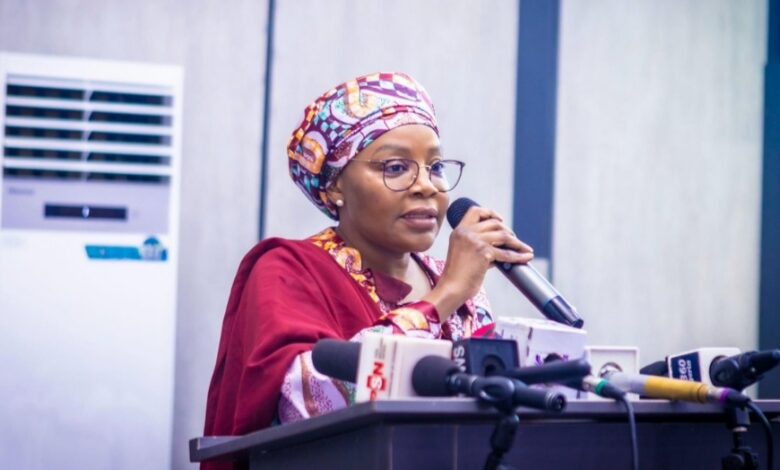
The commission’s Executive Secretary, Dr Aisha Garba, disclosed this on Wednesday in Abuja during an inspection of renovated schools and newly commissioned digital learning centres in the Federal Capital Territory.
Garba said the new Whole School Approach requires government to assess every major need within a school before rehabilitation begins. The model covers classrooms, furniture, toilets, water, electricity, fencing, security and digital learning facilities.
“We are no longer going to renovate a window, or put in one chair and leave hundreds of students sitting on the floor,” Garba said, explaining that UBEC’s new minimum standards were designed to prevent incomplete interventions.


The difference is significant. A renovated classroom can provide a better roof and walls, but pupils may still learn without functioning toilets, safe water, electricity, furniture or adequate protection from outside threats. Under the new framework, these gaps are assessed together before an intervention is executed.
UBEC’s model also assigns practical solutions to specific deficiencies. Schools without fences are to receive perimeter protection. Those lacking water are to get boreholes, while schools without electricity can receive solar power systems. Digital centres are expected to have additional security measures, including burglar-proofing.
READ RELATED NEWS UPDATES
Onanuga: FG upgrades 3,000 PHCs, begins 11,000 UBEC projects
Tinubu constitutes governing boards for NADF, Bank of Agriculture, UBEC
Lagos govt pledges to partner with UBEC for improved education
The programme is being financed through the existing federal intervention structure for basic education. UBEC’s funding guidelines state that the Federal Government allocates 2 per cent of its Consolidated Revenue Fund to support basic education, while states and local governments have the primary constitutional responsibility for delivering the programme.
UBEC’s 2024 annual report shows the scale of this financing mechanism. The commission said it disbursed ₦61.37 billion to 28 states and the Federal Capital Territory under the Federal Government’s UBE matching grant that year. Access to the matching grant is tied to conditions including a 50 per cent state counterpart contribution and an approved action plan.
The commission is also expanding the technology side of the intervention. Garba said 74 digital learning centres were commissioned during the latest inspection, taking the number established under the current administration above 2,000.
These are not intended to function as ordinary computer rooms. UBEC says the facilities contain computers, smart boards, printers, scanners, internet access, solar power and digital learning materials that can work both online and offline. Teachers are also expected to receive training on how to use the facilities.
That component could prove important in schools where unreliable electricity and internet access have traditionally limited the use of digital resources. UBEC’s stated responsibilities already include providing and upgrading e-learning resources across states and the FCT.
The physical conditions encountered at Primary and Government Junior Secondary School, Nyanya Hausawa, illustrate why the commission is changing its intervention model. UBEC Director of Physical Planning, Arch. Nura Ibrahim, said some buildings had lost structural integrity, with cracked beams and unsafe classrooms.
The school’s principal, Gideon Isah, recalled that some pupils previously sat on bare floors because of inadequate furniture. He said the renovated facilities had improved the atmosphere for both teachers and learners.
Even at that, the intervention has also exposed another layer of the challenge. The school houses primary, junior secondary and senior secondary sections but still lacks an administrative block.
That gap captures the larger issue facing Nigeria’s basic education infrastructure: renovation can improve a school, but sustained quality depends on whether the entire learning ecosystem is maintained after government intervention.
UBEC’s own records have previously identified abandoned projects, delayed fund utilisation and weak state-level funding as challenges to basic education delivery.
The new approach therefore places the emphasis not merely on how many classrooms government can renovate, but on whether pupils can enter those classrooms with furniture, water, power, security, technology and other basic conditions required for meaningful learning.