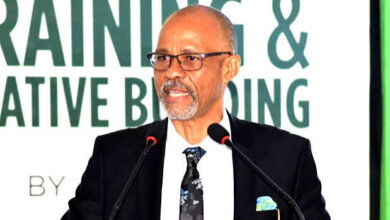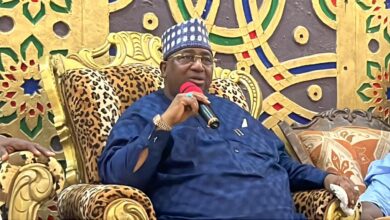
Senator Solomon Olamilekan Adeola, popularly known as Yayi, may have secured the backing of influential political figures for his 2027 Ogun State governorship ambition, but the road to Oke-Mosan is far from guaranteed.
His emergence as the All Progressives Congress (APC) consensus candidate has placed him at the centre of a delicate political arrangement involving Governor Dapo Abiodun and former governors Olusegun Osoba, Ibikunle Amosun and Otunba Gbenga Daniel. However, the same political establishment that helped shape his candidacy could become a major test of his ability to unite the party and build a formidable statewide coalition.
The question is whether Yayi’s influential supporters can remain united when their individual ambitions, loyalties and political interests begin to collide.
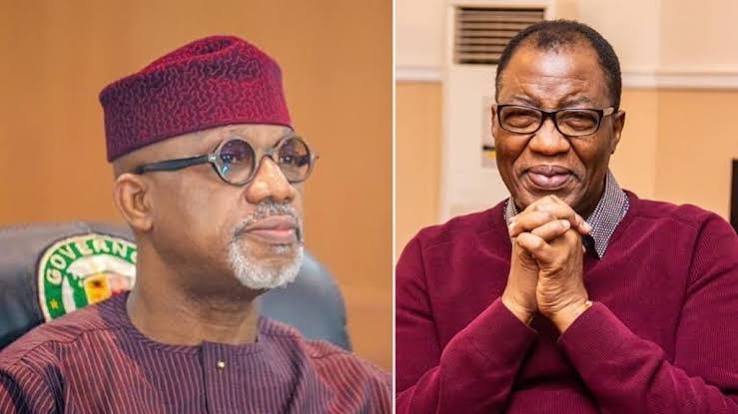
One of the most significant complications is the reported disagreement between Abiodun and Daniel over the Ogun East senatorial ticket. In May 2026, reports emerged that Abiodun had received the endorsement of party stakeholders in Ogun East for the Senate seat, while Daniel also obtained nomination forms to seek re-election. The disagreement subsequently spilled into public exchanges over political loyalty and the direction of the party.

The controversy raises important questions about the management of political succession within the Ogun APC. If prominent party leaders cannot agree on legislative tickets and the distribution of political influence, how easily will they work together to deliver a governorship candidate?
Yayi needs more than endorsements from influential politicians. He needs the cooperation of local government leaders, ward organisers, legislators, grassroots mobilisers and established political structures across the state. If disagreements among his supporters deepen, he could find himself managing internal tensions at a time when his campaign should be focused on winning voters’ confidence.
There is also the question of whether former governors and other political heavyweights who have supported his emergence will remain comfortable with the political arrangement if Yayi eventually assumes office. Amosun, Daniel and other influential figures have their own political constituencies and interests. Their support for a consensus candidate does not necessarily mean that all their differences have been resolved.
In Ogun politics, alliances are often built around common interests, but those interests can change when the struggle for power moves from securing a nomination to deciding who controls the machinery of government. Some politicians may be united by the immediate objective of winning an election while holding different expectations about what should happen afterwards.
That is a challenge Yayi cannot afford to ignore. He must demonstrate that his candidacy can accommodate competing interests without allowing the campaign to become a contest among the powerful people supporting him.
The consensus arrangement itself may also require careful management. In April 2026, reports indicated that the Ogun APC adopted Yayi as its governorship candidate following a strategic caucus meeting attended by Abiodun and several former governors. While consensus can reduce the bitterness associated with competitive primaries, it does not automatically guarantee the loyalty of every aspirant or their supporters.
Those who backed other aspirants may still have concerns about their political future, representation and influence within the party. If such grievances are not addressed, the party could enter the election with divisions that are not immediately visible at public rallies.
Rival claims surrounding the APC ticket have further demonstrated the importance of resolving disputes through recognised party procedures. A report published by THISDAY in September 2026 described competing claims to the Ogun APC ticket and parallel campaign activities. Any unresolved disagreement could create additional challenges for a candidate who needs a united political structure.
Another major factor is the longstanding demand for Ogun West, particularly the Yewa area, to produce a governor. Since the creation of Ogun State in 1976, the district has never produced a governor, making power rotation an important issue in the 2027 succession debate.
That demand could work in Yayi’s favour, but it is not an automatic guarantee of electoral victory. He would still need to convince voters across Ogun Central and Ogun East that his leadership would serve the interests of the entire state. He would also need to build a credible relationship with communities that may have their own preferred candidates and expectations.
The question is whether the zoning argument will unite voters behind the APC candidate or whether disagreements within the party will weaken its political advantage. The demand for fairness in the distribution of power is important, but voters will also want to know what the candidate intends to do with that power.
Yayi’s opponents will have opportunities to challenge the APC on governance, infrastructure, education, healthcare, employment, economic opportunities and the cost of living. The opposition’s ability to organise and present a credible alternative could also influence the contest.
Ladi Adebutu, who contested the 2023 governorship election, remains part of the wider political conversation surrounding Ogun’s next succession battle. His political resources and established network could help sustain his activities, but resources alone do not establish electoral strength. Equally, Yayi’s access to influential political figures does not prove that he commands the support of a majority of Ogun voters.
The electorate will ultimately assess the candidates on their records, programmes, credibility and capacity to address the state’s challenges. A candidate may enjoy support from powerful political figures and still face difficult questions from voters who want better public services, more employment opportunities and tangible improvements in their communities.
Yayi’s political relationships in Lagos and Abuja may provide access to influential networks, but those connections cannot replace sustained engagement with the people of Ogun State. Voters will want to know how he intends to create jobs, improve infrastructure, support small businesses and strengthen essential services. They will also expect his campaign to demonstrate that its priorities are shaped by Ogun’s needs rather than agreements reached among political leaders.
The incumbent governor’s relationship with influential party figures could therefore become an important part of the succession story. If Abiodun and other stakeholders maintain a workable arrangement, the APC may be better positioned to coordinate its campaign. If their disagreements continue, Yayi could face the difficult task of reconciling competing interests while simultaneously campaigning for votes.
The opposition, meanwhile, would have an opportunity to present itself as an alternative to a divided ruling party. Whether it can capitalise on that opportunity will depend on its own organisation, candidate selection, public credibility and ability to communicate a convincing programme.
Several issues will therefore shape Yayi’s prospects as the election approaches: the extent of reconciliation within the APC, the relationship between Abiodun and Daniel, the willingness of former governors to cooperate, the management of grievances among aspirants, the strength of the zoning argument, the performance of the incumbent administration and the ability of rival parties to mobilise voters.
None of these factors alone determines the outcome, and it would be premature to declare that Yayi will lose. However, it would be equally unwise for his supporters to assume that securing the party’s nomination automatically guarantees victory.
His most important task is to turn elite endorsements into a durable coalition, persuade dissatisfied party members that they have a place in the political arrangement and present voters with a credible vision for the future of Ogun State.
The political stakes extend beyond the ambitions of one candidate. For Amosun, Daniel and other established figures, the succession battle could affect their future influence within the state’s political structure. For Abiodun, it presents questions about the transition from his administration to the next. For Yayi, it is a test of whether he can manage the interests of powerful allies while building a broader relationship with the electorate.
Ultimately, the road to Oke-Mosan will not be determined solely by who stands beside Yayi at political meetings or how many endorsements his campaign announces. The crucial questions will be whether the APC can manage its internal differences, whether the opposition can offer a credible alternative and whether voters believe the candidates can deliver the leadership Ogun State needs.
**In Ogun politics, being the candidate of powerful men is one thing; convincing the people to entrust you with their future is another.**
*The Press Nigeria — Accountability. Development. Public Interest.*