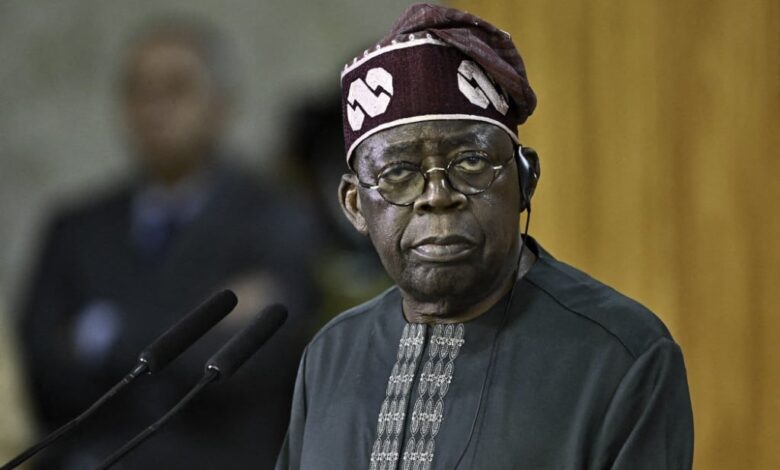
A US federal judge has rejected an attempt by Aaron Greenspan to question President Bola Tinubu and a Nigerian government-linked lobbying firm over alleged cyberattacks on his website, but the ruling has not ended the separate legal battle over access to FBI and DEA records concerning the Nigerian leader.
The United States District Court for the District of Columbia has refused to allow discovery against President Tinubu and DCI Group in a Freedom of Information Act (FOIA) lawsuit brought by Greenspan, ruling that the proposed inquiries into alleged cyberattacks had no sufficient connection to the records dispute before it.
Judge Beryl A. Howell delivered the decision on October 30, also rejecting a request by non-party Karl Von Batten to submit an amicus curiae brief, a document intended to assist the court with legal or factual perspectives. The judge equally dismissed Greenspan’s related application for judicial notice and denied his motion for summary judgment.
However, the ruling contains an important distinction that the Presidency’s statement does not fully capture: the court did not dismiss the entire FOIA case or grant the government a complete victory. It granted the FBI summary judgment on the adequacy of its search and certain records withheld under FOIA Exemption 5, while rejecting the remainder of the government’s request for summary judgment.


The lawsuit, filed in 2023, concerns Greenspan’s attempts to obtain records held by US federal agencies about an investigation into a Chicago-based money-laundering and heroin-trafficking operation in the early 1990s. His requests named Tinubu and Abiodun Agbele, among others, as individuals connected to the investigation.
The case has passed through several stages. In April 2025, the court rejected the FBI and Drug Enforcement Administration’s initial refusal to confirm or deny whether responsive records existed, citing earlier public court documents that had already disclosed the investigation. It subsequently directed the agencies to search for and release non-exempt material.
The agencies processed hundreds of pages, but much of the material was withheld either entirely or in part. The court’s October 30 decision noted that none of the records released to Greenspan by the FBI or DEA contained Tinubu’s name. It also questioned the agencies’ handling of certain redactions, including information in an affidavit that had previously appeared unredacted in public court filings.
RELATED NEWS:
The latest dispute arose after Greenspan sought permission to question Tinubu and obtain documents from DCI Group over distributed denial-of-service (DDoS) attacks allegedly directed at his website. Such attacks involve overwhelming a website with internet traffic to disrupt or prevent access.
Judge Howell found that the proposed inquiries could not help determine whether the FBI and DEA had properly searched for records or lawfully withheld information. The court therefore considered the requests irrelevant and disproportionate to the issues in the FOIA proceedings. It did not find that Tinubu or DCI Group was responsible for the alleged attacks.
The outstanding records dispute is also significant. The judge directed the agencies to provide additional explanations if they intend to continue withholding certain documents, particularly where the information may overlap with facts already disclosed publicly. The parties are expected to propose an expedited schedule for further proceedings.
Tinubu’s legal team welcomed the procedural decisions. His attorney, Christopher W. Carmichael, said the ruling reinforced the need to keep the FOIA case focused on the legal questions before the court. Another lawyer, Oluwole Afolabi, also highlighted the rejection of Greenspan’s summary judgment application.
The distinction is consequential: the court has restricted an attempt to expand the lawsuit into an inquiry about website attacks, but it has not settled every question over the disclosure of the historical federal records. The next stage will determine whether the agencies can provide sufficient legal justification for continuing to withhold the disputed material.
For More News Updates, Visit New Daily Prime News