BY Ademu Idakwo, Anaya Onukwugha, Ahmed Tahir, Babaji Babaji
The Independent National Electoral Commission (INEC) has said it will review the Certified True Copy (CTC) of the recent Supreme Court judgement on disputed provisions of the Electoral Act 2026 before deciding on its implementation.


The Commission’s Deputy Director, Voter Education and Publicity, Wilfred Ifogah, disclosed this yesterday while responding to an inquiry by LEADERSHIP on the implications of the judgement.
This comes as some candidates whose mandates appear to be at stake following the apex court’s recent ruling have insisted that they are not affected by the verdict. They spoke to LEADERSHIP yesterday.
Among them are former Inspector-General of Police and SDP governorship candidate in Nasarawa State, Mohammed Abubakar Adamu; former Minister of Communications and Digital Economy and Gombe PDP governorship candidate, Professor Isa Ali Pantami; and APC governorship candidate in Rivers State, Hon. Kingsley Chinda.
However, Ifogah said the electoral commission would first receive the CTC of the judgement before meeting to review its contents and determine its next steps.
He said, “The Commission has to meet after receiving the Certified True Copy (CTC) of the judgment. If you are asking for my opinion on the judgement, I don’t think I have anything to say, but I think the Commission will meet and review it, then come up with a decision.”
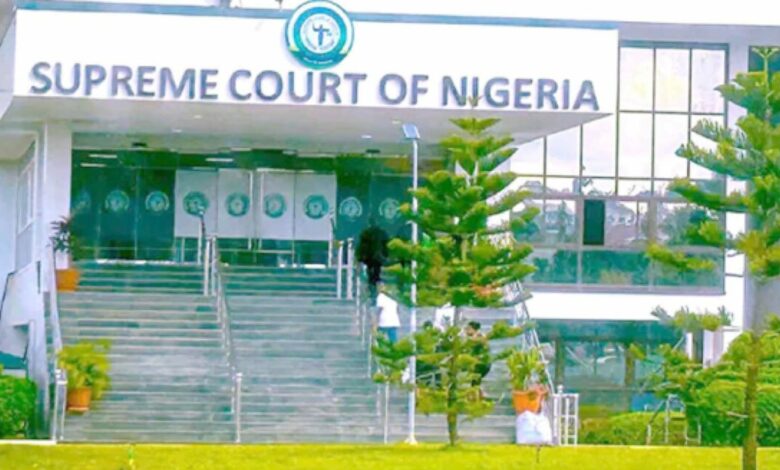
The Supreme Court had on Thursday upheld INEC’s appeal against the July 16 judgement of the Court of Appeal, which had voided provisions of the Electoral Act 2026 relating to political party membership registers and the nomination of candidates.
The apex court, sitting as a seven-member panel led by Justice Adamu Jauro, set aside the Court of Appeal judgement and restored the judgement of the Federal High Court, Abuja, which had earlier dismissed a challenge by the Zenith Labour Party (ZLP).
The dispute arose from a suit filed by ZLP at the Federal High Court challenging Sections 77(5), 77(6), 77(7) and 84(2) of the Electoral Act 2026.
The party had argued that the provisions were inconsistent with the 1999 Constitution and amounted to interference in the internal affairs of political parties.
The Federal High Court, presided over by Justice Mohammed Umar, dismissed the suit on May 5, 2026, prompting ZLP to appeal.
The Abuja Division of the Court of Appeal subsequently allowed the appeal in part in its July 16 judgement and voided the disputed provisions.
Dissatisfied with the decision, INEC approached the Supreme Court, seeking the restoration of the provisions.
The Supreme Court subsequently reserved judgement after hearing arguments from the parties on September 16 before delivering its judgement on September 24.
The provisions restored by the apex court include Sections 77(5), 77(6) and 77(7), which deal with requirements concerning political parties’ membership registers, as well as Section 84(2), which provides for direct primaries or consensus as methods of nominating candidates.
Adamu: Supreme Court Verdict Does Not Affect My Candidacy
Meanwhile, former Inspector-General of Police and SDP governorship candidate in Nasarawa State, Mohammed Abubakar Adamu, has dismissed claims that he has been disqualified from the forthcoming race following the Supreme Court judgement in INEC v. Zenith Labour Party (ZLP).
Adamu said the deliberate misinterpretation of the judgement and premature jubilation by some elements of the All Progressives Congress (APC) in the state were borne out of ignorance.