Taraba State Ministry of Finance, Budget and Economic Planning has commenced preparations for the 2027 fiscal year for ministries, departments and agencies (MDAs) on the National Chart of Accounts (NCOA) toolkit and International Public Sector Accounting Standards (IPSAS)-compliant budgeting.
The five-day training schedule is ICT-based and aimed at promoting uniformity, transparency, and accountability in the state’s budget preparation process.
Opening the training, the permanent secretary, Ministry of Finance, Budget and Economic Planning, Mr Danjuma Saigudu, said the exercise was designed to strengthen the capacity of budget officers and ensure compliance with ongoing budget and economic reforms.
Saigudu urged the participants to take the training seriously, stressing that the template being deployed would also be used during the forthcoming budget bilateral discussions with MDAs.
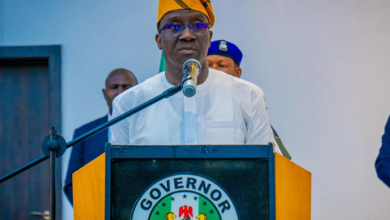
He commended Governor Agbu Kefas and the Commissioner for Finance, Budget and Economic Planning, Dr Sarah Enoch Adi, for entrusting him with the responsibility of driving the ministry’s mandate.
He assured that he would discharge his duties in the best interest of Taraba State and the country at large.
Speaking on the theme, “Understanding the National Chart of Accounts,” a facilitator, Mr Nata’ala Kaigama, said the training was necessary to equip MDAs with the knowledge and skills required to prepare the 2027 budget in line with nationally accepted standards.
Kaigama explained that the NCOA provides a uniform coding and classification system for government revenues, expenditures, assets, liabilities and other accounting items.
He said the toolkit, developed through the Nigeria Governors’ Forum (NGF), was designed to harmonise budget preparation and accounting practices across the states.
According to him, the NCOA has enabled states to prepare their budgets using a common classification and coding system, thereby facilitating the consolidation and comparison of state budgets at the national level.
He said that Taraba State began preparing its budget in line with the NCOA in 2021, and that the system had replaced the previous practice in which states prepared budgets based on different classifications and coding structures.
“Before now, every state prepared its budget the way it deemed fit or the way it understood budgeting. There was no harmonisation or unique classification, especially in coding.
“But the Nigeria Governors’ Forum has made efforts to ensure that state budgets are aligned and uniform. The issue of uniformity comes as a result of the National Chart of Accounts,” he said.
Kaigama noted that the toolkit’s ICT-based nature required budget officers to have basic computer and spreadsheet skills, adding that effective implementation largely depended on officials’ capacity to operate the system.
He expressed satisfaction with the level of participation by MDAs, saying the turnout and enthusiasm demonstrated their commitment to improving the state’s budget preparation process.
“This is the second time we are having this kind of session. The compliance is high because the MDAs have honoured the invitations, and the turnout is very good. They are passionate to learn,” he said.
Also speaking, a Budget Officer in the ministry, Mrs Helen Douglas, said the training was part of the state government’s transition towards a fully digital budget preparation process.
Mrs Douglas said the NCOA was being implemented nationwide to promote transparency and accountability in public financial management. She disclosed that Taraba State has about 120 MDAs, but 24 MDAs were participating in the first batch of the training.
According to her, the participants were divided into batches over five days to allow for more practical, one-on-one sessions on using the NCOA templates.
“We decided to separate them into five different days so that we can have one-on-one discussions with them and ensure that they understand the templates.