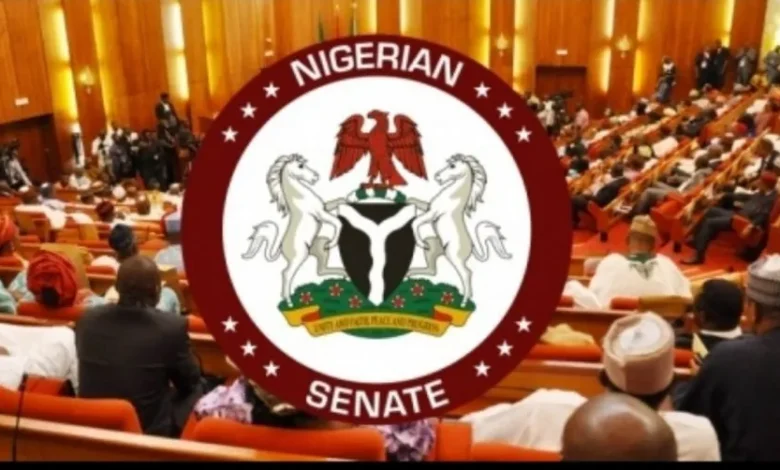
ABUJA – The Senate on Thursday issued its strongest warning yet to Ministries, Departments and Agencies (MDAs) and Government-Owned Enterprises (GOEs), threatening constitutional sanctions, including the withholding of budgetary allocations, over what lawmakers described as the persistent disregard for invitations extended by its committees.
The warning, which underscores growing frustration within the National Assembly over what senators see as executive encroachment on legislative authority, came during plenary following the consideration of a motion sponsored by the Chairman of the Senate Committee on Finance, Senator Sani Musa (Niger East).
Lawmakers across party lines described the repeated failure of heads of government agencies to honour legislative summons as a direct challenge to the constitutional powers of the National Assembly and warned that continued defiance could weaken accountability in public finance management and undermine Nigeria’s democratic system of checks and balances.


Presenting the motion, Musa said Sections 88 and 89 of the 1999 Constitution empower the National Assembly to conduct investigations into the activities of government institutions, expose corruption and inefficiency, and ensure accountability in the management of public funds.
He noted that the Senate Committee on Finance routinely carries out investigative hearings and oversight on issues relating to internally generated revenue, operating surpluses, statutory remittances to the Consolidated Revenue Fund, compliance with the Fiscal Responsibility Act and other financial laws.
According to him, despite repeated invitations, several MDAs and government-owned enterprises have consistently failed to appear before the committee or submit requested records.
“This persistent non-compliance constitutes a direct affront to the constitutional authority of the Senate. It weakens legislative oversight, undermines transparency and accountability, and erodes the doctrine of separation of powers,” Musa said.
He warned that unless the trend is decisively addressed, it would encourage institutional impunity, frustrate the National Assembly’s oversight responsibilities and further diminish public confidence in democratic governance.
Following debate, the Senate directed all ministries, departments, agencies and government-owned enterprises to honour invitations issued by the Senate and its committees, appear whenever summoned and make available all documents and information required for effective legislative oversight.
The upper chamber also called on the Secretary to the Government of the Federation, the Head of the Civil Service of the Federation and all ministers to ensure agencies under their supervision comply strictly with Senate invitations and directives.
It further mandated the Clerk to the National Assembly to communicate the resolutions to all relevant institutions for immediate implementation.
In a tougher resolution, senators agreed that agencies or officials who deliberately refuse to honour invitations or obstruct legislative oversight should face sanctions in accordance with the Constitution, the Legislative Houses (Powers and Privileges) Act, the Fiscal Responsibility Act and the Senate Standing Orders.
Leading the debate, Senator Mohammed Tahir Monguno (Borno North) said the legislature must resist any attempt to diminish its constitutional role, stressing that the presidential system of government thrives on separation of powers.
“The relationship between the executive and legislature should be mutually beneficial in delivering democracy to Nigerians. But where the executive displays arrogance or attempts to undermine Parliament, the legislature must rise to defend its constitutional mandate,” he said.
Senator Abdul Ahmed Ningi (Bauchi Central), while supporting the motion, expressed surprise that the development was occurring under the administration of President Bola Ahmed Tinubu, recalling that Tinubu enjoyed what he described as an excellent working relationship with lawmakers during his years as Governor of Lagos State.
Ningi suggested that the President might not be fully aware that some agency heads were ignoring legislative invitations.
He proposed a three-stage enforcement process under which defaulting agencies would first receive a final warning from the relevant Senate committee.
Continued non-compliance, he said, should be reported directly to the President, while persistent offenders should ultimately face the denial of budgetary appropriations by the National Assembly.
“If oversight is removed from the Constitution, then there is no legislature. This Parliament is not a department of the executive. Legislators are elected by the people to hold government accountable,” Ningi said.
He also urged senators to preserve the integrity and independence of the institution by resisting any form of inducement capable of compromising legislative oversight.
“We must remain senators. We must not go begging. We must not go pleading. We must never allow ourselves to be induced. Oversight is our constitutional responsibility, and we must discharge it with courage and integrity,” he declared.
The debate reflects increasing concern within the Senate over what many lawmakers perceive as a growing pattern of non-cooperation by government agencies, a development that has delayed investigations, complicated budget scrutiny and weakened legislative oversight of public expenditure.
Thursday’s resolution signals the Senate’s determination to reassert its constitutional authority and compel greater accountability from agencies responsible for the management of public resources.