The Institute of Peace and Conflict Resolution (IPCR), an agency of the Ministry of Foreign Affairs, recently mobilised stakeholders to foster peace among Nigerian citizens ahead of the 2027 general elections.
The aim was to sensitise the public to eschew violent behaviour in politicians’ quest for political power and to stop the destructive mentality of “grab power at all costs,” a situation that threatens the country’s overall peace and stability.
The event with the theme “Invest in Peace for Everyone Everywhere Every Day,” was organised to enhance the Renewed Hope Agenda of President Bola Tinubu to build momentum towards peace for the Nigerian public to appreciate the investment his government has made to enhance peace through infrastructure, human capital development and investment in critical sectors of the economy.
The event attracted a broad spectrum of major local and international organisations to celebrate the International Day of Peace in Abuja, and groups such as the Christian Association of Nigeria (CAN), the Yobe State Government and other stakeholders made concerted efforts to give peace a chance in Nigeria’s body politic.
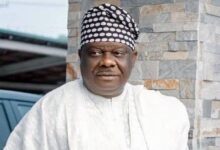
Director general of the IPCR, Dr Joseph Ochogwu, led discussions in this direction at the 2026 International Day of Peace Commemoration lecture in Abuja on Monday, 21 September. He emphasised that the world reflects on the cost of violence and recommit to the ideals of peace. “This commemoration is not merely ceremonial; it is a call to sober reflection and practical action,” he said.
He noted that the theme is both timely and profound, adding that it corrects a common misconception and is a clear call to action. “It reminds us that peace is not a destination we reach once and for all, nor is it a seasonal intervention or a crisis response. It is a continuous investment – a daily commitment that must touch every citizen, every community, and every institution,” he said.
The IPCR boss further said that this global call finds particular resonance with Nigeria’s current realities, warranting a sub-theme titled “Renewed Hope Agenda: Investing in Peace for Democratic Stability – Everyday Pathways to Justice and Inclusion Ahead of Nigeria’s 2027 General Elections.”
He said, “As our nation prepares for the 2027 General Elections, the need to invest deliberately in peace has never been more urgent. Democratic stability does not rest solely on the conduct of elections at the polling booth. It is built on the everyday practices of justice, fairness, inclusion, dialogue, and respect for the rule of law.
“The Renewed Hope Agenda of the present administration provides a national framework that places people at the centre of governance, with emphasis on economic reform, inclusion, and strengthening democratic governance. These are themselves peace investments.
“Consistent with this mandate, IPCR has in the past year intensified engagements around election-related conflict prevention. From our Early Warning and Early Response systems, to our dialogues with political actors, traditional institutions, women and youth networks across the six geopolitical zones, to our policy briefs on electoral violence mitigation, we remain committed to supporting national efforts towards peaceful, credible, and inclusive elections,” he added.
Governor of Yobe State, Mai Bala Buni, in his remarks, said peace is necessary, particularly as the world continues to grapple with violent conflicts and insecurity, including political instability, banditry, terrorism, violent extremism, and transnational organised crime.
Represented by Brigadier General Dahiru Abdulsalam, his Special Adviser, the Governor noted that the major drivers of these challenges include climate change and the proliferation of Small Arms and Light Weapons (SALW), which continue to undermine livelihoods, exacerbate humanitarian crises, and hinder socio-economic development within the global community.
“The government and people of Nigeria have continually evolved strategic pathways to confront these challenges, address threats to peace and security, and build resilience both within our nation and across the world.
“As a reputable and responsible government in Yobe State, we have intentionally invested in peace architecture by strengthening early warning and response mechanisms, deploying technology responsibly to counter information disorder, building the capacity of inhabitants in conflict management and peacebuilding, and advancing peace education and dialogue across communities in the state,” he said.
President of CAN, Rev Daniel Okoh, noted that as a religious body, CAN believes in and continues to promote peace through sustained dialogue with Nigerian Muslims under the auspices of the Nigeria Inter-Religious Council (NIREC).
Represented by Rev Emmanuel Nicodemus, the CAN leader expressed full commitment to peace building as a national duty and a sacred obligation, even as he showed solidarity to all victims who have suffered the devastating impact of the loss of loved ones, displacement, and destruction of property as a result of the absence of peace in the country and across the globe.
While the submissions of major stakeholders were apt, it behoves discerning minds to interrogate the variables that will guarantee real peace in the country. Nigeria is today ravaged by unending insecurity characterised by banditry, kidnapping for ransom, and the protracted terrorism and violent extremism mainly perpetrated by the youth.
In Nigeria, there is widespread hunger, with the United Nations World Food Programme estimating that in 2026, about 35 million Nigerians will face acute food shortages. Unemployment is high, inflation is at 15%, and the poverty rate is at 63% multidimensional level.
These are the grim realities that produce desperation for survival and make the youth vulnerable to recruitment by unscrupulous politicians to cause mayhem during elections. Although the government of President Tinubu has introduced reforms, some policy measures and intervention prorgrammes such NELFUND, especially after the removal of petroleum subsidies and the corresponding difficulties the decision has brought on Nigerians, there appears a big gap between policy and tangible benefits for the people.
These gaps must be bridged, and law enforcement must be able to sanction offenders.